



Plate Carrier Loadout: What to Actually Put on Your Carrier
A plate carrier is a platform; loading it correctly is where most users get stuck. Here is the full plate carrier loadout walkthrough using only Midwest Armor products.
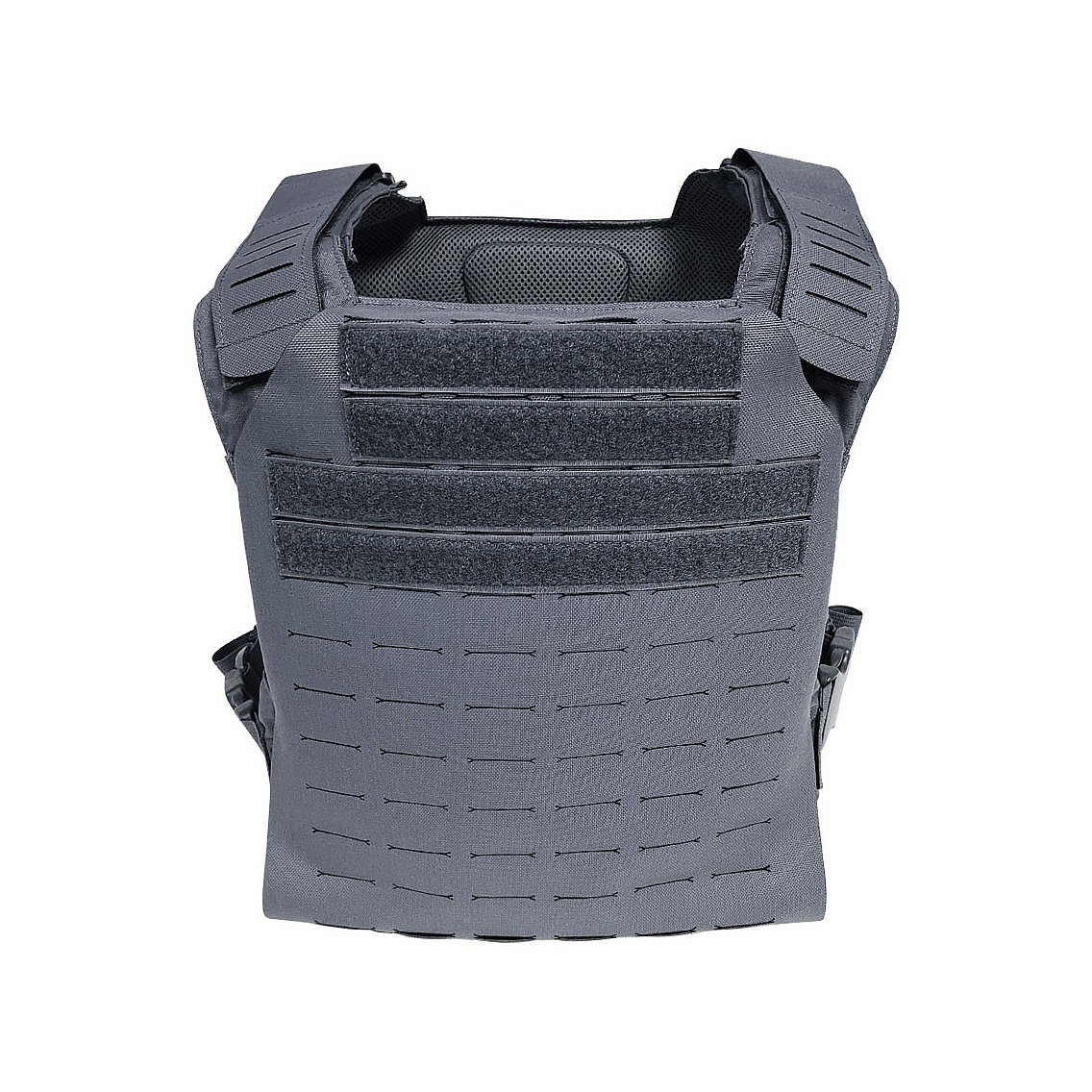
A plate carrier is a platform. Buying the carrier is the easy part. Loading it correctly so it actually does what you need without becoming a 25 lb millstone is where most users get stuck. This guide walks through the full plate carrier loadout decision tree: armor selection, magazine capacity, medical, admin, dump capacity, helmets, and how those decisions interact with each other based on the role you are loading the carrier for.
By the end you should be able to assemble a plate carrier loadout from the ground up using only Midwest Armor products, scaled to your role and weight tolerance.
Step 1: The Carrier Itself
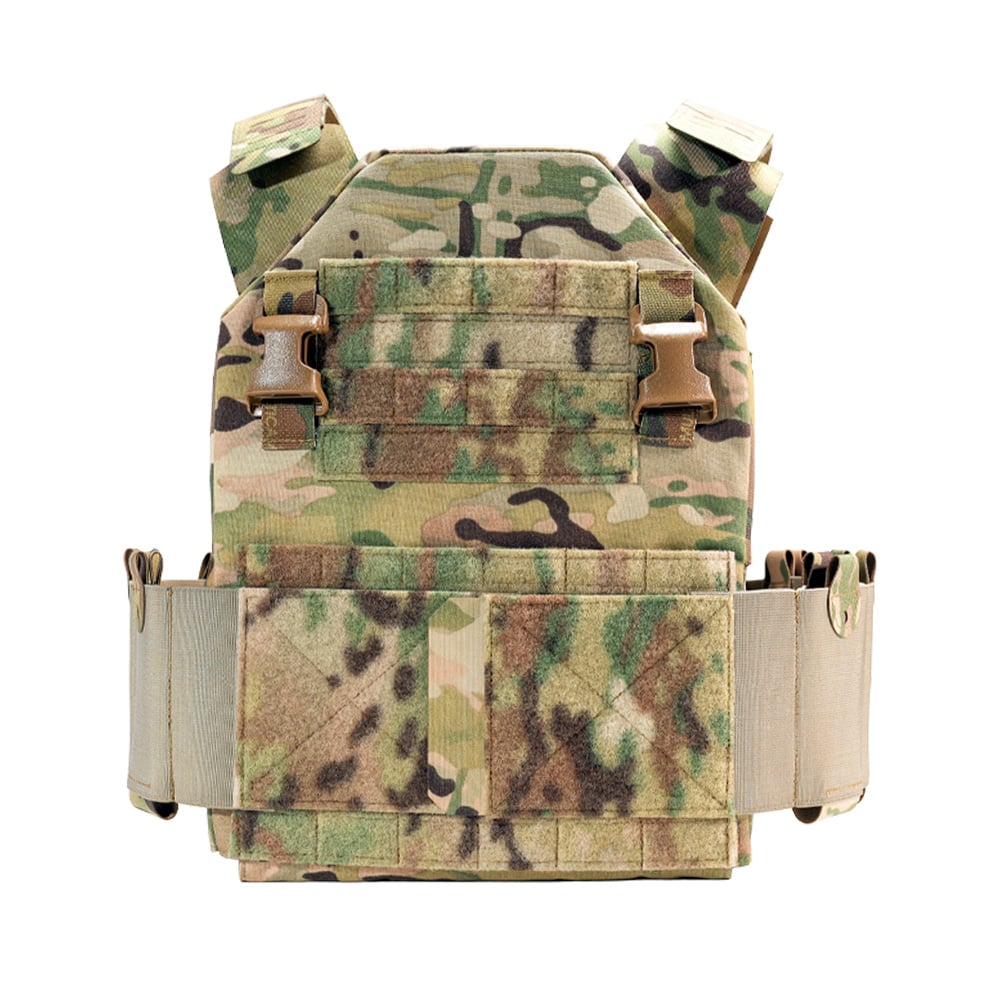
The carrier shell determines how much loadout capacity you have, how the carrier fits, and what mounting options the rest of your loadout uses.
- Sentry Laser Cut Plate Carrier: full-cut tactical carrier with laser-cut MOLLE. Best general-purpose carrier in the lineup. Right for LEO patrol, rifle response, training, and most tactical roles.
- Lancer Laser Plate Carrier: lightweight laser-cut carrier with reduced bulk compared to the Sentry. Right for civilian rifle response and fast-moving roles where weight matters.
- AMP Plate Carrier: minimalist carrier built around the lightest possible profile. Right for users who want bare-essentials capacity without heavy MOLLE webbing.
- Leap Plate Carrier Base: modular base carrier designed to accept placards and front panels. Right for users who want to swap configurations between mission profiles.
- Surge Hybrid Carrier Base: hybrid carrier optimized for users who want soft armor + slim hard plate compatibility in a single carrier.
- ForceFit Training Carrier: training-only carrier. Same dimensions as a live carrier but built around training rather than live use. Right for users who want to practice without wearing out a live carrier.
If you do not know which carrier to start with, the Sentry is the most versatile. It handles every loadout below this point in the guide.
Step 2: Armor Selection
Match the armor to the threat profile. The hard rule: rifle threats need hard plates. Soft armor alone does not stop rifle rounds.
- Level 3 (III) hard plates stop common rifle threats including 7.62×39 (AK) and 5.56 M193. Right for most civilian and many LEO threat profiles.
- Level 3+ plates add coverage against the M855 5.56 green-tip round.
- Level 4 (IV) hard plates stop the .30-06 M2 AP armor-piercing round and almost everything below it. Right for buyers who want maximum protection or operate where armor-piercing threats are credible.
- Level 3A (IIIA) soft armor inserts can be added behind hard plates for backface deformation reduction and as a layered protection system. Right for buyers who want maximum protection across the full threat envelope.
For full threat-level discussion including the 0101.06 to 0101.07 transition and “in conjunction with” plate ratings, see our guide to level 3 and level 4 body armor.
Step 3: Magazine Capacity
How many magazines you carry depends on your role. Be honest about what you actually need; over-rigging is the most common loadout mistake.
- Civilian truck rig / home defense: 2-3 rifle mags is plenty. Most home defense scenarios end at the first magazine.
- Training rig: 4 rifle mags. Standard square-range setup that lets you run sustained drills without resupply.
- LEO patrol: 4-6 rifle mags depending on department policy and shift duration.
- Tactical / rifle response: 6+ rifle mags for sustained-engagement scenarios.
- Pistol-primary loadout: 4-6 pistol mags, fewer if rifle is also carried.
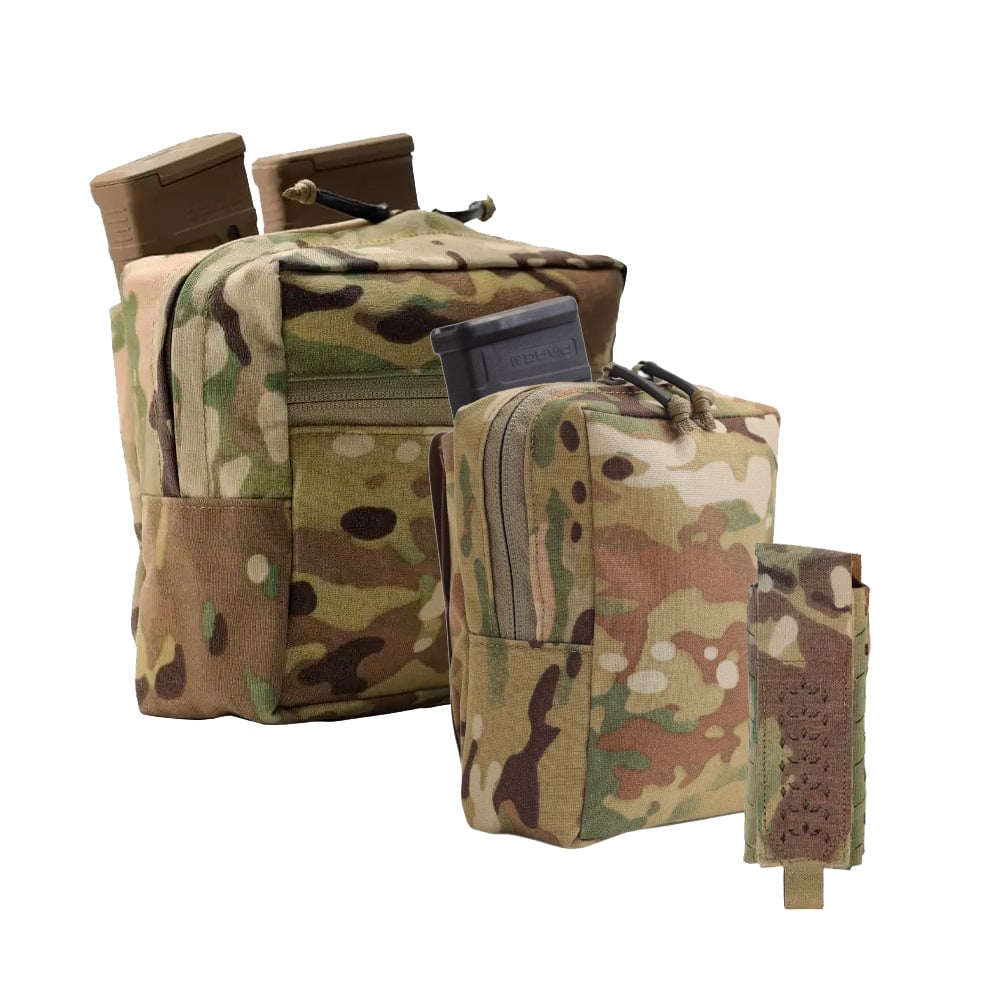
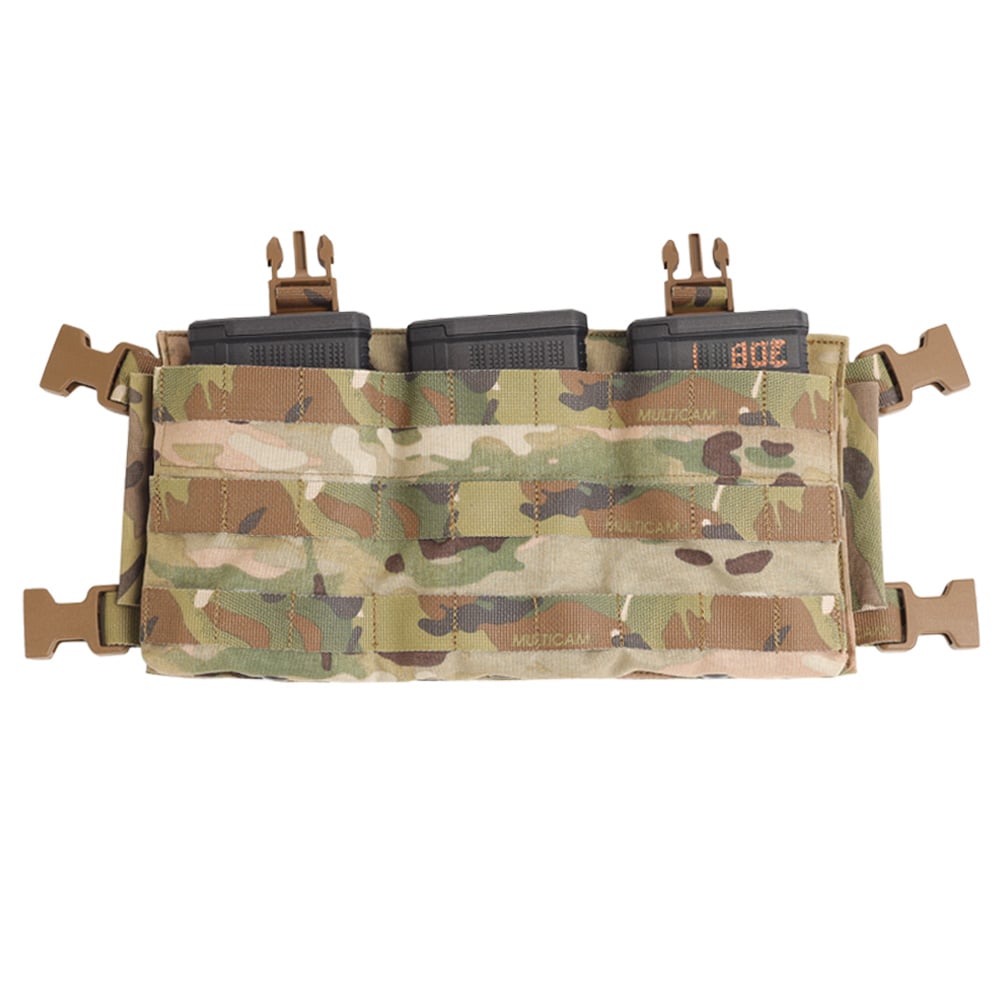
Mag pouch options scale to capacity. Single mag pouches are slower to access but pack tighter. Double and triple mag pouches save real estate. Most users settle on a mix: a triple at the centerline plus singles or doubles on the wings.
For mag pouch selection, see our mag pouch guide.
Step 4: Medical (Non-Negotiable)
Every plate carrier should have an IFAK. Medical kit is the most-used and least-thought-about element of most loadouts. The minimum:
- One IFAK with M-A-R contents: tourniquet, hemostatic gauze, vented chest seals, NPA. Pre-built kits like the Individual Bleeding Control Kit or IPOK handle the contents in one purchase.
- One dedicated tourniquet in a fast-access holder like the Elastic Tourniquet Holder or RIGID Gen 7 CAT TQ Case. The IFAK tourniquet is your backup; the dedicated holder is for the immediate self-application scenario.
Mount the IFAK on the back of the cummerbund (kidney area) so a partner can grab it from behind, or on the wing where you can reach it yourself. Mount the tourniquet holder on the strong-side cummerbund or front of the carrier where you can reach it with either hand.
For full IFAK and tourniquet detail, see our complete IFAK guide and tourniquet guide.
Step 5: Admin Pouch
An admin pouch holds the small items you actually reach for during a deployment: pens, notebook, multitool, ID, batteries. Most users underestimate how often they use the admin pouch and overestimate how often they use mag #6.
- Minimalist single-pen: the Admini Pouch for a single pen and small note card.
- Standard admin format: repurpose the GP 5x5x2 Clamshell EMT Pouch V2 as a clamshell admin organizer.
- Slim mag-pouch profile: the GP 4x6x2 Single Mag Pouch works as a slim admin pouch when loaded with a pen and folded note card.
Mount above the front mag pouches at sternum height. For full admin pouch discussion, see our admin pouch guide.
Step 6: Dump Pouch (Optional)
A dump pouch holds spent magazines you do not have time to stow during reload drills. Optional for most civilian loadouts; standard for training rigs and LEO patrol.
- Drop Pouch: standard collapsible dump pouch sized for 5.56 STANAG magazines.
- Bermuda Drop Pouch: larger format for AK mags or general-purpose stowage.
Mount on the strong-side wing or centerline back. For full dump pouch discussion, see our dump pouch guide.
Step 7: Helmet (When the Loadout Justifies It)
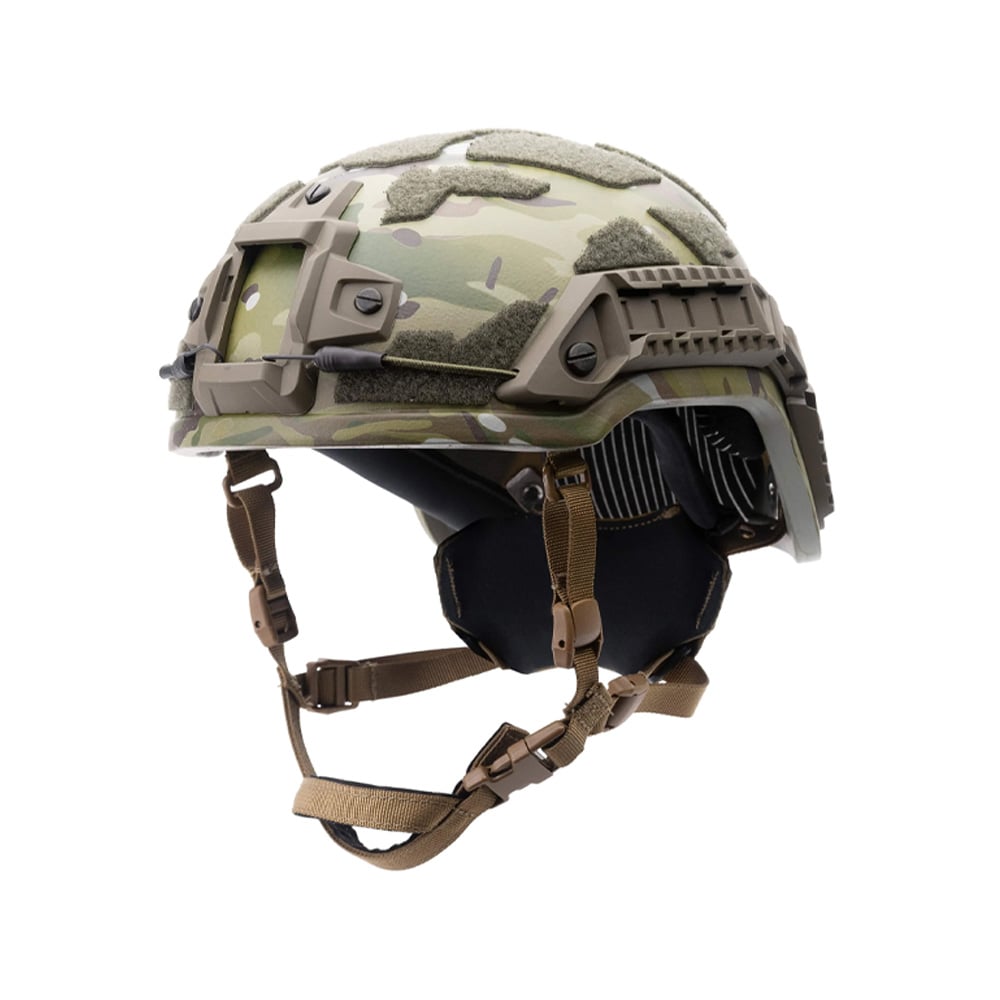
If your role includes ballistic head threats, a helmet is the right addition to the loadout. The PGD ARCH GEN3 is our recommended ballistic helmet, NIJ Level 3A rated with built-in NVG shroud and ARC rails.
Add the PGD Helmet Dial Retention System for comfort upgrade and a helmet cover for IR-defeat surfaces and patches.
For full helmet selection guidance, see our complete helmets guide.
Sample Loadouts by Role
Civilian Truck Rig / Home Defense
- Lancer Laser Plate Carrier (lightweight)
- Level 3 or Level 4 hard plates
- 2-3 single mag pouches across centerline
- Individual Bleeding Control Kit (IFAK)
- Elastic Tourniquet Holder + CAT
- Admini Pouch (minimal admin)
Total weight: roughly 12-14 lb. Sits ready next to the home defense rifle, deploys in seconds.
LEO Patrol
- Sentry Laser Cut Plate Carrier (full-cut)
- Level 3+ or Level 4 hard plates
- Triple rifle mag pouch + 2 single rifle mag pouches (5 mags total)
- Double pistol mag pouch
- IPOK (LEO-specific IFAK)
- RIGID Gen 7 TQ case + CAT
- Standard admin pouch (notebook, citation book)
- Drop Pouch (for evidence collection or rapid mag retention)
Total weight: roughly 18-22 lb. Configured for full-shift wear.
Training Rig
- ForceFit Training Carrier (training-only)
- Training plates (steel or polymer dummy plates, not live armor)
- 4 rifle mag pouches
- Drop Pouch for spent mag retention
- Training tourniquet (retired live tourniquet for practice)
Total weight: roughly 14-16 lb. Used for repetitive drill work without wearing out a live carrier.
Common Loadout Mistakes
- Over-rigging: 6 rifle mags on a civilian truck rig you will never deploy in a sustained engagement. Match capacity to realistic scenario.
- Skipping the IFAK: most-used loadout component, most-skipped during initial purchase. Always include medical.
- Mounting the IFAK where you cannot reach it or where a partner cannot grab it. Test access from both angles.
- Buying based on aesthetic rather than role: kit that looks great in photos but does not fit your actual use case ends up in a closet.
- Not training in the loadout: a loadout that has not been live-tested under stress will fail under stress.
Bottom Line
Build the loadout from the role outward. Start with the carrier and armor that match your threat profile, add the magazine capacity that matches your scenario, include medical (always), add admin and dump as the role justifies, and add a helmet only when ballistic head threats are part of the threat envelope.
For deeper detail on any single loadout component, see our supporting guides: plate carriers, body armor selection, mag pouches, IFAKs, admin pouches, dump pouches, and helmets.
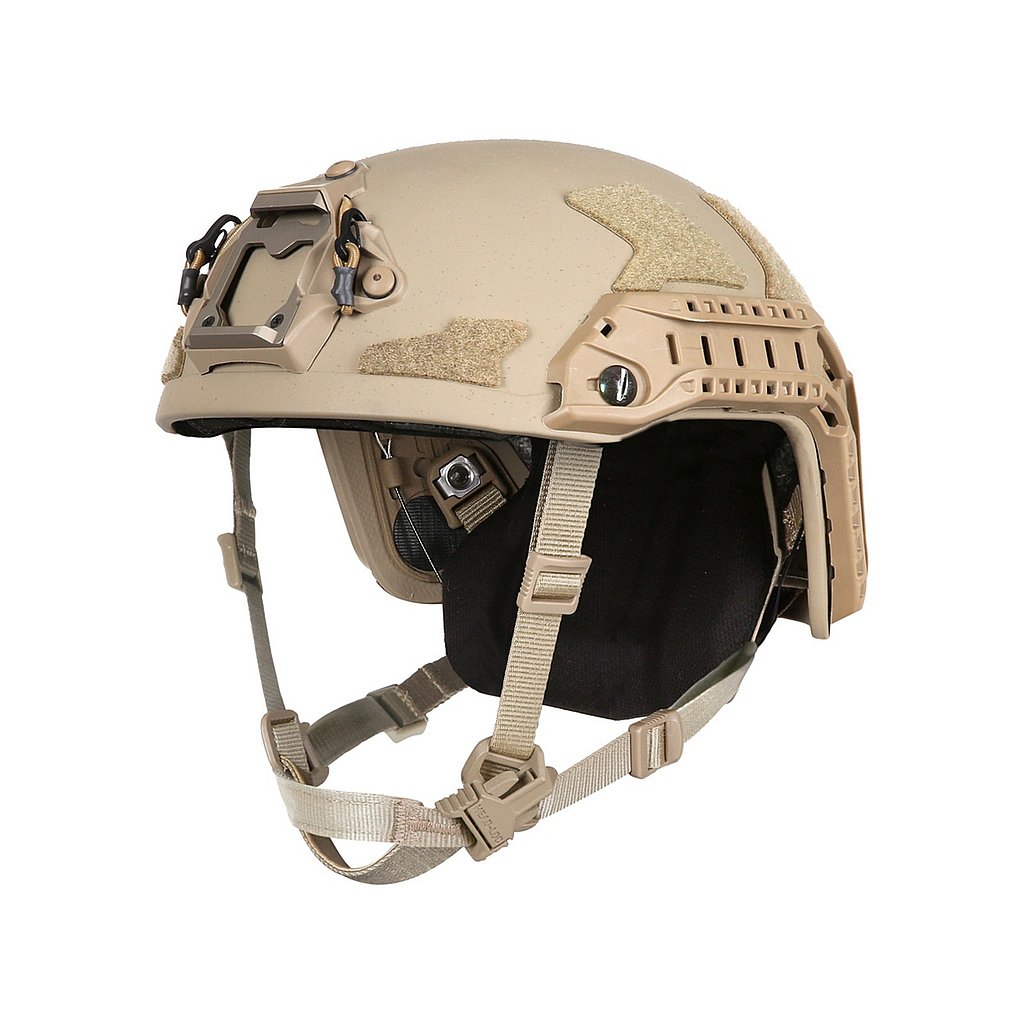
Ops-Core FAST SF Gen II Guide: Sizing, Weight, Protection and Setup
Ops-Core makes the FAST helmet, the high cut design most of the market has copied since. Ops-Core is part of Gentex Corporation, and its helmets are…
Ops-Core FAST SF Gen II vs PGD ARCH GEN3: Which High Cut Helmet to Buy
We carry two high cut ballistic helmets: the Ops-Core FAST SF Gen II and the PGD ARCH GEN3. Both are rated NIJ Level IIIA, both have…
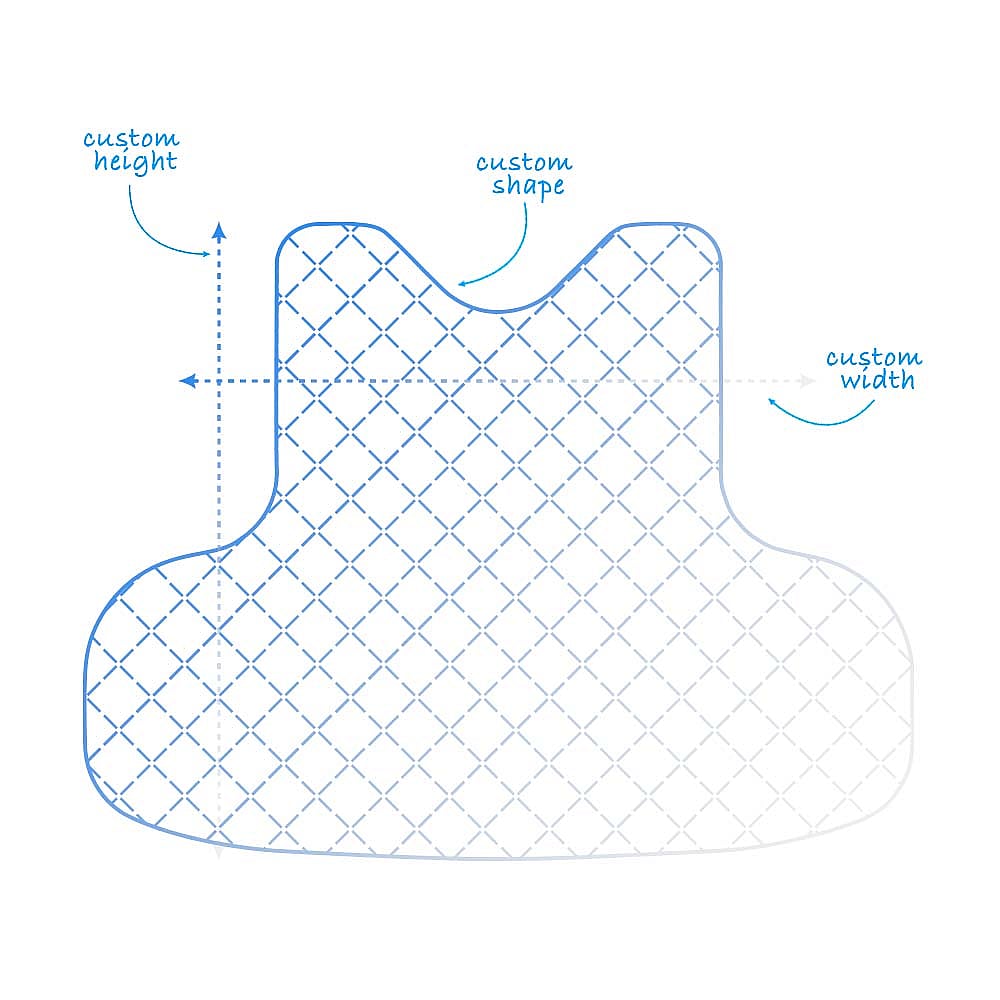
Custom Soft Armor: How to Get Inserts That Actually Fit Your Carrier
Most soft armor doesn't fit the carrier you actually own. Here's how our Custom Soft Armor program solves the fit problem and when to choose custom…