



Plate Carriers: The Complete Guide to Choosing, Configuring, and Setting Up Your Carrier
The complete guide to plate carriers. Anatomy, sizing, plate positioning, cummerbund setup, loadout building, mission profiles, break-in, and the setup mistakes we see every week. Over a decade of building plate carriers in Knoxville, Tennessee.
A plate carrier is the most important piece of tactical gear you will ever own. It holds your armor. It holds your mags. It is the platform everything else attaches to. A good one, set up right, disappears into the workflow and lets you focus on the task. A bad one, or a good one set up wrong, fights you every minute you wear it and exposes you to threats your armor should be stopping.
We are a family-owned shop that has been designing and manufacturing plate carriers in Knoxville, Tennessee for over a decade. In that time, we have built thousands of carriers for civilians, law enforcement, private security, and military. We have seen what works and what fails. We have watched customers solve problems they did not know they had, and we have watched people struggle with gear that looked right in photos but did not function in the field.
This is the complete guide to plate carriers. What they are, how they are built, how to pick the right one for your role, how to size it correctly, and how to set it up so it earns its place in your loadout. Everything you need to know before you buy, and everything you need to do to make the carrier work for you instead of against you.
What a Plate Carrier Actually Is (and Is Not)
A plate carrier is a load-bearing garment designed to hold hard armor plates on your torso. That is the core function. Everything else, the MOLLE webbing, the cummerbund, the pouches, the accessories, exists to support that primary function or to add capability around it.
What it is not: a tactical vest. The terms get used interchangeably in marketing and they should not be. A tactical vest may or may not carry armor. Many “tactical vests” sold on the civilian market are load-bearing vests with MOLLE but no armor capability at all. A plate carrier is specifically designed around hard armor plates, with dedicated plate pockets sized for SAPI-standard or proprietary plate dimensions.
What it is also not: a chest rig. A chest rig is a front-mounted load-bearing platform that carries gear across your chest without armor. If you need armor, you need a plate carrier. If you do not, a chest rig is lighter and easier to work in. For the full breakdown on that distinction, read our Chest Rigs Guide.
The Three Functions a Plate Carrier Must Perform
Hold armor in the correct position. Plates have to cover the organs they are designed to cover. A plate sitting two inches too low leaves the upper chest and great vessels exposed. A plate sitting too high pushes into your chin and compromises mobility. The carrier is the structure that keeps the plate where it needs to be during every motion you make while wearing it.
Distribute load across your torso. A loaded plate carrier runs 20 to 30 pounds. That weight has to ride on your torso in a way that lets you move, breathe, and sustain wear for hours if the role requires it. Bad load distribution multiplies fatigue and causes real injury over time. Trapezius strain, lower back pain, and nerve impingement at the shoulder are common consequences of carriers that load the shoulders instead of the torso.
Support the gear attached to it. Mag pouches, IFAKs, radios, hydration, admin pouches, lights. Everything you attach has to stay where you put it, accessible when you need it, secure when you move. A carrier with loose MOLLE webbing, flimsy attachment points, or unreliable hardware fails at this core function regardless of how the armor portion works.
Everything else is decoration. If the carrier does these three things well, it is a good carrier. If it does not, no amount of features, branding, or aesthetic choices makes up for the failure.
Anatomy of a Plate Carrier
Learn these terms. They come up in every spec sheet, every review, every conversation with someone who knows gear. Understanding the anatomy makes everything else in this guide make sense.
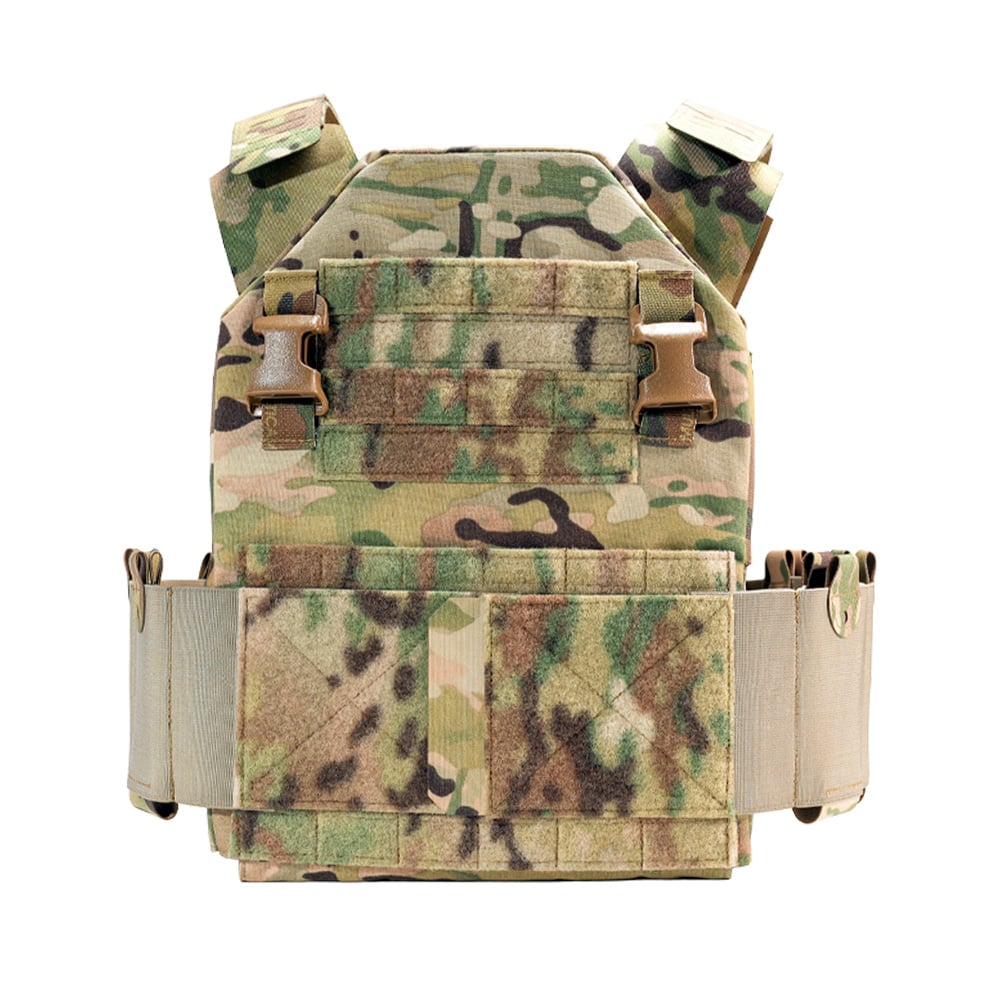
Front Plate Bag
The main pocket on the front of the carrier holding the front hard armor plate. Construction varies. Most use a top flap secured by velcro or a buckle, which allows plate insertion from above. Some use a zip entry on the side for cleaner aesthetics. Some use a hybrid with both.
The inside of the front plate bag often has a secondary pocket behind the hard plate position. This is the soft armor pocket, designed to hold a soft armor insert that provides IIIA protection behind or around the hard plate. Not every carrier has this, and some treat it as optional with a separate soft armor compartment.
Quality indicators on the front plate bag: reinforced stitching at stress points, clean edges on the fabric, no exposed raw nylon, plate-stop elastic or velcro to keep the plate from shifting inside the pocket, and a closure system that stays closed under aggressive movement.
Back Plate Bag
Same function as the front, but for the rear plate. The back plate bag often has an integrated drag handle sewn into the top, which is critical in a real medical emergency. A teammate or responder working on you may need to drag you out of a dangerous area while you are unconscious or unable to assist. The drag handle makes that physically possible without compromising spinal protection.
Check the drag handle stitching regularly. It is passive gear until you need it, and like all passive gear it gets ignored during inspection. A drag handle with failing stitching will separate from the carrier the moment real load is applied to it.
Soft Armor Pocket
Located behind the hard plate pocket in most carriers. Holds soft armor that provides IIIA protection at a lower weight than hard armor, covers edge shots that miss the hard plate, and protects against handgun threats that may be more common than rifle threats in the wearer’s realistic scenario.
Soft armor sizing matters here. A soft armor panel sized for one carrier may not sit correctly in another. This is one of the most common reasons we build custom soft armor at Midwest Armor. If your soft armor does not fit your carrier’s pocket correctly, it will bunch, gap, and fail to provide the coverage you paid for. The Custom Soft Armor program solves this by building panels sized to your specific carrier.
Shoulder Straps
Connect the front and back plate bags over your shoulders. Can be fixed length (attached via buckles or direct stitching at a set position) or adjustable (with webbing and ladder locks allowing length changes).
Padding varies. Some shoulder straps are integrated into the plate bag itself as a single continuous piece. Others are separate pieces that attach via hardware. Padded versions with mesh and foam improve comfort significantly for extended wear. Unpadded versions are lighter but hurt after 30 minutes under load.
The attachment hardware matters as much as the straps themselves. ITW, Duraflex, and similar American-made buckles hold up under load and cold weather. Cheap plastic hardware cracks in cold temperatures and fails under aggressive movement. Our carriers use American-made hardware throughout for exactly this reason.
Cummerbund
The band wrapping around your torso, connecting the front and back plate bags at the sides. Three main construction types:
Elastic cummerbunds use a stretch panel across the entire width. Light, breathable, flexes with your body during movement. Easy to don and doff. Can lose tension over years of use but works well for most wearers.
Hybrid cummerbunds have an elastic center section with solid ends. The elastic gives you the flexibility of full elastic, while the solid ends provide a stable mounting surface for pouches and side plate pockets. Our default cummerbund design on most carriers.
Rigid cummerbunds use structured material throughout. Most secure for heavy loads and side plate use. Less flexible and can be uncomfortable for extended wear.
The cummerbund is the most overlooked piece of the carrier and the source of most setup problems. We will return to it in the setup section.
Side Plate Pockets
Some cummerbunds include pockets for side plates that cover the kidney and underarm areas. Side plates are smaller than front and back plates, typically 6×8 inches, because they are protecting a smaller cross-section of the torso. Side plates are optional on most civilian setups but mandatory in certain military and LEO roles.
Before committing to side plates, honestly evaluate whether your threat profile justifies the additional weight. Two side plates can add 4 to 6 pounds to the carrier, which compounds with the rest of the loadout. For many civilian defensive scenarios, IIIA soft armor in the cummerbund provides handgun protection to those areas without the rifle-stopping capability or the weight penalty.
MOLLE and PALS Grids
The 1-inch webbing rows stitched in a 1.5-inch ladder pattern across the front, back, and sides of the carrier. This is the attachment system. Pouches, placards, and accessories attach to the MOLLE grid via straps that weave through the webbing and secure on the back side.
Newer carriers use laser-cut MOLLE, which punches the attachment slots directly into a laminate material instead of using sewn webbing. Laser-cut is lighter, lower profile, and often more durable over long-term use because there is no stitching to fail. Traditional webbing is more forgiving for older or off-brand pouches whose strap geometry does not match newer laser-cut spacing exactly.
For the full breakdown on how MOLLE and PALS work, what the attachment patterns are, and how to mount pouches securely, read our Complete MOLLE and PALS Guide.
Loop Velcro Fields
Hook-and-loop panels on the front flap, the back flap, or both. Used for identifiers (medical, blood type, name tape), unit patches, ID flags, and velcro-backed placards that can carry mag pouches or admin pouches.
Quality velcro matters. Budget carriers often use thin velcro that loses grip after a few dozen cycles. Quality velcro maintains grip for the life of the carrier. When testing a carrier, cycle the velcro several times and check whether it still holds firmly.
Drag Handle
Sewn into the top of the back plate bag. Critical piece of gear in a real medical emergency, often ignored in setup because it is passive. Check yours for stitching integrity before you need it, and repeat the check on your quarterly inspection schedule.
Plate Carrier Categories
Not all plate carriers serve the same role. Four main categories cover the market, and picking the category first narrows the selection significantly.
Minimalist Carriers
Low-profile carriers designed around plates and minimal gear. Limited MOLLE real estate, lightweight construction, fast to don and doff. Often used without cummerbund-attached accessories, relying on a thin cummerbund or a simple waist strap.
Best use case: home defense setups where the priority is grabbing a ready-to-go loadout quickly at 2am. Concealed wear under a jacket. EDC truck-gun backup armor. Short-duration defensive scenarios where full tactical loadout is neither practical nor necessary.
Trade-offs: limited capacity for accessories, less support for long-duration wear, minimal soft armor capability. A minimalist carrier is not the right choice if you plan to run a full combat loadout with radio, admin, multiple mags, and medical on the carrier itself.
\r\n\r\n\r\n\r\nOur pick in this category is the Leap Plate Carrier Base, a lightweight, adaptable platform built from USA materials that runs slick or scales up as you add gear. It is the foundation we point most home-defense and low-profile buyers to, and it is also offered as a Leap Starter Kit for a complete ready-to-run setup.
\r\nFull-Feature Tactical Carriers
Full MOLLE coverage front and back, hybrid or rigid cummerbund with side plate capability, multiple mounting options for placards and accessories, integrated shoulder padding, drag handle, and soft armor pockets throughout. Heavier than minimalist but configurable for any role.
Best use case: LEO patrol, tactical training, civilian defensive setups that need to cover a range of scenarios, and any role where the wearer will carry significant accessory loads on the carrier. Default choice for anyone who is not sure what category fits their needs.
Trade-offs: heavier than minimalist, slower to don, more complex to set up correctly. The complexity is usually worth it for the capability, but if your realistic use case does not require the full feature set, you are paying for weight you do not need.
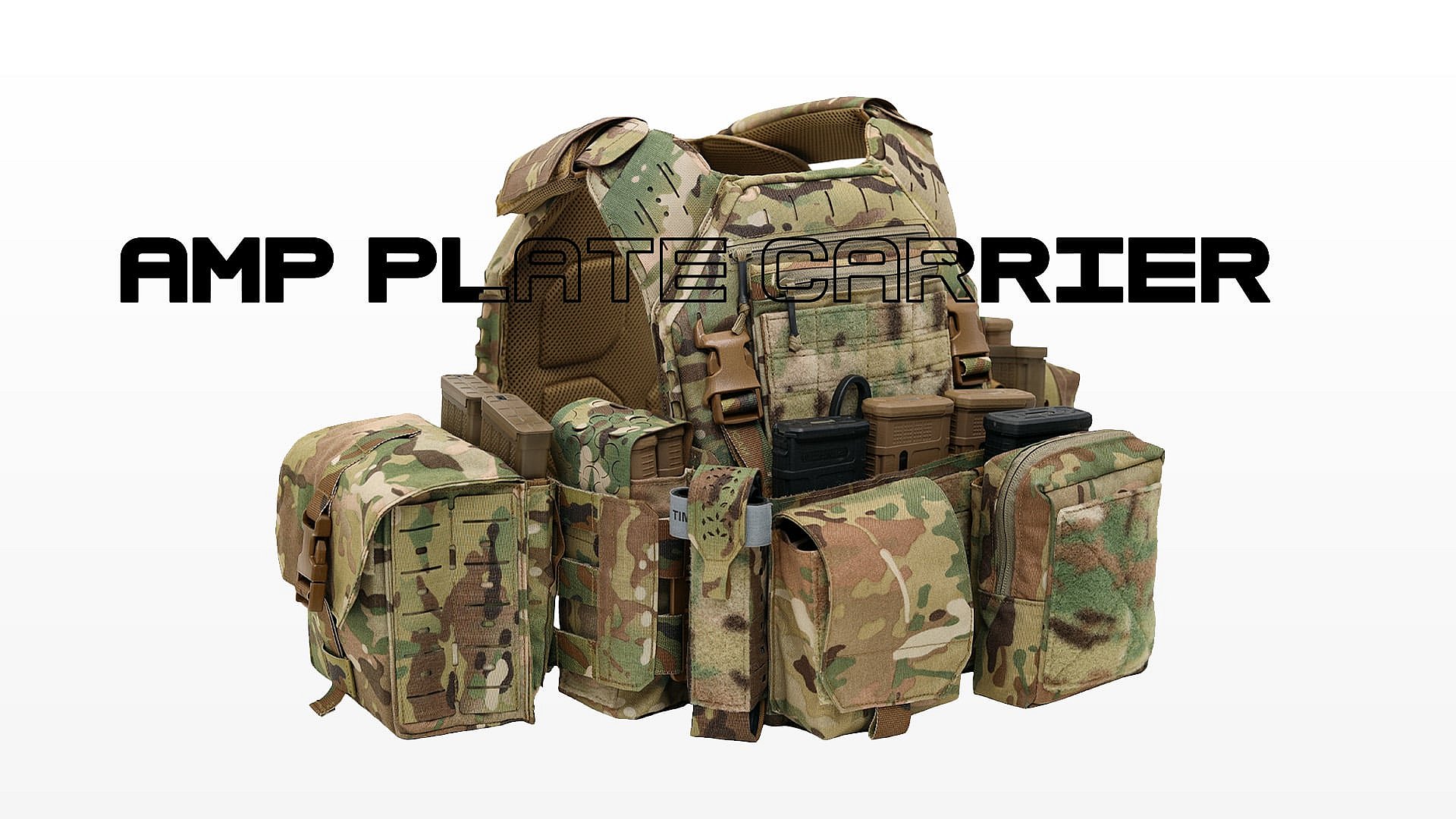
\r\n\r\n\r\n\r\nOur pick in this category is the AMP Plate Carrier. AMP stands for Adaptive Modular Plate, and the carrier lives up to it: a precision laser-cut platform with a retention elastic cummerbund for fast on and off, scalable from a worked-up tactical loadout down to a leaner setup. It is our default full-feature recommendation for LEO, training, and serious civilian defensive use.
\r\n CarriersDesigned to be worn under clothing. Typically soft armor only, though some accept thin hard plates like Level IIIA rigid inserts or low-profile Level III polyethylene plates. The design priority is discretion, so these carriers eliminate MOLLE, external hardware, and visible profile features.
Best use case: executive protection, undercover LEO, EDC under professional attire, concealed daily wear for civilians in elevated-risk professions. Different design priorities than external carriers. This guide focuses primarily on external plate carriers, but we build concealable soft armor configurations as well.
Custom Carriers
Built to specific body dimensions and mission requirements. For buyers whose proportions do not match standard sizing, whose role requires non-standard plate sizes, or who need coverage configurations that stock carriers do not provide.
We build custom carriers in Knoxville when standard sizing does not work. This is not exotic. It is a regular part of what we do. Broad-shouldered wearers, very tall wearers, very short wearers, women with proportions outside unisex sizing assumptions, and wearers with non-SAPI plate sizes are all common custom build scenarios.
If stock sizing does not work after honest testing, custom is the path. Contact us to start the conversation.
Sizing: Get This Right or Nothing Else Matters
Most plate carrier purchases that fail, fail at the sizing step. Not at the construction, not at the feature set, not at the brand. At sizing. A carrier that does not fit your body cannot be adjusted into working correctly, no matter how expensive or well-made it is.
Three measurements drive plate carrier fit: plate size, torso length, and chest circumference. Get all three right and your options narrow to carriers that will actually work for you. Get one wrong and you end up with gear that fits poorly regardless of price.
Step 1: Plate Size
Start here, because the carrier has to accommodate whatever plates you own or plan to buy. The common sizes follow the military SAPI standard:
- SAPI Small: 8.75 x 11.75 inches. Smaller adult builds, some women, younger wearers. Less common in civilian market but available.
- SAPI Medium: 9.5 x 12.5 inches. Workhorse size for adult males of average build. Most civilian and LEO setups use this size.
- SAPI Large: 10.125 x 13.25 inches. Taller or broader builds. Worth sizing up if you are 6 foot or taller and have the torso length to support the larger plate.
- SAPI Extra Large: 11 x 14 inches. Rare in civilian use, more common in military-issue loadouts. Requires long torso length and broad frame.
Beyond SAPI, two plate cut variations matter:
Shooter’s Cut and Swimmer’s Cut are the same nominal size as SAPI but with more aggressive shoulder and underarm cuts. The cutout geometry improves shoulder mobility for active shooting positions at the cost of slightly reduced surface area coverage. Preferred by shooters, trainers, and anyone who needs to shoulder a rifle repeatedly without the plate interfering.
Female-specific plates have shorter vertical dimensions and chest contouring to match female torso geometry. Still not widely available from all manufacturers, but increasingly offered by brands that actually fit women rather than assuming a male body curve.
Whatever plate you choose, it has to fit the carrier’s plate bag. Most carriers list which plate sizes they accommodate. If yours does not, measure the plate bag interior and compare to your plate dimensions before buying. A plate that is 1/4 inch too large will not seat correctly. A plate that is 1/2 inch too small will rattle.
Step 2: Torso Length
Measure from the suprasternal notch (the soft dip at the base of your neck, between your collarbones) down to your navel. Most adult males land between 16 and 19 inches.
This measurement drives two decisions. First, it tells you whether your torso length matches the plate you chose. A 16-inch torso with a SAPI Large plate means the plate will extend below your natural waist and bind into your hips or duty belt. A 20-inch torso with a SAPI Medium plate means the plate will not cover your lower torso the way it should.
Second, it tells you whether standard carrier sizing will work. Carriers are built assuming a torso length that matches the plate they accommodate. If your torso is significantly longer or shorter than the assumed length for your plate size, standard carriers will fit poorly regardless of chest circumference. This is often the tell that custom sizing is the right path.
Step 3: Chest Circumference
Measure around the widest part of your chest, under your arms, with a T-shirt on (nothing bulky, no jacket). This determines cummerbund length.
Every carrier has a range it accommodates via cummerbund adjustment. Our carriers cover S, M, L, XL, and XXL in standard sizing, with approximate chest ranges:
- Small: 34-38 inch chest
- Medium: 38-42 inch chest
- Large: 42-46 inch chest
- Extra Large: 46-50 inch chest
- XXL: 50-54 inch chest
If your chest falls outside these ranges, or if your chest-to-torso proportion does not match the assumed curve within a size band, standard sizing will fit poorly. Custom is the answer.
When Standard Sizing Does Not Work
Standard plate carrier sizes are designed around assumed adult male body curves. Broad-shouldered, narrow-waisted, tall, short, female, and every body type that falls outside that assumption ends up with fit compromises that cannot be solved by adjustment.
Common scenarios where custom is the answer:
- Very tall torsos (20+ inches). Standard carriers leave the lower torso exposed or run the plate into the belt line.
- Very short torsos (under 15 inches). Standard carriers extend below the natural waist and interfere with duty belts or hip movement.
- Broad chest with narrow waist. The carrier that fits your chest floats at the waist, or the carrier that fits your waist will not close at the chest.
- Women’s proportions. Most carriers are built around male geometry. Female-specific sizing helps but does not cover the full range of female body types.
- Very large builds (6’5″, 280+ lbs). Even XXL stock sizing leaves exposed zones at the lower torso or sides.
- Very small builds (5’1″, 110 lbs). Small stock sizing is still too large, with panel edges that protrude past the shoulders or obstruct movement.
- Post-surgery or asymmetric proportions. Bodies recovering from injury or with medical variations often need custom cuts to accommodate asymmetry.
If you have been fighting fit problems across multiple stock carriers, custom is probably the right answer. The cost difference is real but so is the usability difference. Armor you do not wear does not protect you, and a carrier that fits poorly is a carrier you will stop wearing.
Plate Positioning: The Single Most Important Setup Rule
If you learn nothing else from this guide, learn plate positioning. Most plate carriers we see in the wild have the front plate set too low by two to three inches. That mistake costs lives.
Where the Front Plate Should Sit
The top edge of your front plate should sit at your suprasternal notch. Put your finger on the soft dip between your collarbones at the base of your neck. That is where the top of your plate should land when you are standing upright.
Why? Because above the suprasternal notch, you are into the great vessels (carotid arteries, jugular veins) and the trachea, which armor cannot practically cover. Below it, you move into the chest cavity where the plate protects the heart and the upper lung fields. If the plate sits at or just above the suprasternal notch, it covers the vital organs you can protect. If it sits two inches lower, the upper part of your heart and the great vessels above it are exposed.
Why People Get This Wrong
Because a plate sitting at the correct height feels strange at first. It rides higher than you expect. When you tilt your head down, you feel the top edge against your chin. This is not a problem. You adjust. The alternative is setting the plate at a position that feels comfortable, which pushes it down into coverage territory that matters less while exposing the upper chest zone that matters most.
This is the most dangerous setup mistake because it is silent. You cannot feel that your plate is in the wrong place. You have to know where it should be and check. Reach up with the carrier on and feel where the top edge is. If it is more than one finger-width below your suprasternal notch, raise it.
Back Plate Position
The back plate should mirror the front. Top edge roughly at T4 or T5 vertebrae, which corresponds to the spot directly behind the suprasternal notch. If the front is set correctly and the shoulder straps are symmetrical, the back plate should land in the right position automatically.
Check by having someone else look at the back of your carrier while you stand upright. The top edge should be level, neither riding up into the neck nor dropping below the shoulder blades. If the back plate is too high it will push into your neck when you look up or when you are prone. If it is too low, your lower back is exposed and the carrier will tend to sag at the rear, pulling the front up off your body when you lean forward.
Side Plate Position
If you run side plates, they should sit snugly in the cummerbund without gapping at the top or bottom. The side plate covers the kidney and underarm vessels on either side. Vertically, they should align roughly with the lower half of the front plate.
Most side plates are 6×8 inches because they protect a smaller cross-section than front and back plates. Make sure your cummerbund is actually holding the side plate snug. Loose side plates rattle and slide, and a sliding plate is not providing reliable coverage.
Shoulder Straps and Load Distribution
Shoulder straps carry the vertical load of your carrier. The goal is to get the carrier sitting on your torso, not hanging from your shoulders. Those are two different things and the distinction matters.
A carrier that hangs from the shoulders puts all the downward load into your trapezius muscles. You feel this after 30 minutes as hot spots and a dull ache across your upper shoulders. A carrier that sits on the torso uses the cummerbund to bear the load, and the shoulder straps only keep the plates aligned vertically.
Adjustment Procedure
Put the carrier on with plates in. Tighten the cummerbund to working tension (covered in the next section). Then adjust the shoulder straps so the plates sit in position and the straps are snug but not pulling down into your shoulders.
Too loose and the carrier flops when you move. Plates ride up and down when you run. The front plate can lift off your chest when you jump or go prone. Too tight and the straps dig into your trapezius. Your arms feel restricted, especially when you reach overhead. Shoulder straps that are digging at rest will be unbearable after an hour of movement.
The sweet spot: you can slide two fingers between the shoulder strap and your shoulder without forcing it, but the strap is not lifting off your shoulder when you move.
Padding Decisions
Shoulder pads are useful in specific situations and unnecessary in others. If you are wearing the carrier for extended periods (over 2 hours), carrying heavy loads, or dealing with shoulder pressure from other gear like a pack, shoulder pads reduce fatigue meaningfully. If your carrier is dialed in correctly and you are doing short-duration wear (home defense ready-up, range sessions, short patrol), shoulder pads are optional and can add unnecessary bulk.
Most of our carriers accept aftermarket shoulder pads without modification. Test before committing. Pads that sit in the wrong position can actually increase pressure points rather than reducing them.
Cummerbund Tension
The cummerbund is what holds the carrier to your body. It is not just a closure. It is a critical piece of load-bearing equipment and most people set it wrong.
The Flat Hand Test
Stand upright with the carrier on and plates in. Slide a flat hand (palm flat, fingers together) between your stomach and the front of the carrier. You should be able to fit the flat hand in with moderate resistance, but not be able to make a fist between your body and the carrier.
Too loose: you can fit a fist. The carrier will rotate on your torso when you twist. Side plates will gap. Soft armor will bunch. The front plate will swing forward when you lean forward. This is the most common setup error on elastic cummerbunds.
Too tight: you cannot slide a flat hand in without forcing it. Your breathing is restricted, especially when you exert yourself. Your ribs will hurt after 30 minutes. On hybrid or rigid cummerbunds, too-tight tension cuts into your lower ribs and obliques.
Even Front-to-Back Tension
Cummerbund tension should be symmetrical. If the right side is tighter than the left, the carrier will pull off-center and your plates will not sit square. Check by having someone look at you from directly in front and from behind. The carrier should be centered.
Some cummerbunds adjust at both ends, some only at one. Know which you have. If yours adjusts only at one end, you set tension by how much webbing you pull through at that single point. Mark the working length once you have it dialed, so you can repeat it.
The Cummerbund Gap Problem
Here is something most plate carrier companies do not talk about. Even a well-adjusted cummerbund often leaves exposed gaps at the sides of the torso, between the edge of the front plate bag and the edge of the back plate bag. If you are running soft armor inside the cummerbund, the soft armor often does not fully cover this gap either.
This is a real coverage problem. The side torso contains the kidneys, liver, spleen, and major vessels. Those are organs you want protected. Standard cummerbund soft armor panels are usually cut to a single standard size that does not fill the gap on all carriers.
For our Sentry and Lancer carriers we offer pre-sized cummerbund side armor panels (see the Sentry set and Lancer set) that close this gap directly. For other carrier brands, we build custom cummerbund panels sized to eliminate the gap on whatever carrier you own. If you have never checked your cummerbund for this gap, do it now. Most people are surprised.
Loading Out the Carrier
Now you have a carrier that fits and plates in the right position. Time to load it. MOLLE layout is strategy, not decoration. Three principles drive every good layout.
Accessibility tier. Items you need fastest go closest to your dominant hand and in predictable positions. Items you need less often go in less accessible spots. Items you need rarely but critically (like a tourniquet) go in a standardized location so anyone trained can find them on your body.
Weight balance. The left side and right side of your carrier should carry approximately equal weight. Put too much on one side and you will fatigue asymmetrically. The front and back should balance to avoid a rocking motion when you move. A front-heavy carrier pulls you forward and tires your lower back.
Predictability. Your layout should be muscle memory. In a high-stress moment, you should be able to reach for any piece of gear without looking. This means fixed positions for fixed items. The same things always go in the same places.
Front Panel Layout
The front panel is prime real estate. Heavy-use items only. Center position for primary mags, support-hand side for admin or a third mag, dominant-hand side for a light or small utility pouch.
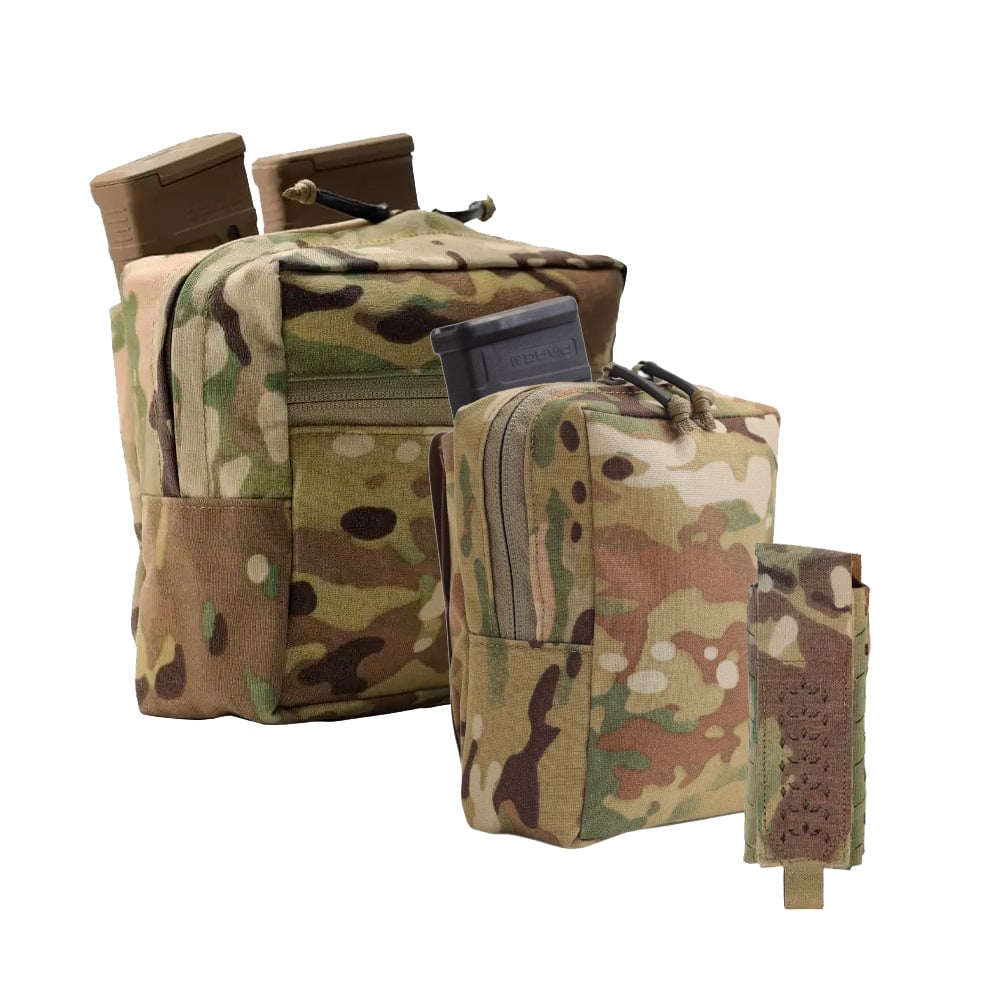
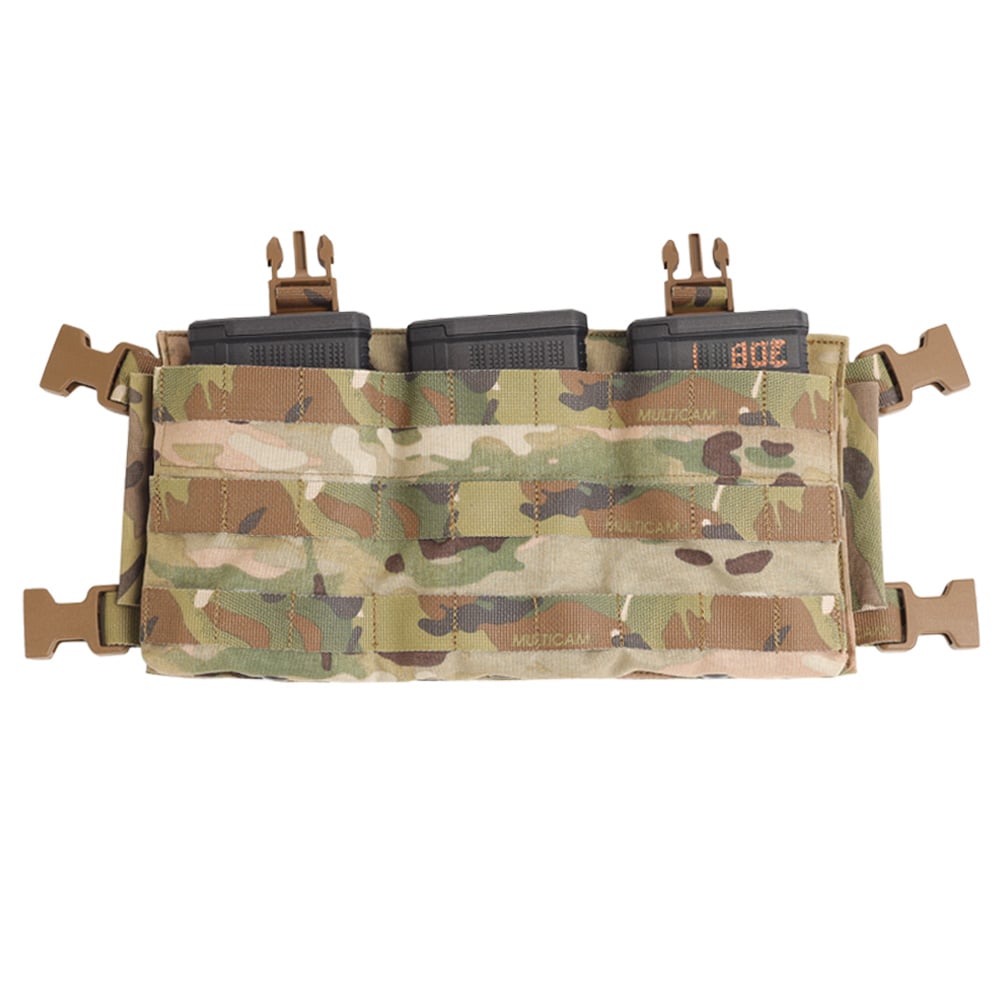
For most setups, our GP Double Mag Pouch in the center position handles primary mags cleanly. For heavier loadouts, the MOLLE Triple Mag Front Placard gives you three mags in a purpose-built panel. For smaller configurations, a single mag plus admin works. Full breakdown in our Pouches Guide.
Common front panel mistake: loading every inch of MOLLE real estate with accessories you think you might need. This adds weight you will carry all day for gear you might use once. The better rule: if you have not used it in the last two range sessions or training exercises, it does not belong on the carrier.
Back Panel Layout
The back panel is for items someone else needs to reach on your body, and for bulk items you do not need to grab yourself.
The primary item on the back panel is your Medical Access Kit (MARK). High center back, with a pull-tab. Standard across military, LEO, and tactical civilian communities. This is where trauma aid lives. If you go down, the person working on you reaches for the back of your carrier and pulls. Standardization matters here. Your placement should match the convention your partners or team train on.
Secondary back panel items: hydration bladder (full width, center back), document pouch or folded map on a rear placard, specialty bulk items that do not need frequent access. The back panel is passive real estate. Do not clutter it with small items that will never be accessed. Keep it purposeful.
Cummerbund Layout
The cummerbund surfaces are great for items you need to reach with either hand without crossing your body.
- Radio pouch: non-dominant side. Your non-dominant hand operates the PTT or volume, keeping your dominant hand on your weapon.
- Knife or tool: dominant side. Quick access for cutting a seatbelt, webbing, or working a mechanism.
- Secondary magazines: on the cummerbund if your front panel is full. This is where your third and fourth mags go when you need that many.
- Dump pouch: rear or non-dominant side. For empty mags, casings, or items you grab and stash fast.
Do not over-load the cummerbund. The cummerbund holds the carrier to your body, and every pouch on it adds weight that has to be supported by the elastic or hybrid material. Too much weight on the cummerbund causes it to sag and the carrier to shift during movement.
Soft Armor and Hard Plates
Most modern plate carriers run a hard plate (Level III or IV for rifle protection) backed by soft armor (Level IIIA for handgun protection and edge-shot coverage). The combination covers the full realistic threat envelope for civilian and LEO use.
Hard plates are selected based on threat match. Level III stops most common rifle rounds including 7.62 NATO FMJ. Level IV stops armor-piercing rifle rounds including .30-06 M2 AP. For most civilian and LEO applications, Level III is sufficient. Level IV is the right call when AP rifle fire is in your threat model.
Soft armor backs the hard plate and covers edge shots. Our in-house MASS and MASS Air soft armor is tested to NIJ 0101.06 Level IIIA. MASS is Kevlar-based, MASS Air is Honeywell-based. Both American made, both built in Knoxville, both designed to provide handgun protection behind or alongside hard plates.
For customers needing formally NIJ-certified panels, we also build with Onyx and Slate certified material, both American-sourced. The distinction between tested-to-standard and formally certified matters in some regulatory contexts (specific agency purchases, certain state requirements). We can help walk you through which path matches your requirements.
For the full breakdown on armor levels, threat matching, and material selection, read our Body Armor Guide. For custom-fit soft armor when standard sizing does not work with your carrier, see our Custom Soft Armor program.
Mission Profile Setups
The same carrier can be set up in different configurations depending on use. Five common profiles cover most real-world setups.
Profile 1: Home Defense
Priorities: fast donning, light weight, minimal loadout. You will likely be wearing this over pajamas at 2am with adrenaline making your hands clumsy. Simpler is better.
- Plates and soft armor in place
- One IFAK on the back panel
- One mag pouch with a loaded mag on the front (single or double)
- A light in an accessible pocket
- Admin pouch with house keys and phone charger cable
Skip the extra mags, the radio, the dump pouch. Keep it to what you need in a house-clearing or barricade scenario. Total loaded weight: around 15 to 20 lbs with plates. Donning time target: under 20 seconds from stand to ready.
Profile 2: Range and Training
Train with the loadout you plan to carry. If your operational setup is three mags, train with three mags. If you run a radio, train with a radio. The carrier you learn in becomes the carrier you fight in.
One useful variation: train at least occasionally with a heavier loadout than your normal setup. If your operational carrier runs 20 lbs, spend a training session at 28 lbs. You will feel what fatigue does to your shot placement and your movement, and your baseline loadout will feel light by comparison.
Range layout: three mags up front (triple placard or double plus single), IFAK on back, admin pouch for ear pro and spare batteries, hydration for longer sessions. Optional chest rig layered over for additional mag capacity if running extended drills.
Profile 3: LEO Patrol
Typical setup for an external-carrier patrol officer:
- Plates and soft armor (usually IIIA soft with ICW hard plates for rifle response)
- Three rifle mags on the front
- IFAK on the back, standardized with your unit’s convention
- Radio on the non-dominant side of the cummerbund
- Cuffs, OC spray, and admin items on the cummerbund or duty belt depending on department setup
- Shoulder pads for all-shift wear
Check your department’s load-out regulations. Some agencies have specific requirements about identifier visibility, tourniquet placement, and unit patches. Departmental SOP governs the specifics. The general principles apply regardless.
Profile 4: Military and Tactical
Military loadouts vary widely by role and this guide cannot cover them all. The principles still apply: balance, predictability, mission-specific accessory choices, and proven placement for anything another team member might need to access on your body.
If you are in a unit, your SOP drives your setup more than this guide does. If you are a contractor or building a civilian setup inspired by military gear, apply the same discipline: only gear that earns its place, standardized medical placement, mission-specific configuration over aesthetic choices.
Profile 5: Private Security and Executive Protection
Often runs concealable or low-profile external carrier under professional attire. IIIA soft armor for handgun threats is typical. Minimal accessories, usually just admin and a concealed mag carrier. Some EP roles add rifle-rated plates in a separate quick-don vehicle-stored carrier for elevated threat response.
The design priority for EP carriers is discretion. No visible MOLLE, no tactical aesthetics, quiet operation (velcro closures are noisy, buckle closures are quieter). For clients requiring concealability, we build concealable soft armor configurations designed to sit invisibly under clothing.
Women and Plate Carrier Fit
Most plate carriers are built around assumed male torso geometry. Narrower shoulders, shorter torso, different chest profile, wider hip-to-waist taper, and different weight distribution make standard “unisex” sizing a compromise for most women.
Common fit issues women experience with standard carriers:
- Plate sits too high at the neck because the carrier assumes a longer torso
- Plate edges protrude past the shoulders because the carrier is sized for broader male geometry
- Cummerbund does not accommodate the chest-to-waist taper common in female bodies
- Soft armor panels sized for male chest geometry bunch or gap when worn by women
- Shoulder straps rub or slide because they are spaced for male shoulder width
A few manufacturers build female-specific stock carriers. These are an improvement over unisex but still built around assumed averages within the female population. Individual variation is just as wide among women as among men, and stock female sizing does not fit everyone.
For women whose proportions fall outside stock female sizing, custom is the reliable path. We build custom carriers sized to female body geometry regularly. Contact us to discuss what you need.
Vehicle Storage and Go-Bag Considerations
If your carrier lives in a vehicle or go-bag between uses, storage conditions affect the gear.
Heat is the main concern. Vehicle interiors in summer regularly exceed 140°F. UHMWPE plates are heat-sensitive above 180°F. Storage in a hot vehicle can degrade plates over time. Aramid soft armor (Kevlar, Twaron) also degrades faster in heat. If you must vehicle-store, use a sunshade for the vehicle or keep the carrier in a floor bag or trunk rather than on a rear deck.
UV exposure is the second concern. Direct sunlight through a vehicle window accumulates over years. Store the carrier out of direct sun when possible. A simple cover (bag, jacket, blanket) mitigates UV exposure significantly.
Moisture is the third. Vehicle condensation, humidity in closed trunks, or rain exposure over time can reach the soft armor cover and compromise the fiber integrity. Check your soft armor cover for damage quarterly if vehicle-stored.
For go-bag setups stored indoors, these concerns are minimal. For vehicle-stored carriers, consider whether the armor you are storing is your primary armor or a secondary set you can afford to replace on a shorter cycle.
Break-In and Fit Testing
You have sized your carrier, set plate position, tuned shoulder straps and cummerbund, and loaded your MOLLE layout. Now do not take it out in the field yet. Break it in first.
Phase 1: Empty Wear (30 to 60 minutes)
Put the carrier on without plates and wear it around the house. Walk, sit, stand, bend over, reach overhead. Feel for any immediate pressure points, chafing spots, or things that poke.
Common empty-wear issues: cummerbund ends catching on clothing, shoulder strap rub points, velcro peeling off the carrier and onto your shirt.
Phase 2: Plates Only (1 to 2 hours)
Load plates into the carrier and wear it for 1 to 2 hours, moving around normally. No MOLLE gear yet, just the carrier and plates. You are testing how the plates sit and whether the shoulder strap and cummerbund adjustments hold up under load.
Watch for: plates shifting from their set position, cummerbund loosening over time, any hot spots that develop with weight that did not appear in empty wear.
Phase 3: Full Loadout (2 to 4 hours)
Now add your planned MOLLE gear and wear the full loadout for an extended session. If you can, do this during a range session or a training day. Real movement under load reveals fit problems that static wear will not.
Adjust anything that is not right. It is much easier to retune your setup during break-in than to discover problems in the field.
The 15-Minute Rule
If something on your carrier hurts at 15 minutes of wear, it will not get better at 2 hours. It will get worse. Hot spots, pressure points, and chafing get magnified by time, sweat, and movement. Fix them during break-in.
Our standard plate carriers and soft armor come with a 15-day fit test window. If the fit is not right after you have broken it in properly and adjusted it, you can exchange it for a different size or configuration within 15 days. This policy exists because fit is real and not every body matches standard sizing on the first try.
Common Setup Mistakes We See Every Week
Read this section even if you think you have your setup dialed. Most of these mistakes are invisible to the person making them until someone else points them out.
Mistake 1: Plate Set Too Low
The single most common setup error. People set the plate where it feels comfortable, which is usually 2 to 3 inches below where it should be. Result: exposed upper chest, exposed great vessels, exposed heart. Set the top edge of the front plate at your suprasternal notch, not below it.
Mistake 2: Front-Heavy Loadout
Three mags, admin pouch, IFAK, light, and a radio all on the front panel with an empty back panel. The carrier rocks forward when you move. The cummerbund sags at the rear. You fatigue unevenly. Move weight to the back panel. Hydration alone on the back will rebalance most front-heavy setups.
Mistake 3: Cummerbund Too Loose
Often combined with Mistake 1. A loose cummerbund lets the plate sag forward and down, which feels comfortable but exposes you. It also lets the carrier rotate on your torso when you twist, throwing off coverage during any fast movement. Apply the flat hand test. If you can make a fist between your body and the carrier, tighten it.
Mistake 4: Ignoring the Back Panel
The back panel is just as important as the front, not just for weight balance but for medical access. If you go down and a teammate or responder has to work on you, they will reach for the back of your carrier. If your MARK is not there, or not in the standardized position, they are wasting time looking. Set the back panel with the same care as the front.
Mistake 5: Mismatched Armor and Carrier
Running soft armor from one brand inside a carrier from a different brand. The soft armor does not fit the pocket correctly. It bunches, gaps, or sits wrong. This is one of the most common reasons we build custom soft armor. If your soft armor does not fit your carrier correctly, you have two options: exchange it for a matched set, or have custom panels built for your specific carrier. Running mismatched gear because it “mostly fits” creates coverage gaps you cannot see.
Mistake 6: Skipping Break-In
Buying a carrier, loading it up, and wearing it for the first time at a training day. Every fit problem you have shows up at the worst possible moment. Break in every carrier before you depend on it.
Mistake 7: Gear Creep
Every few months, adding one more pouch, one more accessory, one more tool, until the carrier has become a sum of bolted-on extras rather than a deliberately configured system. Twice a year, strip everything off and reload only what you have used in the last 90 days. Everything else comes off.
Maintenance and Inspection
A plate carrier is a piece of safety equipment. Treat it like one. A basic inspection routine extends the working life of your gear and catches problems before they become failures.
Weekly Visual Check
Look at high-wear points. Shoulder strap stitching. Cummerbund attachment points. The drag handle. Any visible wear in the Cordura or nylon outer shell. MOLLE webbing that is fraying. Velcro that has lost its grip. Zippers that are starting to stick.
Fixing small issues early is cheap. Ignoring them until a strap fails under load is expensive in ways you do not want to discover.
Monthly Cleaning
Wipe down the carrier with a damp cloth and mild soap. Pay attention to areas that collect sweat: the shoulder strap padding, the inside of the cummerbund, and anywhere the carrier rests against your body. Let it air dry completely before storing. Do not put it in a dryer. Heat damages the webbing and the velcro.
Soft armor inserts should be pulled out for cleaning every few months, wiped down, and reinserted. Do not machine-wash soft armor. The agitation and heat can damage the ballistic material. For more on soft armor maintenance and expiration, read our Soft Armor Expiration Guide.
Quarterly Deep Inspection
Pull plates and soft armor out. Inspect the plate pocket interior for wear. Check the soft armor for delamination, unusual stiffness changes, or visible damage to the cover. Re-seat everything and confirm nothing is damaged.
Also a good time to re-evaluate your loadout. Has it drifted from what you actually use? Strip and reload.
When to Replace
Hard plates: 5 to 10 years depending on composition. Check manufacturer guidance for your specific plates.
Soft armor: Typically 5 to 7 years from manufacture date, printed on the label. Aramid-based soft armor (Kevlar, Twaron) can degrade faster if exposed to UV, moisture, or extreme heat. Store in a cool, dry place out of direct sunlight.
Carriers: No hard expiration. Inspect regularly and replace when you see structural wear. A carrier that has lived a hard life for a decade may need retirement. A lightly-used carrier can last much longer.
Warning signs that demand immediate replacement: delamination, visible damage to the ballistic material cover, webbing that is fraying through, structural failure at stitch lines, significant stiffness change in soft armor, or any impact damage to hard plates including cracks, dents, or ceramic fracture lines.
Construction and Materials
Quality carriers are built from specific materials in specific ways. Here is what to look for when evaluating construction.
Cordura Weight
500D and 1000D Cordura are the two common weights for tactical nylon. 500D is lighter and more flexible, good for minimalist carriers or concealable setups. 1000D is heavier and more durable, the default for full-feature tactical carriers that will see aggressive use.
American-sourced Cordura from brands like Invista carries better consistency than imported nylon labeled as “Cordura-equivalent.” The difference shows up in abrasion resistance, UV stability, and color retention over time.
Stitching Quality
Stitching is where cheap carriers fail first. Look for tight, even stitch spacing, reinforced box stitching at stress points (shoulder strap attachments, cummerbund attachments, drag handle), and heavy-duty thread that matches the load the stitching is meant to bear.
Our carriers are sewn on our machines in Knoxville by our team. Every carrier is inspected before it ships. This is different from production-line carriers built on automated machines with inconsistent quality control.
Hardware
Buckles, ladder locks, and webbing hardware should be American-made from brands like ITW or Duraflex. These hold up under load, in cold weather, and under repeated cycling. Cheap plastic hardware cracks in cold temperatures and fails under aggressive movement.
Berry Compliance
Berry Compliance means the product meets the Berry Amendment requirements for Department of Defense procurement, which effectively means all components (fabric, thread, hardware, labor) are sourced and manufactured in the United States.
Why it matters: Berry Compliance is a guarantee of American supply chain integrity. Our plate carriers, chest rigs, pouches, and other nylon gear are Berry Compliant end to end. Cordura, webbing, thread, and hardware all American-sourced, all assembled in Knoxville. The hard plates and soft armor that go inside the carrier sit outside the typical Berry Amendment scope because ballistic materials are generally not Berry categories, so those components are sold as American-made rather than Berry Compliant. For buyers with specific procurement requirements on the ballistic side, we can walk through which components carry what level of documentation.
Our Complete Plate Carrier Lineup
See the full plate carrier catalog at midwestarmor.com/product-category/plate-carriers. Standard sizing from Small to XXL, specialty cuts, and custom builds. All designed and manufactured in Knoxville from Berry Compliant materials.
Every carrier ships with our 15-day fit test window. If the fit is not right after proper break-in and adjustment, exchange for a different size or configuration. The goal is a carrier that works for you, not one that technically fits the size chart.
Deep Reading
- How to Set Up a Plate Carrier: The Complete Guide to Fit, Load, and Real-World Use
- How to Choose the Right Body Armor
- Custom Soft Armor Ballistic Inserts
- Level IIIA vs Level III vs Level IV: What Each One Actually Stops
- Soft Armor Expiration Dates: What They Actually Mean
- Tactical Pouches: The Complete Guide
- Tactical Chest Rigs: The Complete Guide
- The Complete MOLLE and PALS Guide
Questions? We Answer Them
If you are setting up a new plate carrier and want help with fit, plate selection, loadout, or custom sizing, reach out. Text us at 865.859.9850 or email support@midwestarmor.com. Tell us what you are running it for, what your body looks like, and what threats are in your match. We will walk you through the right configuration.
Related Guides
- How to Size a Plate Carrier: Fit, Plates, and Common Mistakes
- SAPI Cut vs Shooter’s Cut vs Swimmer’s Cut
- Plate Carrier Loadout: What to Actually Put on Your Carrier
- How to Choose the Right Body Armor
Over a decade of doing this in Knoxville means we have seen most of what comes up. We will steer you right, even if the answer is that a standard carrier from us is the right call, or a custom build is worth the wait, or a chest rig without armor actually fits your use case better than a plate carrier at all. Our job is to get you into the right gear, not the most expensive gear.
FAQ
A typical civilian or LEO setup with plates, soft armor, 3 mags, an IFAK, a radio, and a few accessories runs 22 to 28 pounds. A minimal home defense setup with plates and a couple of accessories is 15 to 20 pounds. Military and tactical loadouts can easily hit 35 pounds or more. The lighter your plates (polyethylene vs steel), the more budget you have for accessories. See our deep dive on whether steel body armor is still worth it for the full case on why we recommend polyethylene or ceramic over steel for personal armor.
Depends on your threat and your role. Military and some LEO roles require side plates. Most civilian defensive setups skip them because the kidney and underarm areas are less commonly struck in defensive scenarios, and side plates add meaningful weight. A good middle ground is running a IIIA soft armor cummerbund without hard side plates, which adds handgun protection to those areas without the weight penalty.
Yes. A moisture-wicking undershirt reduces chafing, absorbs sweat, and extends the life of your carrier by keeping salt and moisture off the interior surfaces. Cotton is acceptable but holds moisture; synthetic athletic material performs better. Avoid wearing the carrier directly against skin for anything longer than a ready-up.
Yes, and many LEO patrol setups do. The carrier rides above the belt, and the cummerbund sits on the natural waist. Load your carrier with rifle mags and your belt with pistol mags, cuffs, and handgun accessories, so they do not compete for space. Make sure the carrier does not block access to your duty belt items.
Usually one of two things. Cummerbund is too loose, so the carrier lifts off your torso when you move. Or the shoulder straps are set too short, which pulls the carrier up. Check the cummerbund first. Flat hand test. If the cummerbund is right and it still rides up, lengthen the shoulder straps slightly.
Most common cause: you gained or lost weight, or you switched what you wear underneath. A change of even 10 pounds changes your circumference and cummerbund fit. Adjust cummerbund tension first. If the straps still feel off, recheck plate position. If you switched from a summer T-shirt to a winter base layer, you may need more cummerbund length to accommodate the bulk.
Yes, but the weight and feel will be different. For dry practice and skill drills, running empty is fine. For anything involving movement and mag changes, run it loaded with either your actual plates or training weights equivalent to your plates. Your body learns different mechanics under load, and skipping the weight in training means you will move differently in real conditions.
Plate carriers are designed around the hard and soft armor system, with plate pockets as the central feature. Tactical vests may or may not have armor capacity; many are just load-bearing vests without ballistic protection. Modern terminology sometimes uses “tactical vest” loosely, so read the product description carefully. If it does not have dedicated hard plate pockets sized for SAPI or equivalent, it is not really a plate carrier.
Yes. If you have non-standard body proportions, unusual plate sizes, or specific mission requirements that standard carriers do not cover, we design and manufacture custom carriers to spec. Contact us at support@midwestarmor.com or text 865.859.9850 to start the conversation.
There is no set replacement schedule for the carrier itself. Inspect regularly and replace when you see structural wear: stitching failures, webbing fraying through, cummerbund losing tension permanently, velcro losing grip, or hardware cracking. A well-maintained carrier can last a decade of regular use. Your plates and soft armor have specific expiration dates (see the Soft Armor Expiration Guide for details).
Depends on the plates. UHMWPE polyethylene plates float, which can help in water. Steel plates sink and add significant weight that can drown you in deep water. Ceramic plates sink and are also sensitive to impacts including water impacts at speed. Military swim gear is specifically designed around this. Civilian plate carriers are not generally engineered for water operations.
Ventilation becomes critical. Mesh padding helps. Moisture-wicking base layers help more. Carrier materials like 500D Cordura breathe better than 1000D. Some carriers are specifically designed for hot weather with mesh backing and cooling channels. If you operate primarily in hot climates, prioritize carrier ventilation in your selection.
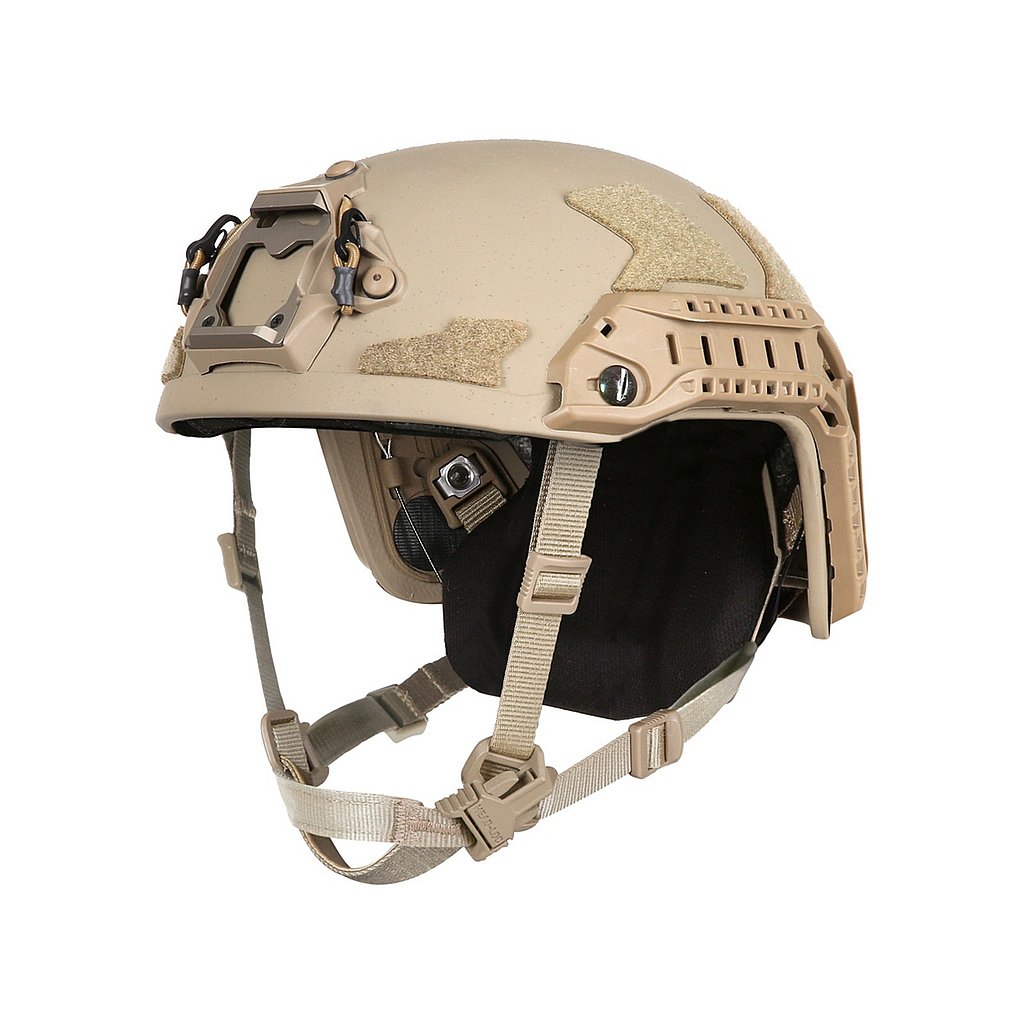
Ops-Core FAST SF Gen II Guide: Sizing, Weight, Protection and Setup
Ops-Core makes the FAST helmet, the high cut design most of the market has copied since. Ops-Core is part of Gentex Corporation, and its helmets are…
Ops-Core FAST SF Gen II vs PGD ARCH GEN3: Which High Cut Helmet to Buy
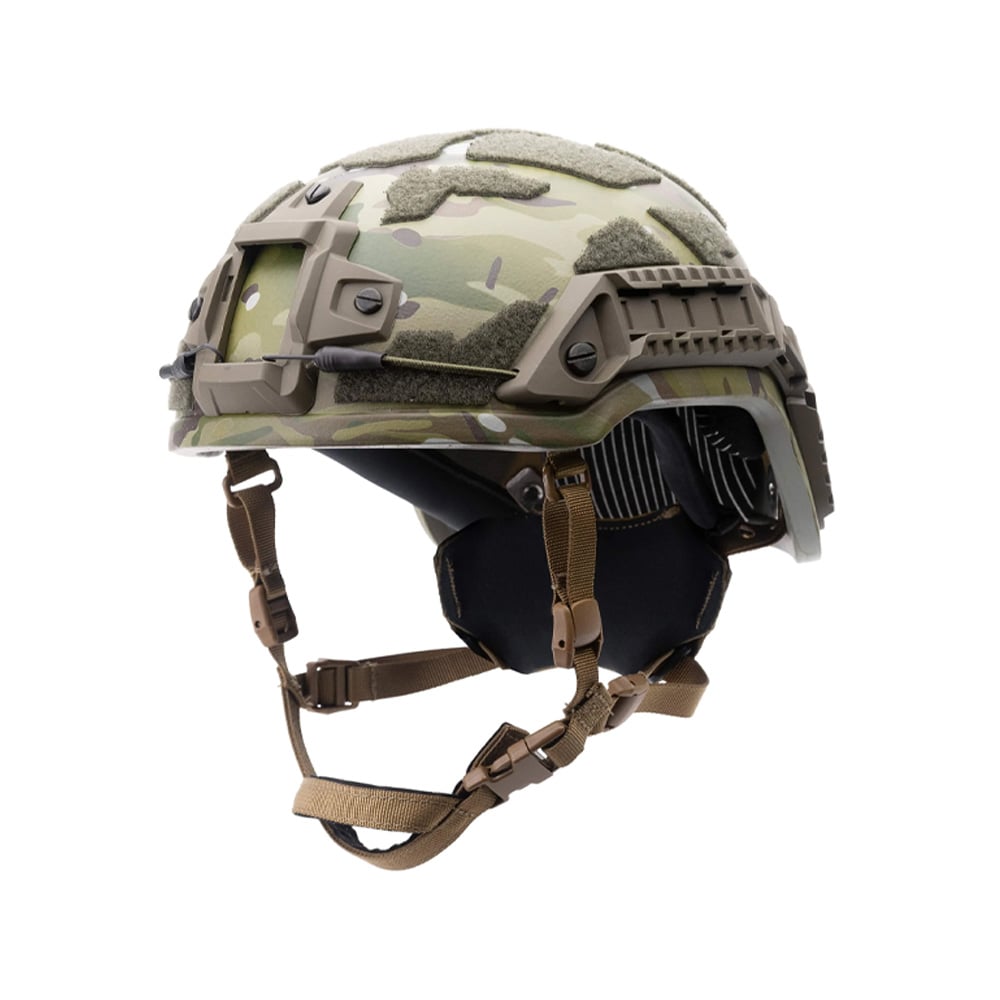
We carry two high cut ballistic helmets: the Ops-Core FAST SF Gen II and the PGD ARCH GEN3. Both are rated NIJ Level IIIA, both have…
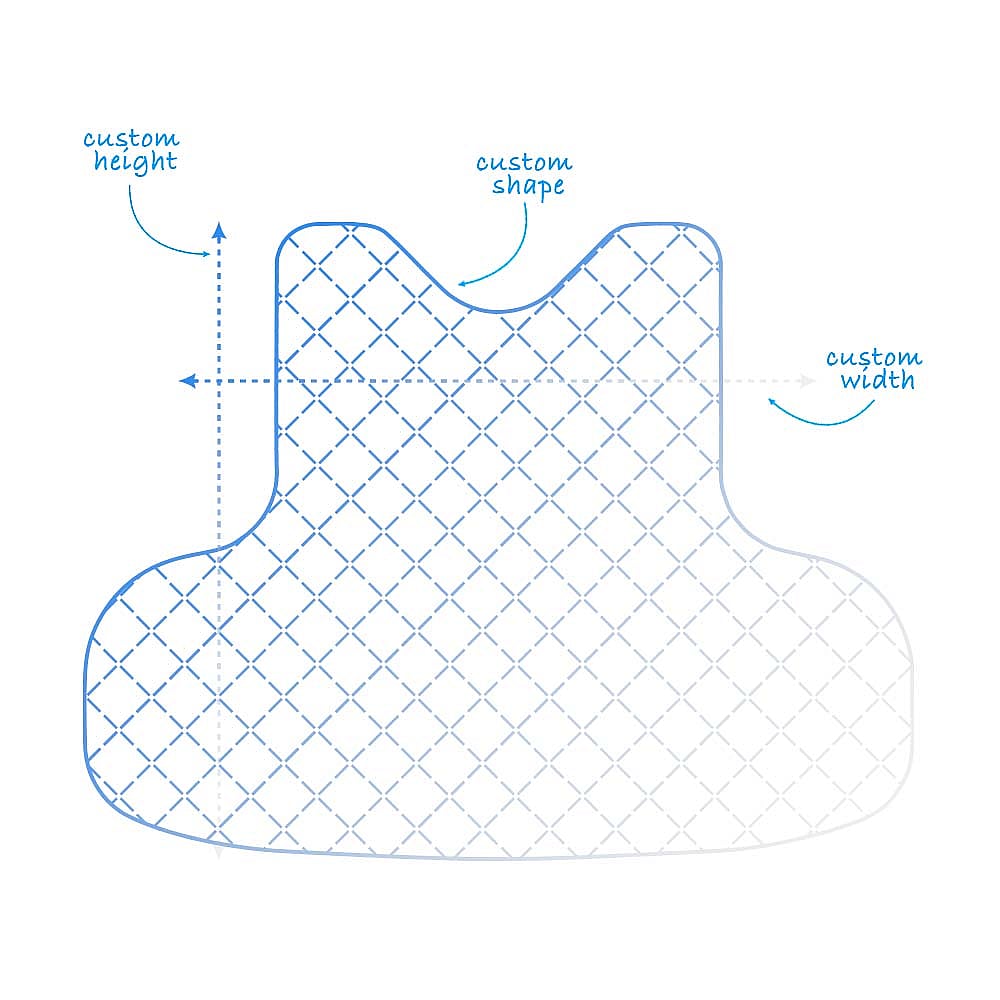
Custom Soft Armor: How to Get Inserts That Actually Fit Your Carrier
Most soft armor doesn't fit the carrier you actually own. Here's how our Custom Soft Armor program solves the fit problem and when to choose custom…