



Custom Soft Armor: How to Get Inserts That Actually Fit Your Carrier
Most soft armor doesn't fit the carrier you actually own. Here's how our Custom Soft Armor program solves the fit problem and when to choose custom over stock.
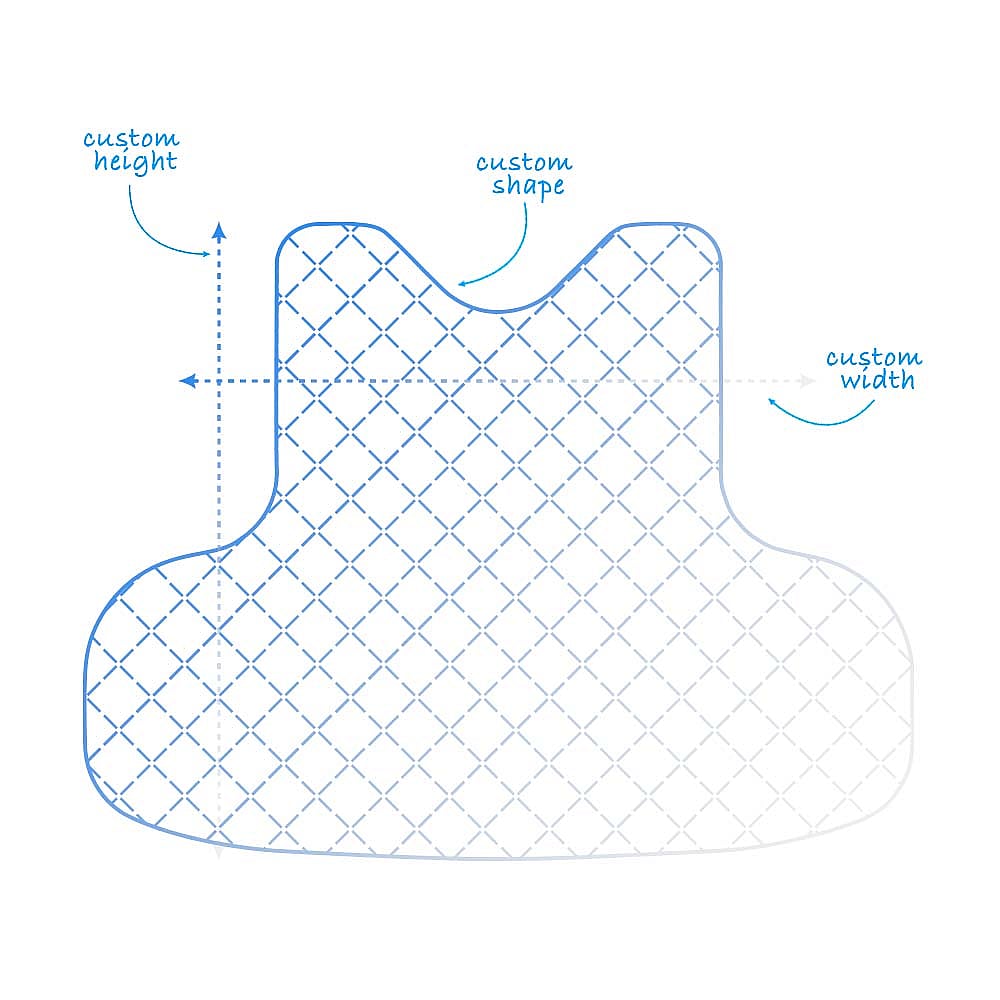
There is a problem in body armor that almost nobody in the industry talks about: soft armor rarely fits the carrier you actually own. If you have bought soft armor panels and stuffed them into a carrier from a different brand, hoping they would sit right, you already know what I am about to describe. Panels too wide on one side, riding up in the collar, gapping at the sides of the cummerbund, sliding around every time you move. Or the “Large” you ordered is two inches too short because every brand defines “Large” differently.
We are a family-owned shop that has been designing and manufacturing soft armor in Knoxville, Tennessee for over a decade, and we see this every week. Customers buy a carrier from Company A and soft armor from Company B and then try to force the fit. Some cut down the panels to make them work, which destroys the ballistic integrity of the armor. Some buy a whole new matched set, which is expensive and wasteful. Most just live with the bad fit because they did not know there was another option.
There is another option. We build custom soft armor sized to your exact carrier, pouch, backpack, bag, or anything else you need ballistic protection inside of. Not standard sizes. Not “close enough.” Your exact dimensions. This post explains why standard soft armor sizing is broken, how our custom program works, and when you should use it versus buying off the shelf.
Why Standard Soft Armor Sizing Does Not Work
The soft armor industry inherited a sizing system from military body armor programs, primarily BALCS, MBAV, and the concealed vest cuts that law enforcement agencies standardized around in the 1990s and 2000s. Those cuts work if you own a carrier built to the matching military spec. But the civilian and commercial tactical market has exploded in the last fifteen years, and carrier brands have been designing in all different directions. The result is fragmentation: dozens of carrier cuts, each slightly different, and a soft armor industry mostly still selling the original three or four standard shapes.
A few common mismatches we see all the time:
- Modern concealed carriers have shapes that do not match the traditional concealed cut. The panel is too tall, too short, or has the wrong shoulder angle.
- Plate carriers with unusual cummerbund designs where soft armor backers do not fill the space correctly, leaving gaps.
- Female body types where standard sizes either gap at the bust or run too long at the waist.
- Non-standard body proportions including very tall, very short, broad-shouldered, narrow-shouldered buyers who sit outside the standard distribution curve.
- Pouches, bags, and backpacks where there is basically no standard option because the shape does not exist in any catalog.
When soft armor does not fit, three things happen. One, coverage gaps where the armor does not protect the area it is supposed to because it is not sitting where it should. Two, discomfort where bad-fit armor bunches, rides up, digs in, until you either wear it poorly or stop wearing it. Three, carrier function where poorly-fitted soft armor does not lay flat, which throws off plate positioning, cummerbund tension, and your ability to move.
The industry’s usual answer is “buy our carrier and our armor together.” That works, but it locks you into one brand’s ecosystem. If you already love your carrier, or if you own expensive armor from another brand, you are stuck.
How Our Custom Soft Armor Program Works
We built the Custom Soft Armor program to solve the fit problem directly. The premise is simple: tell us the exact shape you need, and we will build it. The execution is a five-step process that costs $10 up front (credited back to your order) and delivers in about 4-6 weeks.
Step 1: Order a Tracing Kit
The $10 Tracing Kit ships with everything you need: tracing paper, a marker, clear instructions, and a return envelope with a prepaid shipping label. The $10 covers the paper, shipping to you, and shipping back to us. Every dollar of that $10 is credited 100% toward your soft armor order when you place it, so the effective cost of the kit is zero if you buy from us.
Step 2: Trace the Shape You Need
Lay the tracing paper over the carrier, pouch, or bag you want armored. Trace the interior shape, the exact area where the soft armor panel will sit. If you are tracing a plate carrier, trace the pocket that the soft armor will slide into. If you are tracing a pouch or bag, trace the compartment dimensions.
If you are armoring something unusual, add notes directly on the tracing. Tell us where the seams are, where you want extra coverage, any dimensions we should pay attention to. We have built custom panels for binders, messenger bags, desk drawer inserts, vehicle door panels, and once a podium for a public speaker. If you can trace it, we can make armor for it.
Step 3: Mail the Tracing Back
Use the prepaid return envelope we sent with the kit. No additional cost, no postage to figure out. Drop it in the mail.
Step 4: Choose Your Armor Material and Get a Quote
Once we receive your tracing, we digitize the pattern and send you a quote. You have two paths to choose from depending on whether you want third-party NIJ Certified material or our in-house American-made material. Both paths use American-made ballistic material and American suppliers end-to-end. The differences are price, weight, and whether the ballistic material itself carries third-party NIJ Certification.
Path A: Third-Party NIJ Certified Material
We carry three NIJ 0101.06 Certified soft armor lines, sourced from our certified partners Onyx Armor and Slate Armor. Both are American manufacturers and both have passed third-party NIJ testing on the specific ballistic models we use. Pick this path if you need or want NIJ Certification on the ballistic material going inside your custom panel.
- Stinger IIIA is entry-level NIJ 0101.06 Certified, woven aramid, 0.35″ thick at 1.55 psf. Best value for certified protection.
- Combat IIIA is mid-tier NIJ 0101.06 Certified, Twaron construction, 0.25″ thick at 1.18 psf. Adds extensive special threat testing against 9mm SXT, .40 S&W GDHP, and 5.7×28.
- Clipper IIIA is premium NIJ 0101.06 Certified, Twaron and Dyneema hybrid, 0.21″ thick at 0.86 psf. The lightest and thinnest certified IIIA soft armor we have found.
All three are rated for handgun threats up to .44 Magnum. The differences are weight, thickness, price, and breadth of special threat testing. Stinger is more than enough for most customers. Clipper is for people who want the absolute lightest concealable option and are willing to pay for it.
Path B: Midwest Armor In-House Material
We also build custom panels using ballistic material we design and manufacture ourselves at our Knoxville facility. Pick this path if you want American-made soft armor end-to-end without paying for third-party lab certification fees. Two in-house options:
- MASS IIIA Panels is our most affordable in-house option. Woven DuPont Kevlar construction, tested to NIJ 0101.06 threat standards at the same independent labs the NIJ uses for formal certification testing. This is the right choice when you want a proven aramid build at a lower price point than the certified lines.
- MASS Air IIIA Panels is our lightweight in-house option, built using Honeywell and Textech ballistic materials and engineered to compete with Clipper on weight and thickness. This is for customers who want the lightest concealable option built entirely in-house by us.
Our in-house material is tested to NIJ 0101.06 standards at the same independent labs the NIJ uses for formal certification testing. We have chosen not to submit for the formal certification paperwork itself on our own MASS and MASS Air panels; for customers who specifically need formal NIJ certification (departmental requirements, grant funding, insurance stipulations), we also resell the fully certified Stinger, Combat, and Clipper lines. The ballistic performance is equivalent; what you lose on the in-house lines is the third-party certification paperwork, not the testing rigor.
Cover Material
For either path, you choose the cover material: standard ripstop nylon or Cordura. Both are American-made. Cordura costs slightly more but holds up better under hard use and abrasion.
Step 5: We Build and Ship
Approve the quote and we start manufacturing. Every panel is cut, sewn, sealed, and finished in our Knoxville facility. The ballistic layers are ultrasonically welded using the Sonobond process, which creates a waterproof, debris-proof seal without stitching through the ballistic material. Every material we use, from the ballistic layers to the cover fabric to the webbing and thread, is American-made and sourced from American suppliers we work with directly.
Turnaround is typically 4-6 weeks from receipt of tracing to shipment. Custom work takes longer than stock because we are cutting patterns to your specific shape rather than pulling from inventory. Every custom panel ships with a 5-year warranty and a 100% fit guarantee. If what we build does not fit what you traced, we replace it.
What You Can Armor With Custom Soft Armor
Short answer: if you can trace it flat on paper, we can armor it.
Long answer, with examples:
Plate Carriers
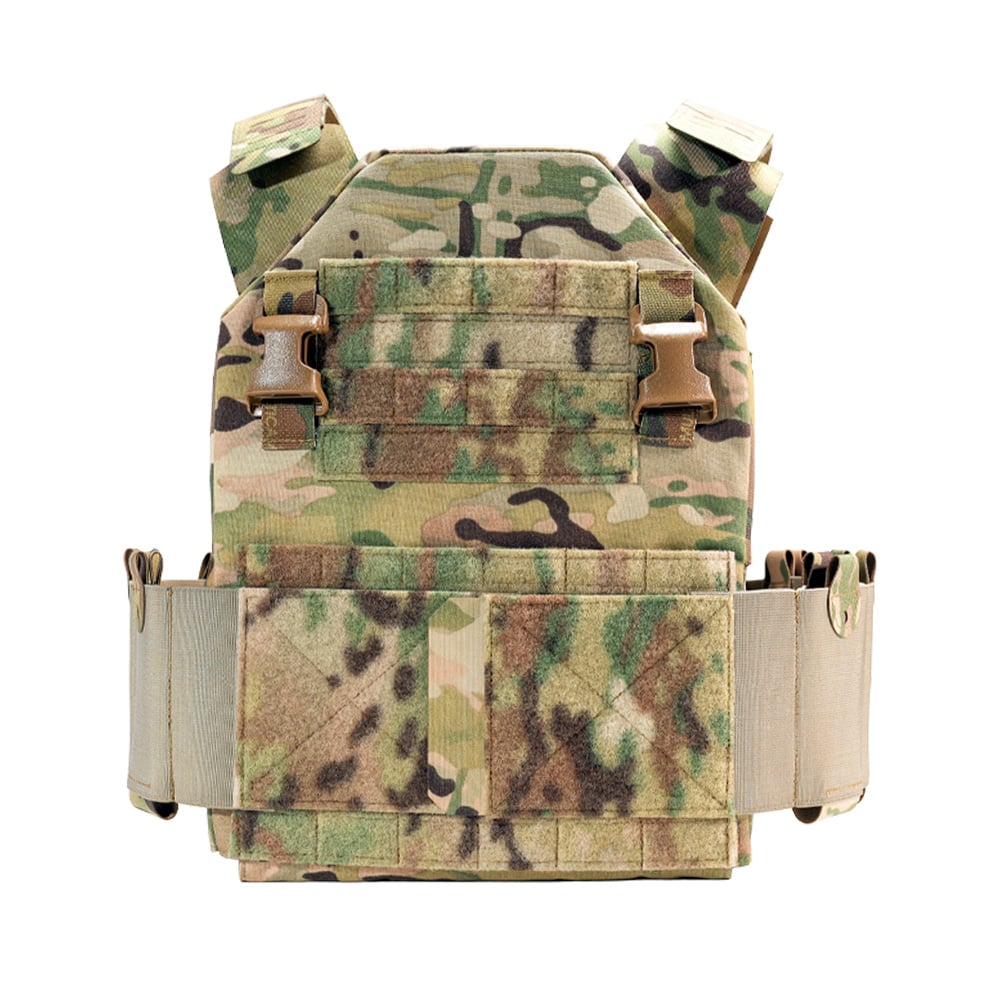
This is the most common use case. Your plate carrier has a soft armor pocket behind (or in front of) the plate pocket. You trace the interior of the soft armor pocket and we build a panel shaped to fill it exactly. Works with any plate carrier brand: First Spear, Crye, Spiritus, Eagle, Paraclete, Condor, Midwest Armor, anyone. The carrier brand does not matter; the shape of the pocket does.
Cummerbunds
Cummerbund panels are where we see the most standard-sizing failures. Every carrier brand designs cummerbunds slightly differently (height, curve, length, attachment system) and standard cummerbund panels rarely fill the space correctly. A custom cummerbund panel eliminates the side gap that most plate carriers leave exposed. For our Sentry and Lancer carriers we offer pre-sized cummerbund side armor panels (see the Sentry set and Lancer set). For any other carrier brand, custom is the right path.
Concealed Carriers and Vests
Concealed carriers are the wild west of sizing. Every manufacturer has their own concealed cut, and almost no two are interchangeable. If you own a concealed carrier from a brand that does not sell matching soft armor, custom panels are the only way to get proper fit.
Backpacks and Bags
Laptop bags, backpacks, tactical sling bags, messenger bags, briefcases. Any bag with a flat compartment can be armored with a custom panel sized to slide inside. We make a standard Ballistic Backpack Insert that fits most backpacks, but for non-standard bags, especially laptop bags and briefcases, custom is often the better answer.
Pouches and Placards
Some placards and pouches have compartments large enough to accept soft armor inserts, adding protection without changing the external profile of your setup. If you run a front-loading placard and want to add a IIIA panel behind your magazines, we can size one to fit.
Unusual Applications
We have built custom soft armor for binders used by protection details, desk drawer liners, vehicle interior panels, briefcase liners, and a few items we would rather not describe. If your application is unusual, send us the trace with notes explaining what you need. We will tell you whether we can build it and what it will cost.
Custom Carriers: The Other Side of the Fit Problem
Sometimes the problem runs the other direction. You do not need custom soft armor. You have soft armor you like, from a brand you trust, that you bought years ago or were issued at work. What you need is a carrier that fits that armor.
We build those too. If you own soft armor from another manufacturer and you want a carrier built around it, we will design and manufacture a carrier to fit. This is less of a published program and more of a direct conversation: each carrier project is different, and pricing depends on complexity. Contact us at support@midwestarmor.com or text 865.859.9850, describe what armor you have and what kind of carrier you want (plate carrier, concealed carrier, tactical vest), and we will work through the spec together.
This is, as far as we know, something almost no other armor company offers at retail scale. Most brands will build a carrier for their own armor or nobody’s. We build for whoever’s armor you already own because enough customers have asked us to that it turned into a real program. If you have been sitting on a set of soft armor wondering what carrier it will fit, the answer is: the one we build for it.
When to Use Custom vs When to Buy Stock
Custom is not always the right answer. Here is how to decide.
Buy Stock Soft Armor If:
- You own a carrier that uses a standard cut (BALCS, MBAV, SAPI, standard concealed)
- You are a standard-ish body type (most adult males land in Medium to Large)
- You need armor quickly. Stock ships in days, custom takes 4-6 weeks
- Price is the primary concern. Stock is always cheaper than custom
- You want to exchange it if the fit is not perfect. Our 15-day fit test applies to stock, not custom
For those cases, order from our standard soft armor lineup. We carry Stinger, Combat, and Clipper in Concealed, BALCS, and MBAV cuts, plus our in-house MASS IIIA and MASS Air IIIA panels in MBAV and BALCS cuts. If it does not fit within 15 days, exchange it for a size that does.
Go Custom If:
- Your carrier uses a non-standard cut (most modern plate carriers, any concealed carrier outside the mainstream)
- You have non-standard body proportions: tall, short, broad, narrow, female-identifying body shapes that standard male sizing does not accommodate
- You need to armor something that is not a carrier: bag, backpack, pouch, binder, vehicle component
- You have tried standard sizing and the fit is bad
- You want coverage gap elimination that stock panels cannot provide (for example, a cummerbund gap that does not exist in standard sizes)
- You value perfect fit over faster delivery
What the NIJ Certification on Custom Panels Actually Means
A reasonable question when you order custom armor: does the NIJ Certification still apply when the panel is a custom shape?
Here is the straightforward answer. NIJ Certification is granted to a specific ballistic model: the material composition, layer count, and construction method. When Stinger, Combat, or Clipper were certified, the NIJ lab tested those materials and construction methods against the 0101.06 threat profile. That certification stays valid as long as the material composition stays unchanged. The certified shapes the NIJ actually tested are the C1-C5 standard sizes.
When we cut a custom panel from Stinger, Combat, or Clipper material at your specific dimensions, the ballistic material itself is identical to the certified stock product. Same aramid or Twaron or Twaron and Dyneema hybrid, same layer count, same Sonobond sealing process. Only the outer shape changes.
The NIJ Certification technically applies to the tested stock shapes. Custom shapes use the same certified ballistic material but are not themselves individually NIJ Certified. This is standard across the industry. Any manufacturer doing custom soft armor is in the same position.
In practical terms: the material in your custom panel is the same material that passed NIJ testing. It will perform identically against the threats the stock version was tested against. What you lose with custom is the ability to point at the NIJ label and say “this exact panel passed NIJ.” What you gain is fit.
The same logic applies to our in-house MASS and MASS Air lines. The material is tested to NIJ 0101.06 threat standards at the same independent labs the NIJ uses for formal certification testing. We have chosen not to submit for the formal certification paperwork itself on these in-house lines. The ballistic performance is equivalent to certified material, the shape can be anything you need, and the price is lower because you are not paying for the third-party certification process.
For most buyers, these tradeoffs are fine. If you trust that the material works against handgun threats, custom shaping does not change that. For agencies or operations where third-party NIJ Certification is a hard legal requirement, stick with stock certified sizes.
American-Made, End to End
Everything we ship is American-made. Our ballistic materials, our covers, our webbing, our thread, our labels. Every supplier in our chain is a US manufacturer, and every panel is cut, sewn, sealed, and finished by our team in Knoxville, Tennessee. We are part of an American textile industry that still exists, still employs people, and still makes things that function. This matters to us, and if you are reading this carefully, it probably matters to you too.
Here is how the manufacturing actually breaks down by product line so you know exactly what you are buying.
Our In-House Lines
Our in-house lines are designed, engineered, and manufactured by us end-to-end. MASS IIIA uses woven DuPont Kevlar aramid. MASS Air IIIA uses Honeywell and Textech ballistic materials, engineered to compete with Clipper on weight. Both are sourced from American manufacturers and built in our Knoxville facility. Our in-house lineup also includes BALCS IIIA panels, MBAV IIIA panels, and Ballistic Backpack Inserts. All tested to NIJ 0101.06 threat standards at the same independent labs the NIJ uses for formal certification testing. We have chosen not to submit for the formal certification paperwork itself on our in-house panels; for customers who specifically need formal NIJ certification (departmental requirements, grant funding, insurance stipulations), we also resold lines.
Our Resold Certified Lines
Stinger IIIA, Combat IIIA, and Clipper IIIA are NIJ Certified lines we resell, not build. They are manufactured by our certified partners Onyx Armor and Slate Armor. Both are American manufacturers. Both have passed third-party NIJ 0101.06 Certification on those specific ballistic models. When you buy stock certified armor from us, we are reselling their finished product as-is. We picked these three because they are the best at their respective price points and because we want customers who need third-party NIJ Certification to have that option without having to shop elsewhere.
Custom Panels
Custom is where the two paths meet. When you order custom soft armor, you pick the ballistic material (our in-house MASS or MASS Air, or third-party certified Stinger, Combat, or Clipper) and we cut, sew, seal, and finish the panel in our Knoxville facility to your specific dimensions. The ballistic material comes from us or from our partners. The custom cutting, construction, and finishing work is always ours.
So the honest breakdown is this. We manufacture our in-house ballistic lines end-to-end. We do not manufacture the certified ballistic material. We source it from Onyx Armor and Slate Armor, who do. And every custom panel, whichever material you choose, is built by us in Knoxville.
Ready to Get Armor That Actually Fits?
If you have read this far and you have a carrier, pouch, or bag that stock soft armor will not fit, the next step is simple.
Order a $10 Tracing Kit and we will send you everything you need. Trace your shape, mail it back, choose your material from our in-house MASS or MASS Air lines or from the third-party certified Stinger, Combat, or Clipper lines, and we build to your dimensions in 4-6 weeks. The $10 is credited 100% to your order.
Questions before you order? Text us at 865.859.9850 or email support@midwestarmor.com. Tell us what you are trying to armor and we will walk you through whether custom is the right path, or whether stock will work, and which material lines up with what you actually need. We would rather help you make the right decision than make the sale.
Still deciding between armor levels or trying to understand NIJ standards? Read our Body Armor Guide for the full rundown on threat levels, materials, and which armor matches your threat profile.
FAQ
Plate carriers, concealed carriers, tactical vests, cummerbunds, pouches, placards, backpacks, laptop bags, messenger bags, briefcases, binders, vehicle components, and most other applications. If you can trace it flat on paper, we can build armor to fit it.
Yes. 100% US made. Every panel is cut, sewn, sealed, and finished in our Knoxville, Tennessee facility. Our in-house MASS and MASS Air ballistic lines are American-made. The third-party certified lines we resell (Stinger, Combat, Clipper, sourced from Onyx Armor and Slate Armor) are also American-made.
Our in-house MASS (DuPont Kevlar) and MASS Air (Honeywell and Textech) ballistic lines are designed and manufactured entirely in Knoxville by us. Both are tested to NIJ 0101.06 threat standards at the same independent labs the NIJ uses for formal certification testing. We have chosen not to submit for the formal certification paperwork itself on the in-house lines. Stinger, Combat, and Clipper are certified lines we resell from Onyx Armor and Slate Armor. The ballistic performance is comparable across all of them at the IIIA threat level. The differences are price (in-house is lower), weight (Clipper and MASS Air are the lightest), and whether you have a third-party NIJ Certification on the specific material. Pick based on what you value.
The $10 covers the tracing paper, marker, instructions, and shipping both ways (to you and back to us). Every dollar is credited 100% toward your soft armor order when you place it, so if you buy from us the effective cost of the kit is zero.
Yes. We carry standard BALCS, MBAV, and Concealed cuts in all three of our third-party certified lines (Stinger, Combat, Clipper) and in our in-house MASS IIIA and MASS Air IIIA panels. See our soft armor page for all stock options. Custom is for situations where stock sizing does not fit.
Typically 4-6 weeks from the day we receive your tracing back. Custom work takes longer than stock because we cut patterns to your exact shape rather than pulling from inventory.
Yes. Note on your tracing that you want Cordura cover instead of standard ripstop and we will include it in your quote. Cordura costs slightly more but is more durable for hard use.
Every custom panel comes with a 5-year warranty on materials and construction, plus a 100% fit guarantee. If what we build does not match what you traced, we replace it.
Yes. If you own soft armor from another brand and want a carrier built to fit it, contact us at support@midwestarmor.com or text 865.859.9850. Each custom carrier project is a direct conversation because the specs vary widely. Pricing depends on complexity.
Depends on which material path you choose. If you pick third-party certified material (Stinger, Combat, or Clipper), the ballistic material is identical to the certified stock product and performs identically against the same threats. The custom-shaped panel itself is not individually NIJ Certified because NIJ certifies specific tested shapes (C1-C5), not custom dimensions. If you pick our in-house MASS or MASS Air material, that material is tested to NIJ 0101.06 standards at the same independent labs the NIJ uses for formal certification testing, but we have chosen not to submit for the formal certification paperwork on the in-house lines. In both paths, the ballistic performance is equivalent to certified material. What you lose is the NIJ label on the custom-shaped panel. For agencies with strict third-party certification requirements, use stock certified sizes.
Contact us first at support@midwestarmor.com. Send photos, descriptions, and measurements. We will tell you whether we can build it and what information we need. We have worked around plenty of non-flat shapes and can usually find a way.
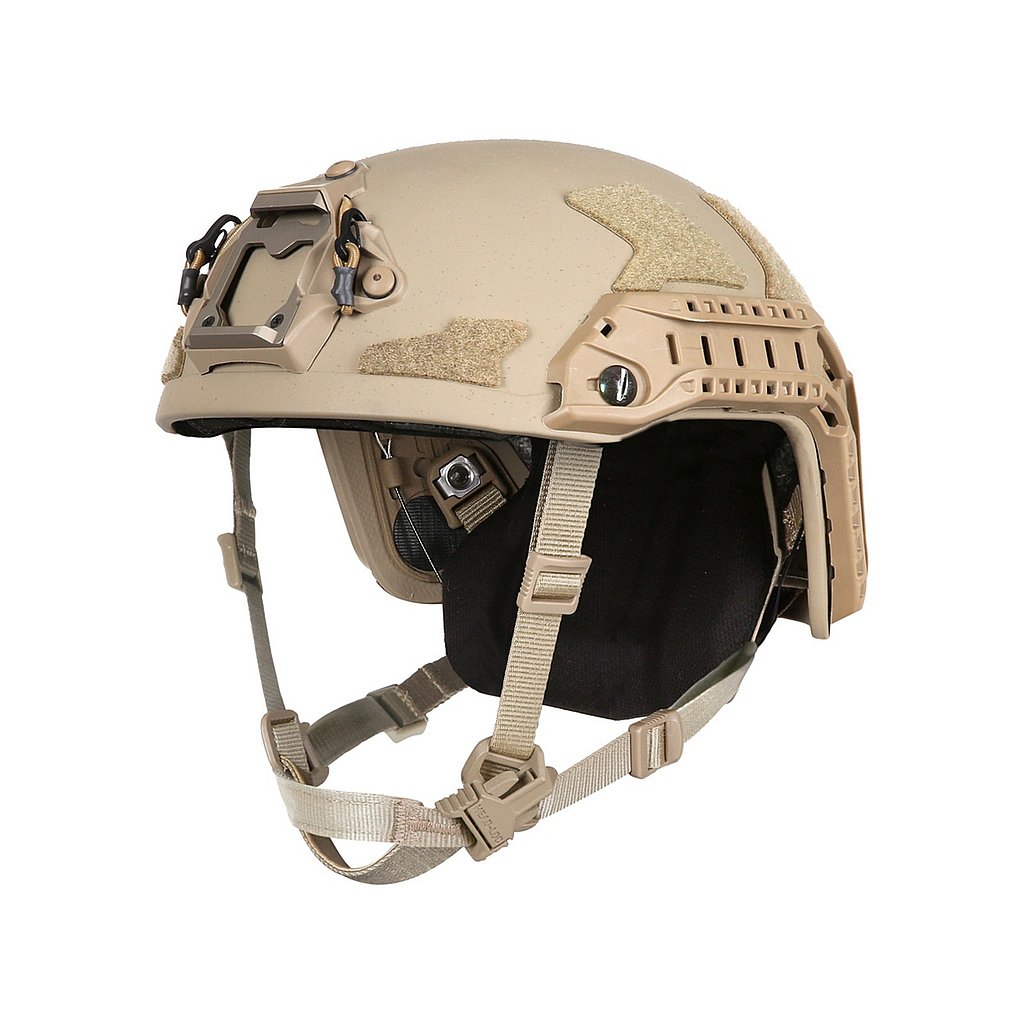
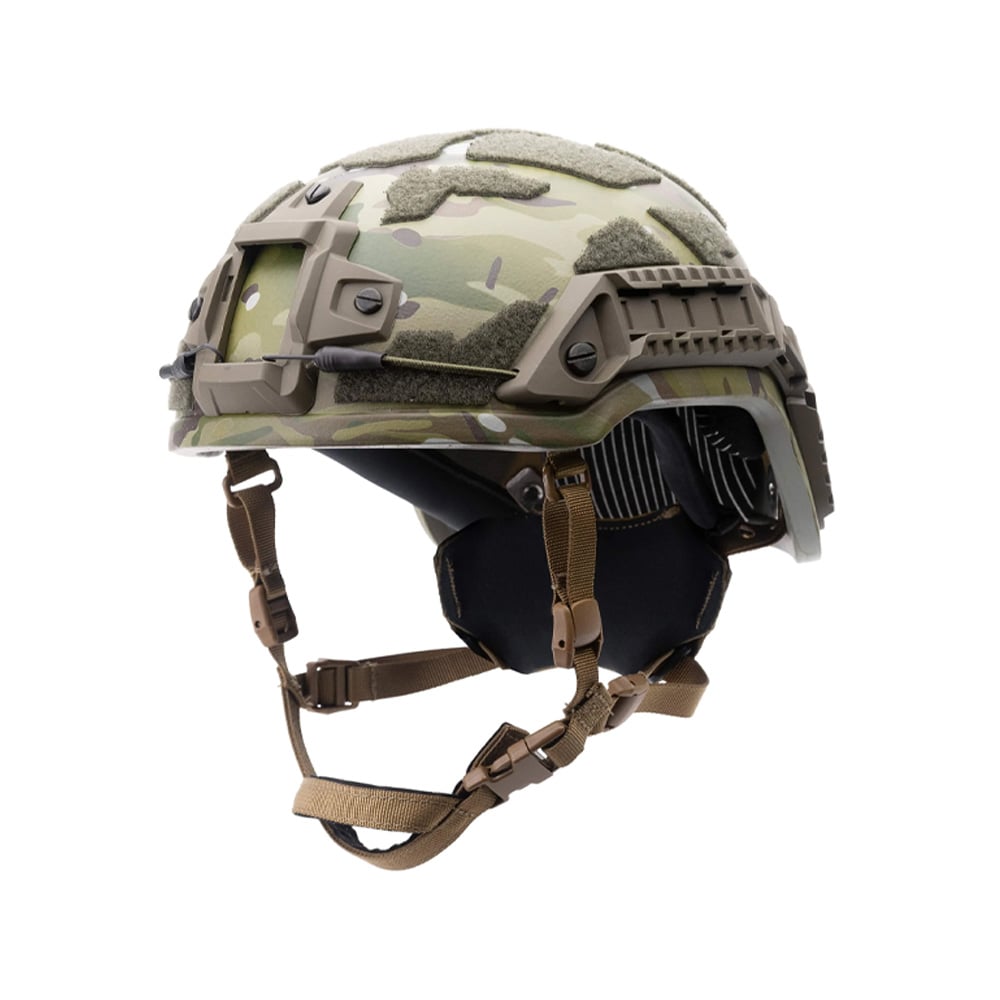
Ops-Core FAST SF Gen II Guide: Sizing, Weight, Protection and Setup
Ops-Core makes the FAST helmet, the high cut design most of the market has copied since. Ops-Core is part of Gentex Corporation, and its helmets are…
Ops-Core FAST SF Gen II vs PGD ARCH GEN3: Which High Cut Helmet to Buy
We carry two high cut ballistic helmets: the Ops-Core FAST SF Gen II and the PGD ARCH GEN3. Both are rated NIJ Level IIIA, both have…
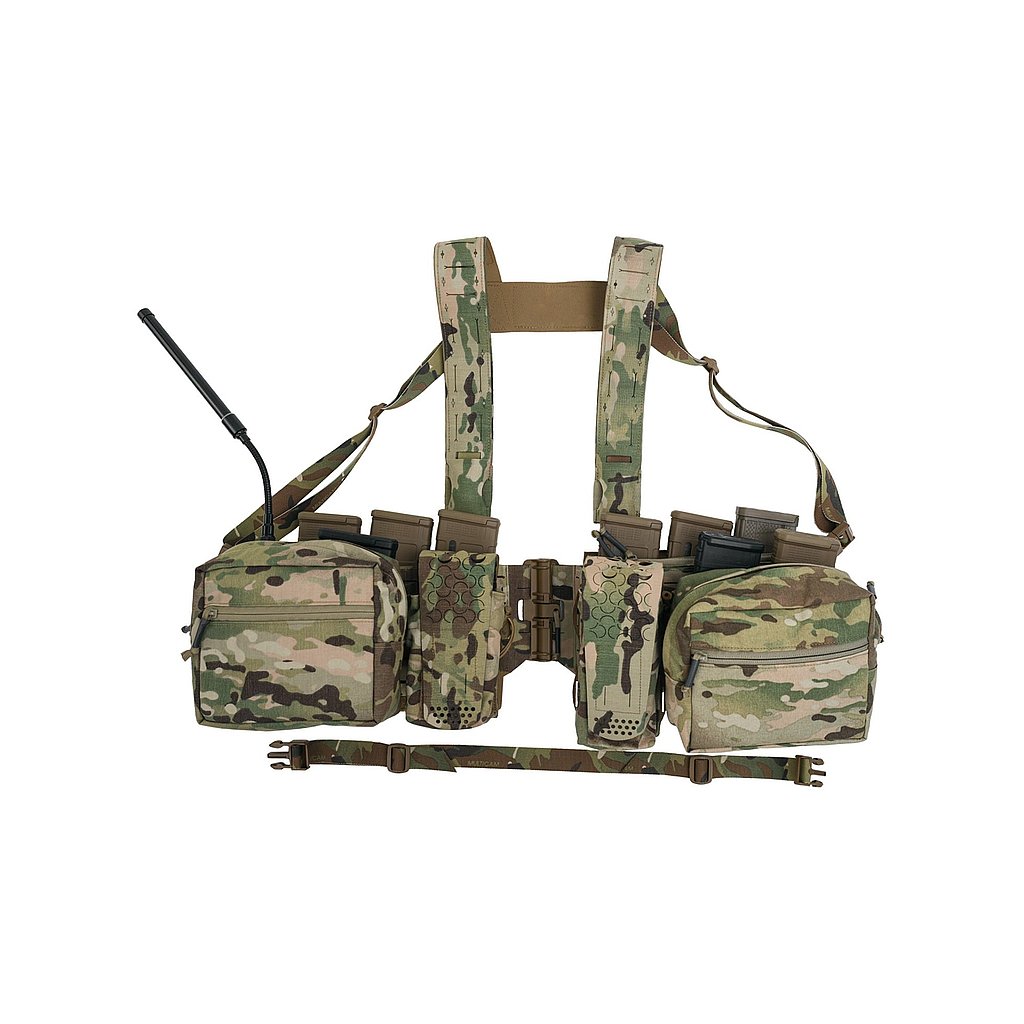
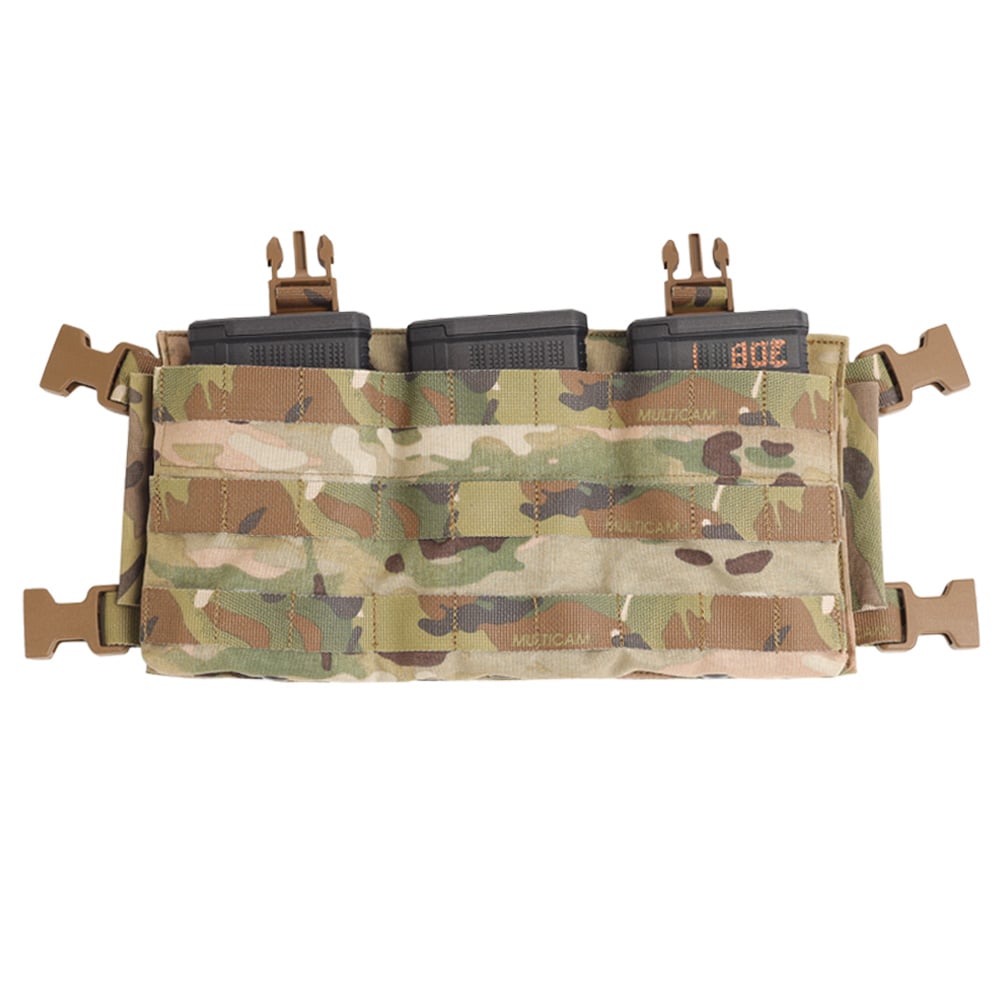
Layering a Chest Rig Over a Plate Carrier: When and How
Layering a chest rig over a plate carrier gives you ballistic protection plus high-capacity gear carriage. The SRV Split Chest Rig is purpose-built for this layered…