



How to Choose the Right Body Armor
A complete guide to choosing body armor: the three factors that drive every decision, soft armor vs hard armor, all four threat levels under both NIJ standards, materials, sizing, and how to match armor to your actual threat profile.
Buying body armor is one of the most important decisions a civilian, LEO, or tactical professional will ever make. It is also one of the most confusing. Walk into any tactical retailer or open any armor catalog and you are greeted with a wall of product listings, level ratings, certifications, material specs, and marketing claims. It is easy to spend weeks researching and still end up uncertain about what you actually need.
We are a family-owned business that has been designing and manufacturing body armor in Knoxville, Tennessee for over a decade. In that time, we have helped thousands of customers pick the right armor for their role, their threats, and their budget. We have also watched plenty of buyers get the decision wrong, either by overspending on armor they did not need or underspending on armor that did not meet their actual threat profile.
This guide is the framework we use ourselves, written to cut through the noise and help you make the right call. It covers the three factors that drive every armor decision, the NIJ standards (both the long-established 0101.06 and the newer 0101.07), every threat level in detail (Level 2, Level 3, Level 3A, and Level 4) under both naming systems, materials and trade-offs, sizing and fit, and the decision tree for matching your role to the right armor. By the time you finish reading, you will have a clear answer to the question: what armor do I actually need?
The Three Factors That Drive Every Armor Decision
Every armor buyer is balancing three variables. Weight, threat level, and cost. These three factors interact. You cannot optimize all three at once. Every armor purchase is a choice about which you prioritize and which you accept trade-offs on.
Weight
Loaded armor is heavy. A Level 3 (III) plate setup with soft armor backing runs 8 to 15 pounds in plate weight alone. A Level 4 (IV) setup can push 18 to 25 pounds. Add a carrier, MOLLE gear, mags, and a rifle, and you are carrying 30 to 40 pounds of kit total.
Weight matters more than most first-time buyers realize. Here is what weight actually costs you:
- Fatigue. Every pound of armor increases the metabolic cost of movement. Over a 4-hour training session, a 15-pound setup and a 25-pound setup produce measurably different fatigue levels. Over a 12-hour patrol, the difference is significant.
- Mobility. Heavier armor restricts range of motion, slows reaction time on transitions, and changes how you move under stress. You train one way, you move another way under load.
- Heat. Armor insulates. Heavy armor insulates more. In hot conditions or during sustained physical activity, heat management becomes a real problem and contributes to fatigue faster than the weight alone suggests.
- Long-term injury. Carrying weight on your shoulders and torso over years of use creates accumulated stress on your neck, back, and hips. Officers and operators who wear armor for decades deal with chronic issues that lighter armor loads reduce.
The lighter your armor, the less these factors cost you. Weight matters. Do not dismiss it.
Threat Level
Threat level is the match between the rounds you are likely to face and the armor you are wearing. The critical insight most buyers miss: higher level is not automatically better.
A Level 4 (IV) plate stops more threats than a Level 3 (III) plate. But Level 4 is also heavier and usually more expensive. If your realistic threat profile does not include armor-piercing rifle rounds, a Level 4 plate is weight you are carrying for protection you are not using.
Matching threat level to actual threats is the most important calibration in armor selection. We cover this in detail in the “Threat Matching” section later in this guide.
Cost
Armor spans a wide price range. A basic Level 3A (IIIA) soft armor vest can be $200. A premium Level 4 (IV) ceramic plate setup with custom-fit soft armor can be $2,000 or more. The difference is real. You get what you pay for, but only up to a point.
Cost drives two meaningful decisions:
How much can you afford? Budget is a real constraint. Do not apologize for it. Spending $1,500 on armor you buy once is often the right answer if that gets you the threat match and the fit you need. Stretching a budget to buy better gear once is smarter than buying cheap gear twice.
What do you get for more money? Higher-end armor generally gets you: lighter weight at the same threat level, better materials, more precise fit, longer useful lifespan, and in some cases better multi-hit performance. Diminishing returns kick in at the top of the market. A $1,500 Level 4 plate and a $2,500 Level 4 plate may have similar ballistic performance with differences mostly in weight savings and cosmetics.
Three factors, three trade-offs, constantly in tension. Your job as a buyer is to know where to push and where to accept compromise.
Types of Body Armor: Soft Armor vs Hard Armor
Before threat levels and standards, there is a simpler split that every buyer needs to understand. All body armor falls into one of two types: soft armor or hard armor. They protect against different threats, weigh different amounts, and are worn differently.
Soft Armor
Soft armor is built from flexible woven or laminated ballistic fiber (Kevlar, Twaron, Dyneema, Spectra). It stops handgun threats and fragmentation, not rifle rounds. Soft armor is what goes into concealable vests and patrol-officer daily-wear vests, and it also serves as backing behind hard plates. It is rated at Level 2 (II) or Level 3A (IIIA) under the NIJ system. Soft armor is light, flexible, and comfortable enough for all-day wear, which is exactly why it is the foundation of concealable body armor.
Hard Armor
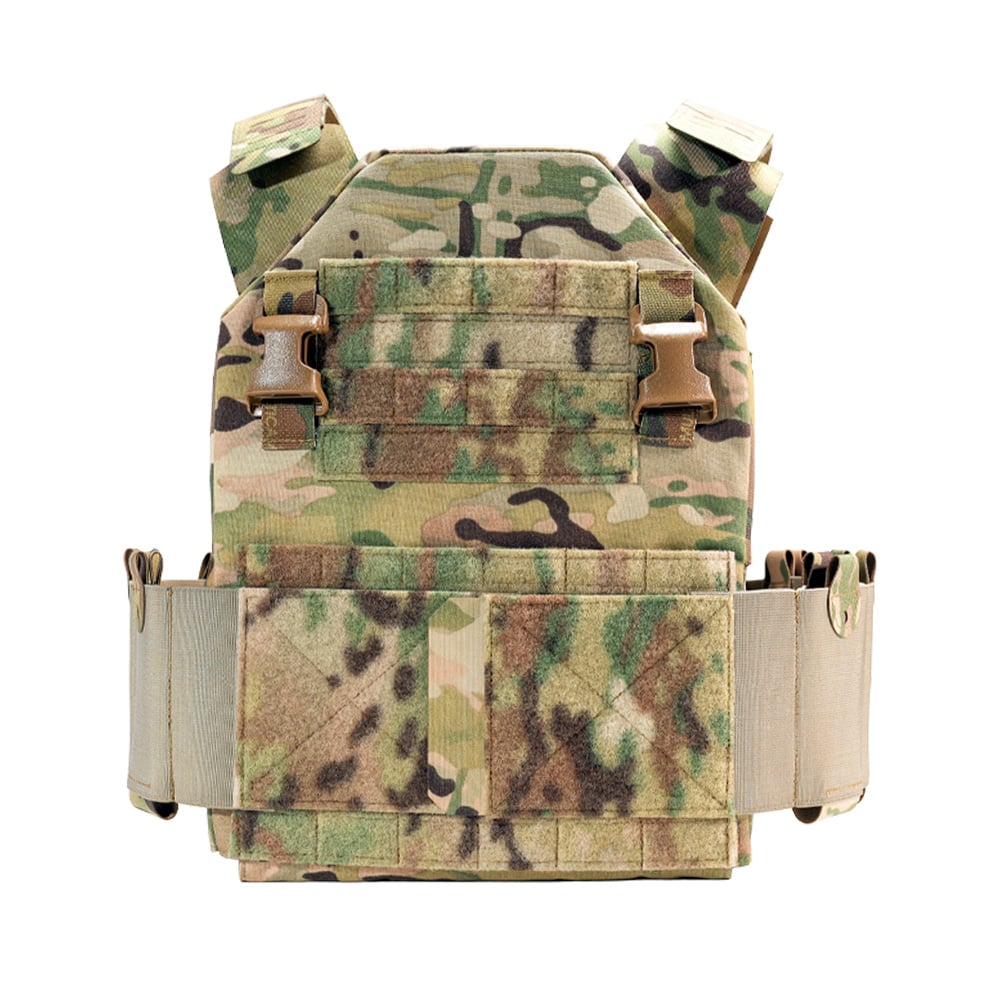
Hard armor means rigid plates, also called rifle plates or hard inserts. Hard plates stop rifle threats that soft armor cannot. They are built from UHMWPE (polyethylene), ceramic composite, or hybrid materials, and are rated at Level 3 (III), the intermediate RF2 level, or Level 4 (IV). Hard plates are heavier than soft armor and are worn in a plate carrier. A hard plate handles the rifle round; soft armor backing behind it catches fragmentation and reduces blunt trauma.
The Four Levels at a Glance
Most buyers want the short version first. Here are the four main body armor levels and what each one stops:
- Level 2 (II) — soft armor. Stops common handgun rounds up to .357 Magnum.
- Level 3A (IIIA) — soft armor. Stops handgun threats up to .44 Magnum. The standard for concealable vests.
- Level 3 (III) — hard plates. Stops common rifle rounds including 7.62 NATO, 5.56 M193, and 7.62×39. Not armor-piercing rounds.
- Level 4 (IV) — hard plates. Stops everything Level 3 stops plus the .30-06 M2 armor-piercing round. The highest NIJ-certified level of body armor available.
The highest level of body armor you can buy is Level 4 (IV), or RF3 under the newer 0101.07 standard. Higher is not automatically better: a Level 4 plate is heavier and more expensive than Level 3, and if your threat profile does not include armor-piercing rounds, that extra weight buys protection you will not use. The rest of this guide walks through how to match the level to your actual threat.
Before we get into individual threat levels, you need to understand how armor is tested and certified. The system is in the middle of a major generational transition right now, and marketing language frequently blurs the distinction in ways that hurt buyers.
What Is the NIJ?
The National Institute of Justice is the research arm of the U.S. Department of Justice. Among other duties, it maintains the body armor testing standard used throughout the industry. When you see “Level 3A,” “Level 4,” or the newer “HG2” or “RF3” on an armor product, that rating traces back to the NIJ standard.
Two Active Standards During the Transition Period
The body armor industry is currently operating under two NIJ standards at once.
NIJ 0101.06 is the long-established standard, published in 2008. This is the framework most armor buyers are familiar with. It uses the numeric threat level system (Level 2, Level 3A, Level 3, Level 4) that has been the industry standard for the better part of two decades.
NIJ 0101.07 is the newer standard, published in November 2023. It introduces a revised nomenclature system, new testing protocols, a new intermediate rifle threat level, and improved testing for women’s body armor. Threat specifications have been moved to a separate document (NIJ 0123.00) so threat definitions can be updated without rewriting the entire performance standard.
Both standards are currently valid and both are in active use.
Transition Timeline
In early 2024, the NIJ Compliance Testing Program stopped accepting new armor models for testing under 0101.06. Manufacturers submitting new armor for certification now test against 0101.07 protocols.
NIJ has committed to maintaining the 0101.06 Compliant Products List through at least the end of calendar year 2027. Armor certified under 0101.06 remains valid and recognized during this transition window. The certification is not being revoked or deprecated; the list is being maintained in parallel while the industry transitions.
As of the time of this writing, the public NIJ 0101.07 Compliant Products List has not yet been published. The first wave of 0101.07 certifications is expected to appear in 2026. Until then, most armor actively sold and worn in the U.S. remains 0101.06-certified or tested-to-0101.06-standard.
What this means for you as a buyer. If you are purchasing armor today, you are almost certainly buying 0101.06-certified or 0101.06-tested product, and that is fine. The 0101.06 standard is rigorous, the certifications are valid, and the armor on that list will continue to be supported through at least 2027. When 0101.07 certifications become broadly available, they will represent an even higher testing bar, but 0101.06 armor does not become obsolete in the meantime.
Be cautious of marketing language. Any product claiming “0101.07 certified” or “0101.07 compliant” today requires verification against the official NIJ Compliant Products List. As of early 2026, no 0101.07 certifications have been officially listed. Marketing terms like “0101.07 ready” or “next-generation compliant” are not equivalent to certification.
The 0101.06 Rating System
Under 0101.06, armor is classified into threat levels based on the ammunition it is certified to stop:
- Level 2 (II): handgun threats up to .357 Magnum
- Level 3A (IIIA): handgun threats up to .44 Magnum
- Level 3 (III): rifle threats up to 7.62 NATO FMJ
- Level 4 (IV): armor-piercing rifle threats up to .30-06 M2 AP
Level 2 and Level 3A are typically soft armor. Level 3 and Level 4 are hard plates.
The 0101.07 Rating System
Under 0101.07, the naming convention changes to make threat types more explicit. “HG” prefixes indicate handgun threats; “RF” prefixes indicate rifle threats. The new system also introduces an intermediate rifle threat level (RF2) that fills a gap in the old system.
Here is how the 0101.06 levels map to the 0101.07 levels:
| 0101.06 Level | 0101.07 Level | Threat Type | Covers |
|---|---|---|---|
| Level 2 (II) | HG1 | Handgun | 9mm FMJ, .357 Magnum |
| Level 3A (IIIA) | HG2 | Handgun | .44 Magnum JHP, .357 SIG |
| Level 3 (III) | RF1 | Rifle | 7.62 NATO FMJ, 5.56 M193, 7.62×39 |
| (New) | RF2 | Rifle | RF1 threats plus 5.56 M855 “green tip” |
| Level 4 (IV) | RF3 | Rifle (AP) | .30-06 M2 AP |
The RF2 addition is the most meaningful change. Under 0101.06, there was no official intermediate level between Level 3 and Level 4. The industry invented “Level 3+” (III+) as an unofficial designation to indicate protection against M855 green tip ammunition. That gray area created confusion and inconsistent marketing claims. Under 0101.07, RF2 is an official certified level for that intermediate threat envelope. This matters for LEO and civilian buyers who face M855 as a realistic threat but do not need full AP protection.
Other notable 0101.07 changes:
- Improved testing protocols for women’s body armor, including new clay shapes and revised shot placements that account for the specific geometry of female-fit panels
- 45-degree angled edge shots added to soft armor testing to simulate real-world oblique impacts
- More rigorous impact durability testing for hard armor
- Updated handgun threats (9mm testing is revised; .357 SIG replaced with .44 Magnum at higher rigor in HG2)
Certified vs Tested-to-Standard: A Critical Distinction
This is one of the most important distinctions in armor buying, and one of the most frequently misunderstood.
NIJ Certified means the product has been submitted to an NIJ-approved independent testing laboratory, has passed the complete testing protocol at the rated level, and is listed on the NIJ Compliant Products List. You can verify certification on the NIJ’s official list. This is the highest level of verification in the industry.
Tested to NIJ Standard means the manufacturer has tested the product against the same threat protocol that NIJ certification requires, but has not gone through the formal certification process. The manufacturer is stating that the product meets the standard, but without the third-party lab verification that certification provides.
Both can indicate competent armor. Certified is the higher standard of verification. Tested-to-standard relies on the manufacturer’s credibility and internal testing rigor.
Why do some manufacturers choose not to certify? Three main reasons:
- Cost. NIJ certification is expensive. Testing fees, lab submission costs, and ongoing compliance costs run into six figures for a single product line. For smaller manufacturers or niche product lines, the economics do not always work.
- Timeline. The certification process takes months. For manufacturers producing limited runs or iterating quickly on designs, formal certification creates friction.
- Product scope. Some armor types (like Level 3A rigid plates, hybrid special-threat plates, or custom-configured panels) do not have formal certification categories under the NIJ standard, so testing-to-standard is the most rigorous verification available.
At Midwest Armor, our in-house MASS and MASS Air soft armor is tested to NIJ 0101.06 Level 3A (IIIA) at the same independent ballistic testing labs the NIJ uses for formal certification testing. We have chosen not to submit for the formal certification paperwork itself, but the panels pass through the same test protocol on the same equipment. For customers who require formally certified panels (departmental requirements, grant funding, insurance stipulations), we resell finished NIJ-certified panels from Onyx Armor and Slate Armor, both American-made and fully certified. These are manufactured by the certified vendor and we stock and ship them rather than building with their raw material. We cover this in detail on our Custom Soft Armor page.
The practical answer for most buyers: if certification is required by your role, buy certified armor from a reputable manufacturer. If certification is not specifically required, tested-to-standard armor from a manufacturer you trust is usually equivalent in ballistic performance and may cost less.
Beware of Uncertified Claims
The distinction above applies to reputable manufacturers who test rigorously but have not pursued formal certification. It does not apply to cheap imports that claim NIJ compliance without any testing behind the claim.
Red flags when evaluating armor:
- No specific test data or reference to testing methodology
- Vague references to “NIJ standard” without specifying level or protocol version
- “Compliant” language without actual certification or tested-to-standard verification
- Prices significantly below established market rates (armor testing is expensive, and that cost shows up in the retail price)
- Foreign manufacturing without transparent origin information
- Marketing claims that exceed what the rated level actually covers
- “0101.07 certified” claims (as of early 2026, no 0101.07 CPL has been published; any such claim requires direct verification)
- Unofficial “Level 3+” or “Level 3A+” designations without specific tested threats identified
If you cannot verify how the armor was tested, assume it was not. Move on.
Threat Levels: What Each One Actually Stops
We cover the specific threats for each level under both the 0101.06 and 0101.07 naming systems, since you are likely to encounter both during this transition period. For a quick side-by-side comparison of Level 3A, Level 3, and Level 4 at a glance, see our shorter guide on what each level actually stops.
Level 2 / II (0101.06) / HG1 (0101.07)
The entry point for modern soft body armor. Designed to stop common medium-velocity handgun rounds.
Under 0101.06, Level 2 is certified against:
- 9x19mm FMJ, 8.0 g (124 gr), at 1,225 ft/s
- .357 Magnum Jacketed Soft Point, 10.2 g (158 gr), at 1,430 ft/s
Under 0101.07, HG1 uses revised testing:
- 9mm FMJ RN, 124 gr, at 1,305 ft/s (slightly higher velocity than Level 2)
- .357 Magnum Jacketed Soft Point, 158 gr, at 1,430 ft/s
Covers in practice: most common 9mm loads in civilian and LEO use, .38 Special, .40 S&W standard loads, and .357 Magnum up to the test velocity.
Does not cover: rifle rounds of any kind, high-velocity handgun rounds like .357 SIG or .44 Magnum, or armor-piercing handgun ammunition.
Level 2 / HG1 was more common a generation ago, when handgun threats were the dominant concern and materials were heavier. Today, Level 3A / HG2 has largely replaced it for soft armor applications because the weight penalty for the additional protection is minimal on modern materials.
Level 3A / IIIA (0101.06) / HG2 (0101.07)
The current standard for soft body armor in most civilian, LEO, and tactical roles. Handles virtually every common handgun threat. Level 3A is the level most concealable vests and soft armor panels are built to.
Under 0101.06, Level 3A is certified against:
- .357 SIG FMJ Flat Nose, 8.1 g (125 gr), at 1,470 ft/s
- .44 Magnum Semi Jacketed Hollow Point, 15.6 g (240 gr), at 1,430 ft/s
Under 0101.07, HG2 uses revised testing: a faster 9mm FMJ RN 124 gr test round, and .44 Magnum JHP 240 gr at 1,430 ft/s. Note that 0101.07 HG2 removes the .357 SIG threat and replaces it with the faster 9mm test. The overall protection envelope remains substantially similar to 0101.06 Level 3A.
Covers in practice: all 9mm loads (standard and +P), .40 S&W, 10mm, .45 ACP, .357 Magnum, .357 SIG, .44 Magnum up to test velocity, and most shotgun slug threats at standard engagement distances (shotgun performance is variable and not part of core certification).
Does not cover: rifle rounds, period. No 5.56 NATO, 7.62 NATO, 7.62×39, or similar rifle cartridge. No armor-piercing handgun ammunition at elevated velocities.
Common use cases: concealable armor worn under clothing for EDC or undercover roles, patrol officer daily-wear vests, executive protection and private security where handgun threats dominate, home defense setups where rifle threats are not a primary concern, and soft armor backing inside plate carriers paired with a hard plate. For the concealed-wear application specifically, see our concealed body armor guide.
Level 3A / HG2 is the workhorse of the soft armor category. Most of the soft armor we build at Midwest Armor is at this level, including our in-house MASS and MASS Air panels. The protection envelope covers the overwhelming majority of realistic threats for civilian and LEO wearers, at a weight and flexibility that enables all-day wear.
Level 3 / III (0101.06) / RF1 (0101.07)
The entry point for rifle-rated armor. Plates at Level 3 are designed to stop most common rifle threats, but not armor-piercing variants.
Under 0101.06, Level 3 is certified against 7.62x51mm NATO (.308 Winchester) FMJ, 147 gr, at 2,780 ft/s, certified to stop 6 spaced hits.
Under 0101.07, RF1 is certified against:
- 7.62×51 NATO M80, 149 gr (updated from 147 gr in addendum), at approximately 2,780 ft/s
- 5.56×45 M193, 55 gr, at 3,250 ft/s
- 7.62×39 mild steel core, 120.5 gr, at 2,400 ft/s
RF1 is a broader testing protocol than old Level 3. Where Level 3 certified a single test round, RF1 explicitly certifies against three common rifle threats. A plate newly certified as RF1 has been tested against a more demanding protocol than a plate certified as Level 3 a decade ago.
Covers in practice: 5.56×45 NATO (M193 standard ball) and .223 Remington FMJ variants, 7.62×39 (AK-style) FMJ, 7.62×51 NATO (.308) FMJ, most hunting rifle rounds in the medium-caliber range, and all handgun threats by default.
Does not reliably cover: armor-piercing rifle rounds (7.62 NATO M61 AP, .30-06 M2 AP), M855 “green tip” 5.56 in some plate configurations (see below), M855A1 enhanced penetrator, very high velocity rounds exceeding the test envelope, and certain specialty or wildcat rifle cartridges.
Common use cases: LEO patrol rifle response setups, civilian home defense where a rifle threat is possible, training environments where weight and durability matter, and most tactical setups that do not specifically need AP protection or M855 protection.
RF2 (0101.07 Only): The New Intermediate Rifle Level
RF2 is the single most useful addition in the 0101.07 standard. It fills the gap between RF1 and RF3 with a certified level specifically for M855 “green tip” 5.56 ammunition.
RF2 is certified against all RF1 threats (7.62 NATO M80, 5.56 M193, 7.62×39) plus 5.56×45 M855 “green tip”, 62 gr, at approximately 3,115 ft/s.
Why RF2 matters. Under the old 0101.06 system, M855 green tip ammunition was a known gap. M855 has a steel penetrator tip that defeats many plates that stop comparable FMJ rounds. Some Level 3 plates stop M855 reliably, others do not. NIJ 0101.06 did not have an official certification for M855 protection, so manufacturers started using the “Level 3+” (III+) designation to indicate they had tested their plate against specific special threats beyond the base Level 3 protocol.
The problem: “+” is not a standardized designation. Every manufacturer decides what their “+” means. One plate marked Level 3+ might be tested against M855 and nothing else. Another might cover M855 plus M193 plus 7.62×39 plus steel core variants. A third might be M855 only at a specific velocity envelope. Reputable manufacturers publish the specific threats their “+” covers, which is the apples-to-apples information a buyer actually needs. Less reputable ones leave “+” vague. Either way, comparing two Level 3+ plates from different brands is comparing two different things, and the buyer has to dig through manufacturer test sheets to figure out which one matches their threat.
What 0101.07 does is eliminate that ambiguity. RF2 defines a single formal intermediate level with a specific threat set (all RF1 threats plus 5.56 M855 green tip). A plate certified as RF2 has been tested against those exact threats at the specific velocity envelope in the standard. No more guessing what “+” means on a particular product. RF2 replaces a marketing designation with a certified specification.
Common use cases for RF2: LEO tactical response scenarios where M855 is a realistic threat, civilian home defense in regions where M855 ammunition is in broad circulation, training environments with mixed ammunition, and anywhere old “Level 3+” plates were being used, now with the benefit of formal certification.
The Level 3+ transition. If you currently own or are considering a “Level 3+” plate, note that this designation is being phased out as RF2 becomes the formal certification for the same threat level. Reputable manufacturers are transitioning their Level 3+ products to RF2 certification as the CPL expands. Buyers should specifically ask whether a Level 3+ plate has or is pursuing RF2 certification, or whether it is an unofficial marketing designation.
Level 4 / IV (0101.06) / RF3 (0101.07)
The ceiling of current NIJ-certified armor. Level 4 is specifically certified against armor-piercing rifle rounds.
Under 0101.06, Level 4 is certified against .30-06 M2 AP (armor-piercing), 10.8 g (166 gr), at 2,880 ft/s, certified to stop 1 hit. Under 0101.07, RF3 uses the same threat: .30-06 M2 AP, 166 gr, at approximately 2,880 ft/s.
Covers in practice: everything Level 3 / RF1 covers, plus AP variants of common rifle cartridges (M61 AP 7.62 NATO, M855A1, M855 green tip), most civilian hunting AP loads, and high-velocity specialty rounds.
Does not cover: exotic armor-defeating rounds designed specifically against Level 4, .50 BMG and similar heavy cartridges, and certain specialty or experimental rounds outside the NIJ standard.
The shot count note. Level 4 / RF3 certification tests against a single hit of .30-06 AP. Multi-hit capability against AP rounds is possible but not guaranteed by the certification. Most Level 4 / RF3 plates will stop multiple hits of lesser threats (FMJ rifle rounds, handgun rounds) but may or may not stop multiple AP hits. If you specifically need certified multi-hit AP performance, look for plates with additional manufacturer testing beyond the base NIJ spec.
The weight and durability trade-off. Level 4 / RF3 plates are almost always ceramic composite or ceramic with polyethylene backing. They are heavy (6 to 8 pounds per plate is typical) and relatively fragile. A dropped ceramic plate may develop internal fractures that compromise performance without being visible on inspection. Level 4 / RF3 plates require careful handling throughout their service life.
Common use cases: military roles with realistic AP threat exposure, LEO tactical units facing AP rifle fire as a credible threat, specialized security roles with threat intelligence indicating AP ammunition, and civilian preppers and enthusiasts wanting the top of the certified spectrum and accepting the weight.
For most civilian defensive scenarios, Level 4 / RF3 is overkill. The AP protection is real but rarely matches the actual threat envelope most civilian wearers face. A Level 3 / RF1 or RF2 setup with quality soft armor backing is the right call for the majority of civilian use cases. If you are weighing whether you need armor at all, our body armor for civilians guide walks through the honest decision.
Hard Armor Materials: UHMWPE, Ceramic, and the Steel Question
Hard plates are manufactured from three main material categories. Two of them (UHMWPE and ceramic) we consider legitimate choices for personal body armor in most scenarios. The third (steel) we do not recommend for personal body armor, period. We will cover why.
UHMWPE (Polyethylene)
Ultra-high-molecular-weight polyethylene is the lightweight hard armor material of choice for most modern personal armor applications. Sold under brand names like Dyneema and Spectra.
A typical UHMWPE Level 3 / RF1 plate weighs 3 to 4 pounds, less than half the weight of comparable steel. Cost is mid-range: more expensive than steel, usually less expensive than premium ceramic.
Advantages: lightest hard armor material available, no spalling (rounds are captured by the material rather than shattering on a hard surface), floats in water, excellent against FMJ rifle threats, and multi-hit capable against the threats it is rated for.
Trade-offs: heat sensitive (prolonged exposure above roughly 180°F degrades the material, so never leave UHMWPE plates in a hot vehicle), not effective against armor-piercing threats (UHMWPE alone cannot reach Level 4 / RF3 ratings), a defined shelf life typically 5 to 10 years depending on manufacturer and storage, and sensitivity to mechanical damage at the edges.
When UHMWPE makes sense. Most Level 3 / RF1 applications. LEO patrol rifle response setups. Civilian home defense with realistic rifle threat concerns. Training environments. The default choice when weight matters and AP threats are not in the profile.
Ceramic Composite
Ceramic plates combine a hard ceramic strike face (usually alumina, silicon carbide, or boron carbide) with a backing material (often UHMWPE or aramid fiber). The ceramic shatters incoming rounds; the backing material catches the resulting fragments.
Ceramic Level 3 / RF1 is typically 5 to 7 pounds; ceramic Level 4 / RF3 is 6 to 8 pounds. Cost is higher than UHMWPE, and ceramic Level 4 / RF3 plates are typically the most expensive option in the mainstream armor market.
Advantages: the only material type that can reach Level 4 / RF3 ratings, excellent multi-hit performance against rated threats, no spalling issues, a thinner profile than UHMWPE at equivalent protection levels, and stability in storage (no heat sensitivity like UHMWPE).
Trade-offs: fragile (a dropped ceramic plate may develop internal fractures that compromise performance without visible damage, so inspect after any significant impact), generally heavier than UHMWPE at equivalent Level 3 / RF1 ratings, and higher cost.
When ceramic makes sense. Level 4 / RF3 applications (this is the only material that reaches Level 4). Any application where Level 4 protection is required and weight is a secondary concern. Tactical roles where AP threats are credible.
Hybrid Special Threat Plates
A category of armor that falls outside the standard NIJ testing framework. Hybrid plates combine multiple materials to defeat specific threats that do not fit cleanly into a single NIJ category. They are designed to stop the most common domestic rifle threats (5.56 variants, 7.62×39, handgun rounds) while being thinner and lighter than a ceramic Level 4 plate. They are not NIJ certified because the threat profile does not map cleanly to a single NIJ level, but they address a real use case for civilian and LEO buyers who want rifle protection against common domestic threats without the weight penalty of full Level 4. Evaluate special threat plates based on the specific manufacturer test data against the threats you actually face.
Steel: Why We Do Not Manufacture or Recommend It for Personal Body Armor
Steel armor has a place in armored vehicles, static fortifications, and specific military applications. It does not have a place on the human body as personal armor. We do not manufacture steel body armor at Midwest Armor, and we do not recommend it for anyone’s personal armor setup. Here is why.
The spalling problem. When a rifle round strikes steel, the round shatters on the hard surface. Fragments scatter outward along the plate face at high velocity. Those fragments can lacerate the wearer’s neck, face, upper arms, and shoulders. A round that the plate successfully stops can still cause significant secondary injuries to the person wearing it. This is not a theoretical concern. There is video evidence, documented testing, and real-world reports of spalling injuries from steel plates. Anti-spall coatings reduce but do not eliminate spalling, and coating quality varies.
The weight penalty. A typical AR500 steel plate at 10×12 dimensions weighs 7.5 to 9 pounds. A comparable UHMWPE plate at the same threat level weighs 3 to 4 pounds. Over the course of a long wear day, this weight difference is a real fatigue and mobility cost.
Steel armor serves legitimate roles outside of personal body armor: vehicle up-armoring, static position hardening, and specific military engineering applications, where the weight is carried by the vehicle or fortification rather than a human wearer. For personal body armor worn on a human being in active scenarios, those same trade-offs become liabilities. For the detailed argument on steel versus alternatives for personal armor, see our article on steel body armor and the spalling problem.
Level 3 Plates and Level 4 Plates: Which to Buy
Once you have decided you need hard armor, the practical question is whether to buy Level 3 plates or Level 4 plates. This is the single most common hard-armor decision, so here is the direct answer before the product lineup below.
Level 3 Plates
Level 3 (III) plates stop common rifle rounds: 7.62 NATO FMJ, 5.56 M193, and 7.62×39. They do not stop armor-piercing rounds, and some Level 3 plates do not stop M855 green tip (the intermediate RF2 level or a Level 3+ plate covers M855). Level 3 plates are lighter and less expensive than Level 4. Most are UHMWPE (3 to 4 pounds) or ceramic composite (5 to 7 pounds). Level 3 is the right choice for the majority of civilian home defense and LEO patrol rifle-response setups, where armor-piercing rounds are not a realistic threat. If you want rifle protection at the lowest weight and cost, Level 3 plates are the answer.
Level 4 Plates
Level 4 (IV) plates stop everything Level 3 stops plus the .30-06 M2 armor-piercing round. Level 4 is the highest NIJ-certified body armor level available. Level 4 plates are ceramic composite (6 to 8 pounds per plate), heavier and more expensive than Level 3. Level 4 is the right choice when armor-piercing threats are credible: military roles, LEO tactical units, and buyers who want the top of the certified protection spectrum and accept the weight. For most civilian defensive scenarios, Level 4 is more than the threat profile requires, but buyers who want maximum protection and will not second-guess the decision later often choose Level 4 for peace of mind.
The Short Answer
Buy Level 3 plates if you want rifle protection at the lowest practical weight and cost and your threat profile is common rifle rounds. Buy Level 4 plates if armor-piercing rounds are a credible threat, or if you want the highest certified protection and accept the added weight. Buyers caught between the two should also look at the intermediate RF2 level, which covers M855 green tip without the full weight of Level 4. Browse current Level 3 and Level 4 plates with live pricing and stock on our Hard Armor category page.
We carry hard plates from leading American manufacturers, with Hesco as our primary hard armor line alongside select LTC and Tencate plates. Every plate we carry is American-made. None are built in-house; hard plates are a space where the right answer for customers is certified plates from specialized manufacturers who run full ballistic testing programs, and we stock and ship them rather than trying to replicate what those shops already do well.
Hard plate availability rotates as stock comes and goes. The Hard Armor category page always shows current live stock and pricing for every plate, so check there for what is in stock today rather than relying on any single product link.
Hesco Plates
Hesco is our primary hard armor line, covering Level 3, Level 3+, Level 4, and special threat plates. Ceramic and Spectra composite construction, multi-curve for comfort, with variants for different operating conditions. The Hesco lineup includes the 3802C (Level 3, waterproof polyurea coating, fully buoyant), the 3802LV (Level 3 ICW, lightweight, designed to pair with Level 3A soft armor), the 3411MC and 3612C (Level 3+, certified Level 3 plus special threat testing), the 4403MC and 4601 (Level 4, next-gen NIJ Certified), and the L211 special threat plate (light at 4.9 lb and thin). Hesco side plates include the 3110 (Level 3+), 4101 (Level 4), and L110 (special threat).
Hesco stock is actively being replenished. Browse the current Hesco lineup and live availability on the Hard Armor category page; product pages show real-time stock status and update automatically as inventory arrives.
LTC and Tencate Plates
Alongside Hesco, we carry select plates from Leading Technology Composites (LTC), one of the largest body armor manufacturers in the world, including ceramic multi-curve Level 4 plate sets and the LTC Trauma Speed Plate for backing use. For the thinnest and lightest special threat option, the Tencate CR6450SA is a US-made seven-curve plate with a polyurea liner rated against salt water, UV, and fuels. As with Hesco, availability rotates; the Hard Armor category page shows current stock.
All plates ship from Knoxville. If you are not sure which plate matches your threat profile, text us at 865.859.9850 and we will walk you through it.
Soft Armor Materials: Aramid and UHMWPE Fibers
Soft armor is built from woven or laminated ballistic fibers. Two main material families dominate the market.
Aramid Fibers (Kevlar, Twaron)
Aramid is the classic ballistic fiber. Kevlar (DuPont) and Twaron (Teijin) are the dominant brand names. Aramid has been the foundation of soft body armor for over 50 years. It is woven into flexible fabric panels, has good ballistic performance against handgun threats, is relatively sensitive to UV, moisture, and heat, has a standard shelf life of approximately 5 years from manufacture, and is flexible and comfortable in concealable applications.
Our in-house MASS soft armor uses DuPont Kevlar and is tested to NIJ 0101.06 Level 3A (IIIA). Kevlar remains the workhorse material for patrol-vest applications where flexibility and proven performance over long daily wear are priorities.
UHMWPE Fibers (Dyneema, Spectra)
Ultra-high-molecular-weight polyethylene in fiber form. Lighter and less moisture-sensitive than aramid, but heat-sensitive and with different degradation patterns. It is built into laminated panels rather than woven fabric, lighter than aramid at equivalent protection levels, has better UV resistance than aramid, is heat-sensitive above approximately 180°F, and has a longer standard shelf life than aramid (often 7 to 10 years).
Our MASS Air soft armor uses Honeywell UHMWPE material and is tested to NIJ 0101.06 Level 3A (IIIA). It is the weight-optimized counterpart to MASS, targeted at wearers who prioritize low-profile concealable wear or long-duration tactical setups where every ounce matters.
Storage and Degradation
Both materials degrade over time. Heat is the biggest single accelerator for both: vehicle interiors in summer routinely exceed 140°F, and armor stored in attics, sheds, or garages degrades faster than the rated shelf life assumes. UV exposure degrades aramid faster than UHMWPE. Moisture affects aramid more than UHMWPE. Folding and flexing damages the fiber matrix at crease points, so store panels flat when not in use. For a full breakdown on armor aging, inspection, and when to replace, see our article on soft armor expiration dates.
Certified vs Non-Certified Soft Armor
The certified versus tested-to-standard distinction we covered earlier applies specifically to soft armor in most purchasing decisions. Soft armor under NIJ 0101.06 Level 3A has a formal certification program, and new soft armor submitted today is tested against NIJ 0101.07 HG2 protocols. Our MASS and MASS Air panels are tested to NIJ 0101.06 Level 3A at the same independent labs the NIJ uses for official certification, but not submitted for the formal certification paperwork. For customers requiring formal NIJ-certified panels, we resell finished Onyx Armor and Slate Armor products, both American-made and fully certified by their manufacturers. See the Custom Soft Armor page for the full material choice walkthrough.
Stand-Alone vs In-Conjunction-With (ICW) Plates
Hard plates carry one of two rating designations that define how they need to be worn to hit their rated level.
Stand-Alone plates meet the rated threat level on their own, with no backer required. A Stand-Alone Level 3 / RF1 plate stops 7.62 NATO FMJ by itself. Most modern hard plates on the market are Stand-Alone. Pick Stand-Alone if you want the simplest mental model and the broadest compatibility across carriers.
ICW (In-Conjunction-With) plates meet the rated threat level only when paired with a specified soft armor backer. The hard plate handles the main ballistic work and the soft armor catches fragmentation and fills out the protection envelope. Remove the backer and the rated level drops. ICW construction exists because distributing the ballistic work between a hard plate and a soft panel lets manufacturers hit a given threat level at lower plate weight than a Stand-Alone build. Some plates carry dual ratings such as “Level 3 Stand-Alone / Level 4 ICW,” which means the plate hits Level 3 on its own and Level 4 when backed by a specified soft armor panel. Pick ICW when you are committed to running a soft armor backer every time and you want the weight savings.
Always Run Soft Armor Behind Hard Plates
This is a general recommendation, not an ICW thing. Even Stand-Alone plates benefit from soft armor backing. When a hard plate stops a round, the plate absorbs the energy and deforms slightly rearward into your torso. That deformation transfers blunt force to the wearer. Soft armor between the plate and your body mitigates that trauma. A plate can successfully stop the round and the wearer can still take significant impact trauma if nothing is absorbing the deformation energy. This is why every complete plate carrier setup we build and recommend includes soft armor backing, regardless of whether the hard plate is rated Stand-Alone or ICW.
Sizing and Fit: When Stock Works and When It Does Not
Body armor sizing is built around assumed body dimensions. For most buyers, stock sizes work. For a meaningful percentage of buyers, they do not. Getting this wrong is one of the most common reasons we see armor sitting unused in closets.
Hard Plate Sizing: SAPI Standard
The Small Arms Protective Insert (SAPI) standard is the dominant sizing convention for hard armor plates. Hard plates are manufactured to fixed dimensions: Small (7.25 x 11.50 inches), Medium (9.5 x 12.5 inches, most common for adult males), Large (10.125 x 13.25 inches), and Extra Large (11 x 14 inches). There is no custom-sized hard plate option at the individual buyer level, so your choice is which SAPI size best fits your torso. Shooter’s Cut / Swimmer’s Cut plates have the same nominal footprint as SAPI but with more aggressive shoulder and underarm cuts for improved mobility, trading slightly less surface area coverage. Most civilian and LEO buyers find Shooter’s Cut the better compromise.
Soft Armor Sizing: Why the Market Is Fragmented
Soft armor does not have a SAPI-equivalent standard. There is no single industry size chart that every manufacturer agrees on. Instead, every soft armor manufacturer defines their own shapes, and most are tied to specific carrier cuts: MBAV, BALCS, Concealed, Spitfire, Hilo, Warrior, and so on. A panel sized for an MBAV carrier does not fit a BALCS carrier. A panel cut to fit one brand’s “Medium” concealable does not fit another brand’s “Medium.” The result is a fragmented market where the label on the box tells you very little about whether the panel will fit your specific carrier.
This fragmentation is why so many buyers end up with soft armor that rides up at the collar, gaps at the sides of the cummerbund, bunches in the pocket, or sticks out past the carrier edges. The reliable way out is a tracing kit: you trace the exact plate pocket of your specific carrier onto a template, send us the tracing, and we cut soft armor panels to those exact dimensions. We walk through the full process on our Custom Soft Armor page and our blog post on how to get soft armor inserts that actually fit your carrier.
When Custom Soft Armor Is the Right Path
Custom sizing is a soft armor option; hard plates come in fixed SAPI sizes and cannot be cut to individual measurements. For soft armor, stock sizing fails for specific body types: very tall or very short torsos, broad chest with narrow waist (muscular builds, lifters, swimmers), female bodies (even “female-specific” stock sizing often fails for non-average proportions), and very large or very small overall builds outside the S-to-XL range. For these cases, custom-sized armor is the path to gear that actually fits. Fit matters because armor you do not wear does not protect you.
One note on 0101.07: the new standard includes significantly improved testing protocols specifically for female body armor, with revised clay shapes, shot placements, and geometry accommodations. Until those options mature, custom panels remain the best path for female wearers whose proportions fall outside the assumed averages. For the detailed breakdown, see our article When Stock Soft Armor Will Not Fit Your Body. Our Custom Soft Armor program builds panels sized to your exact measurements and to your specific carrier, cut, sewn, sealed, and finished in Knoxville.
Threat Matching: How to Pick Your Level
Strip away the marketing and match your level to your actual threat profile. For each potential armor purchase, ask: what threats am I realistically protecting against, what level of armor stops those threats, what is my wear duration and mobility requirement, and what is my budget? The answers, in that order, drive the decision.
- Handgun threats only: Level 3A (IIIA) / HG2 soft armor. Concealable carriers or minimalist plate carriers. Appropriate for EDC concealed wear, patrol officer daily wear, executive protection, and home defense where rifle threats are not in the profile.
- Rifle threats, non-AP, no M855 concern: Level 3 (III) / RF1 hard plates plus Level 3A / HG2 soft armor backing. The workhorse loadout for LEO patrol rifle response, civilian home defense where rifle threats are possible, and most training environments.
- Rifle threats including M855 green tip: RF2 hard plates (as certifications become available) plus Level 3A / HG2 soft armor backing, or Level 3+ plates with verified M855 testing as an interim option.
- Rifle threats including armor-piercing: Level 4 (IV) / RF3 hard plates plus Level 3A / HG2 soft armor backing. Military, LEO tactical, and specialized security.
- Mixed threats, unclear profile: Level 3A / HG2 soft armor as a baseline, with Level 3 / RF1 hard plates available in a ready-to-don plate carrier for rifle response. This matches LEO patrol convention.
If you are building a complete plate carrier loadout around your chosen armor level, our plate carrier loadout guide walks through the full setup, and the civilian truck rig guide covers the home-defense build specifically. If your situation does not cleanly fit one of these profiles, reach out. We help customers work through the threat match daily. Text 865.859.9850 or email support@midwestarmor.com.
American-Made and Berry Compliance
The origin of your armor matters, both for supply chain reliability and for specific customer requirements. American-made armor means the ballistic components, the carrier, and the assembly are sourced and completed in the United States. The Berry Amendment is a federal statute requiring the Department of Defense to procure certain items from American sources; for tactical gear, Berry Compliance means the entire supply chain from raw material to finished product originates in the US.
For our products: nylon gear (pouches, carriers, chest rigs, placards, slings) is fully Berry Compliant, built from American Cordura, webbing, and hardware, cut and sewn in Knoxville. Our in-house soft armor (MASS, MASS Air) is Berry Compliant and American-made because we control the supply chain from fiber through assembly. Partner-sourced armor (LTC plates, Hesco plates, Onyx and Slate soft armor) is American-made, but we cannot claim Berry Compliant on our partners’ products; if you require Berry documentation on a partner-made plate or panel, contact us and we will check directly with the manufacturer. For the full breakdown of what Berry Compliance means and how it differs from a simple “Made in USA” claim, see our Berry Amendment compliance guide.
Maintenance and Replacement
Armor is safety equipment. Treating it like safety equipment extends its useful life and catches problems before they become failures. Do a weekly visual check (cover integrity, stitching, webbing wear, velcro condition), clean monthly with a damp cloth and mild soap (air dry completely, no dryer), and do a quarterly deep inspection (pull plates and soft armor, inspect pocket interiors, check soft armor for delamination or shape changes).
For replacement timing: inspect hard plates after any impact and replace immediately if visible damage, otherwise 5 to 10 years depending on material. Replace soft armor at 5 years for aramid, 7 to 10 years for UHMWPE; expiration dates are printed on every panel. Carriers have no hard expiration; replace them when structural wear appears in stitching, webbing, or attachment points. Store armor in a climate-controlled environment, flat or lightly curved with no sharp creases, out of direct sunlight, and away from chemicals and fuel. For a detailed breakdown on armor aging and inspection, see our article on soft armor expiration dates.
Next Steps
Armor selection is one decision. The complete loadout is a series of related decisions that interact with each other.
If you are building a plate carrier setup from scratch: start with the threat match from this guide, then configure the carrier with our Plate Carriers Guide and build out the full loadout with our plate carrier loadout guide. For a home defense build specifically, see the civilian truck rig guide.
If you are considering soft armor: review the sizing and fit section above. If stock sizing may not work for you, our Custom Soft Armor program walks through the custom build process. For concealed daily wear, see the concealed body armor guide.
If you are building out the rest of the kit: the Pouches Guide and Chest Rigs Guide cover the gear that rounds out a loadout, and every plate carrier should carry an IFAK with a tourniquet.
If you have questions: text us at 865.859.9850 or email support@midwestarmor.com. Tell us your threat profile, your role, your body dimensions, and your budget. We will walk you through the right configuration. Over a decade of doing this in Knoxville means we have probably seen whatever comes up. We will steer you right, whether we make the product or not.
Armor is one of the most personal pieces of gear you will ever buy. Get it right. Get it fitted. Wear it.
FAQ
In most of the United States, yes. Adult civilians without felony convictions can legally own and wear body armor in most states. A few states have specific restrictions (Connecticut requires in-person purchase, and New York restricts body armor sales to specific professions). Federal law prohibits armor possession by people with prior violent felony convictions. For the full state-by-state breakdown, see our guide on whether bulletproof vests are legal.
The highest level of body armor is Level 4 (IV), known as RF3 under the newer NIJ 0101.07 standard. Level 4 plates stop the .30-06 M2 armor-piercing round and everything below it. There is no certified personal body armor level above Level 4. Plates that claim to stop rounds beyond Level 4, such as .50 BMG, fall outside the NIJ certification framework.
Level 3 (III) hard plates stop common rifle threats including 7.62 NATO FMJ, 5.56 M193, and 7.62×39. Level 4 (IV) hard plates additionally stop the .30-06 M2 AP armor-piercing round. Level 4 is heavier and more expensive. Most civilian threat profiles are well covered by Level 3 or the intermediate RF2 level; Level 4 is the right call when armor-piercing threats are credible.
Level 3A (IIIA) soft armor stops virtually every common handgun threat, including all 9mm loads, .40 S&W, 10mm, .45 ACP, .357 Magnum, .357 SIG, and .44 Magnum. It does not stop rifle rounds of any kind. Level 3A is the standard for concealable vests and for soft armor backing behind hard plates.
For a complete Level 3A soft armor setup with a carrier: $400 to $1,200 depending on armor tier and carrier selection. For a full Level 3 hard plate setup with soft armor backing and a plate carrier: $600 to $1,800. For Level 4 ceramic with full setup: $1,200 to $2,500. Custom-fit soft armor panels add $300 to $600 above standard pricing. Invest once, invest well.
Yes. NIJ has committed to maintaining the 0101.06 Compliant Products List through at least the end of 2027. Armor certified under 0101.06 is fully valid and continues to be supported during the transition. There is no compliance risk in purchasing 0101.06-certified armor today.
For most buyers, no. The armor on the market today under 0101.06 certification is rigorous, proven, and broadly available. 0101.07 CPL listings are expected to begin appearing in 2026. For buyers with specific RF2 requirements (M855 protection), watching the 0101.07 CPL as it populates is reasonable. For general armor needs, current 0101.06 product serves well.
Soft armor: 5 years for aramid, 7 to 10 years for UHMWPE, assuming normal storage and wear. Hard plates: 5 to 10 years for ceramic depending on handling, 7 to 10 years for UHMWPE. Expiration dates are manufacturer warranty boundaries, not cliff edges, but replace within warranty for daily-wear primary protection.
Soft armor rated for ballistic threats is not automatically knife-resistant. Knife-rated armor has a separate rating (spike and blade ratings under NIJ 0115.00). Some ballistic armor also carries a knife rating; most does not. If knife threats are in your profile, verify the specific rating.
Concealable armor is designed to be worn under clothing, usually soft armor only, optimized for discretion. Plate carriers are worn externally, accept hard plates plus soft armor, and offer full MOLLE real estate for gear. See our concealed body armor guide and plate carrier vs chest rig comparison for the full picture.
Most civilians without a documented specific threat or high-risk profession do not strictly need body armor. For civilians who do (documented threats, home defense rifle setups, specific professions), it is reasonable kit. Our body armor for civilians guide walks through the honest assessment.
The top edge of your front plate should sit at your suprasternal notch (between collarbones). The plate should feel snug but not constricting. The cummerbund should be tight enough that you cannot make a fist between your body and the carrier, but loose enough that you can breathe freely. For a detailed fit walkthrough, see our plate carrier setup guide.
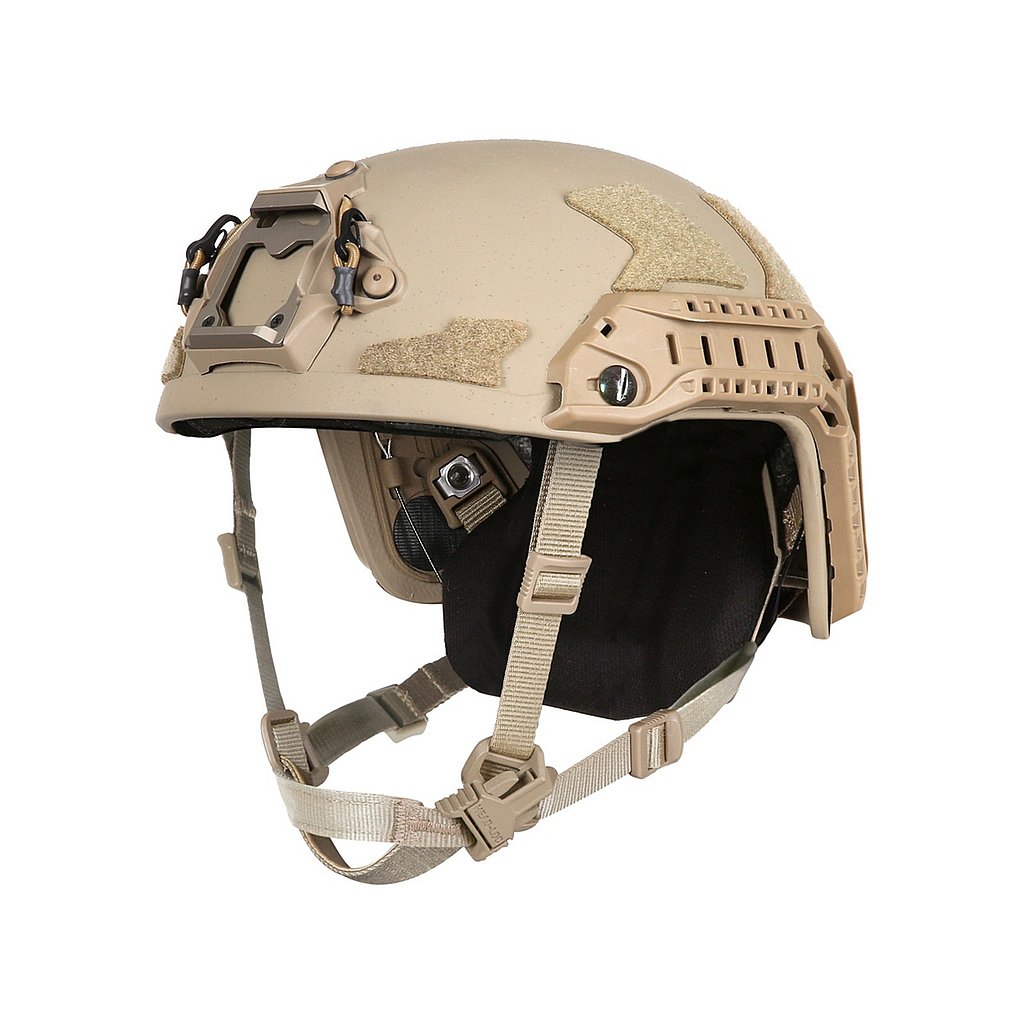
Ops-Core FAST SF Gen II Guide: Sizing, Weight, Protection and Setup
Ops-Core makes the FAST helmet, the high cut design most of the market has copied since. Ops-Core is part of Gentex Corporation, and its helmets are…
Ops-Core FAST SF Gen II vs PGD ARCH GEN3: Which High Cut Helmet to Buy
We carry two high cut ballistic helmets: the Ops-Core FAST SF Gen II and the PGD ARCH GEN3. Both are rated NIJ Level IIIA, both have…
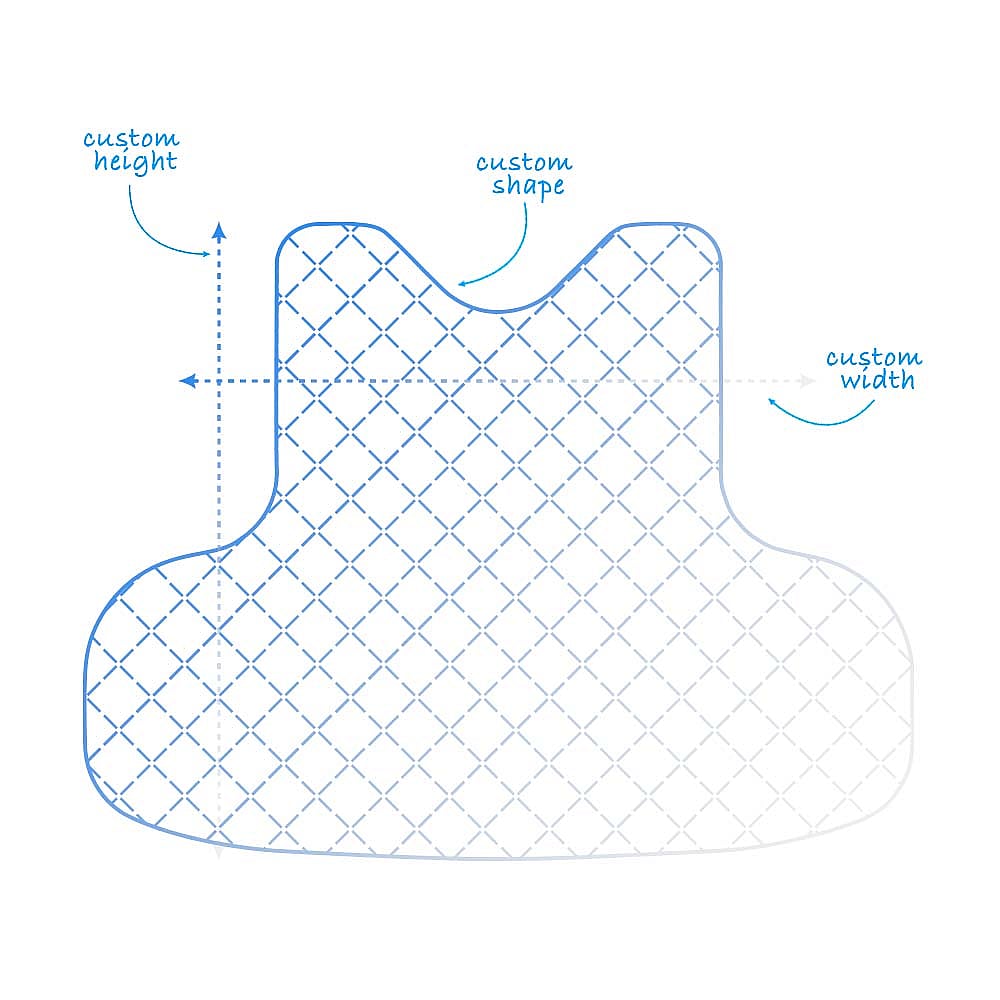
Custom Soft Armor: How to Get Inserts That Actually Fit Your Carrier
Most soft armor doesn't fit the carrier you actually own. Here's how our Custom Soft Armor program solves the fit problem and when to choose custom…