



Admin Pouch Guide: What Goes in It and How to Pick the Right Size
An admin pouch holds the small items you reach for throughout the day: pens, notebook, multitool, ID. Here's what goes in one, how to pick the right size, and where to mount it.
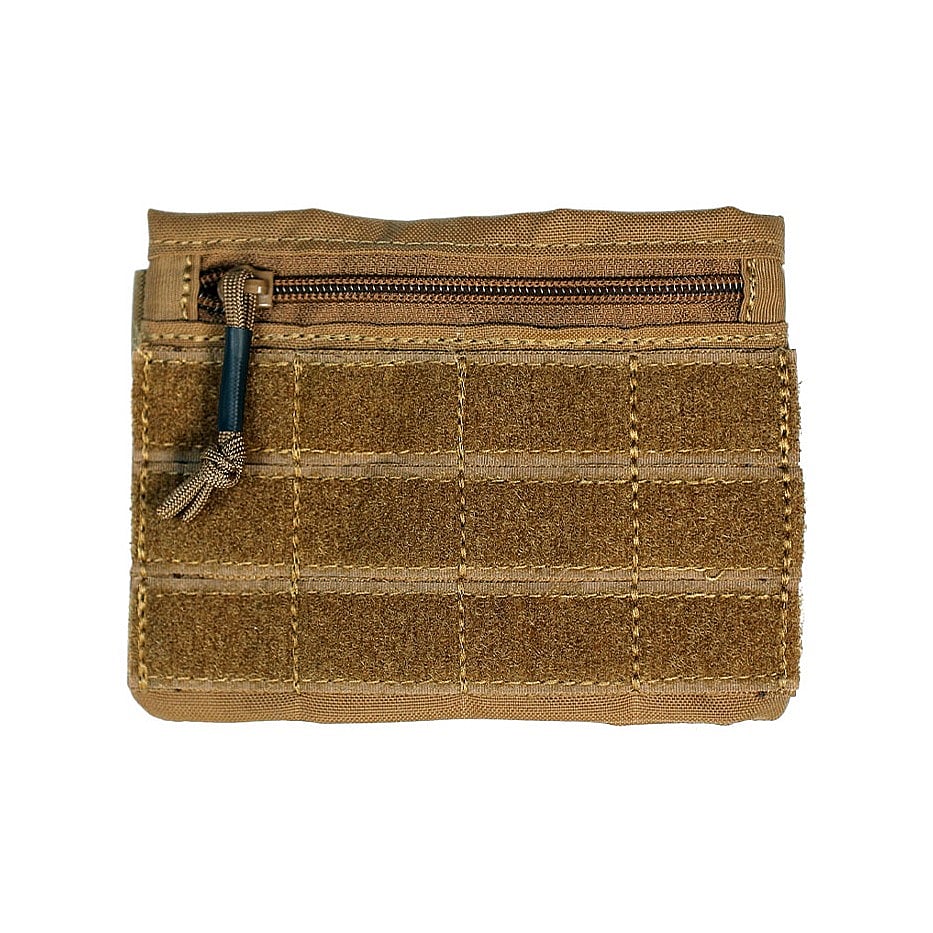
An admin pouch holds the small items you reach for between magazines: a notebook, pens, multitool, ID, keys, batteries, range tools, the things that are not weapons but that you need throughout the day. Admin pouches are easy to overlook because they are the least exciting part of a tactical loadout. They are also the pouch most users end up using more often than any other.
Here is how admin pouches work, what goes in one, how to pick the right size, and where to mount it on a plate carrier or chest rig.
What Is an Admin Pouch?
“Admin pouch” is shorthand for administrative pouch, a small organizer pouch that mounts on a plate carrier, chest rig, or belt. The pouch usually has internal slots for pens and pencils, a flat document compartment for a small notebook or ID, and a zippered or flapped main compartment for general items.
The category started in military use as a place to keep grid coordinates, range cards, and writing tools accessible without digging through a ruck. It expanded into LEO patrol use (citation books, pens, departmental forms), then into civilian shooter use (range cards, scope dope, multitool, batteries, calling cards).
Admin pouches are sometimes called “admin pockets” or “tactical admin pouches” depending on the catalog. The category is the same.
What Goes in an Admin Pouch
The contents depend on your role. Common loadouts:
LEO Patrol
- Pens (multiple, ink dries up)
- Notebook for incident notes and witness contact info
- Spare ID, badge cover, business cards
- Citation book (small format)
- Multitool with screwdriver and pliers
- Latex or nitrile gloves (separate from IFAK)
Military / Tactical
- Pens and grease pencils
- Range card or DOPE card with elevation/windage data
- Map (folded to current operating area)
- Permanent marker (for marking time on tourniquets, casualty annotations, marking buildings)
- Spare batteries (NVGs, lights, IR strobes)
- Multitool
Civilian Shooter
- DOPE card or scope dope reference
- Pen and small notebook
- Multitool
- Spare optic batteries
- Range fee receipt or membership card
- Phone (if you carry one in a tactical setup, the admin pouch is often the most accessible spot)
Admin Pouch Sizes
Admin pouches come in a wide range of sizes from minimalist (single-pen sleeves) to full-format (large enough to hold a hardback notebook and a multitool together). Size matters because admin pouches mount on the front of the carrier or chest rig where they take up real estate that could otherwise hold mags.
Minimalist Single-Pen Format
The smallest admin pouch format is essentially a single elastic loop or fabric sleeve sized for a single pen, marker, or small tool. These mount in tight spaces on the cummerbund or wing of a carrier where a full admin pouch would not fit. We make the Admini Pouch as our minimalist admin option.
The Admini is the right answer for buyers who want a single pen accessible without dedicating a full pouch slot to admin. It also works as a supplemental sleeve on top of a larger admin pouch when you need more pen capacity.
Standard Admin Pouch
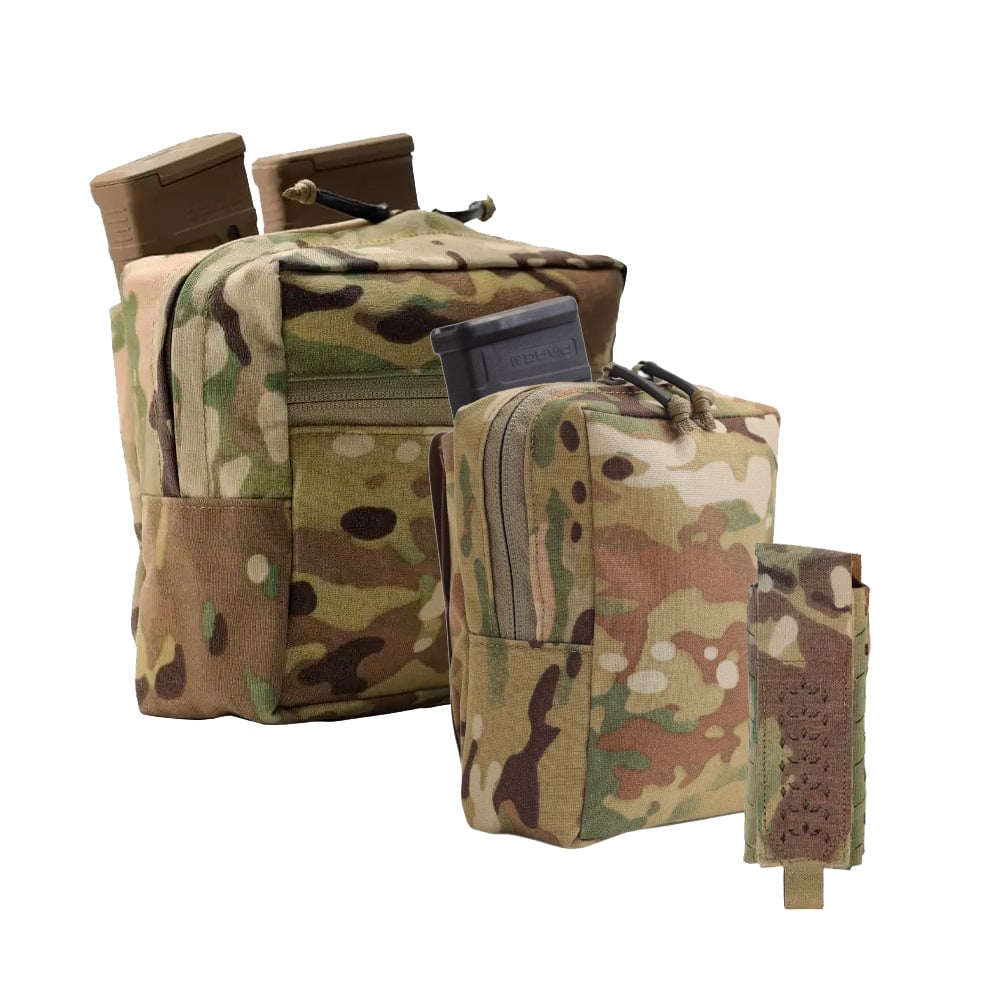
The standard format is roughly 6×4 to 7×5 inches, with internal pen slots, a document compartment, and a zippered main pocket. This is the size most LEO and tactical buyers run. We do not currently produce a standard-format dedicated admin pouch in the Midwest Armor lineup; for now, our GP 5x5x2 Clamshell EMT Pouch V2 is the right size to repurpose as a clamshell admin pouch since it opens flat and accommodates pens, notebooks, and small tools.
Single Mag GP Pouch as Admin
For buyers who want a slim admin format that fits between mag pouches, our GP 4x6x2 Single Mag Pouch works as a single-pen admin pouch when loaded with a pen, multitool, and a folded note card instead of a magazine. The pouch dimensions match a standard rifle mag, so it fits cleanly between two mag pouches without disrupting the layout.
Where to Mount Your Admin Pouch
The admin pouch lives on the front of your carrier or chest rig, where you can reach it with one hand without looking. The standard positions:
- Centerline of plate carrier or chest rig (above mag pouches): most common position. Reachable with either hand, central to the field of view, easy to access.
- Strong-side wing of plate carrier: less common but works for users who want their support side clear of admin gear.
- Top edge of cummerbund (running parallel to the carrier body): minimalist position for an Admini-format pouch where space is tight.
- Strong-side edge of chest rig: leaves the centerline of the rig open for mags.
The mounting position should let you draw a pen, open the pouch, and write something one-handed without disrupting your shooting grip on the rifle. If you are LEO and you anticipate writing in the admin pouch frequently, mount it where your writing-hand can reach it cleanly.
Plate Carrier Admin Pouch vs Chest Rig Admin Pouch
The pouch itself does not change between plate carrier and chest rig contexts; both run the same MOLLE or laser-cut interface. What changes is the available real estate.
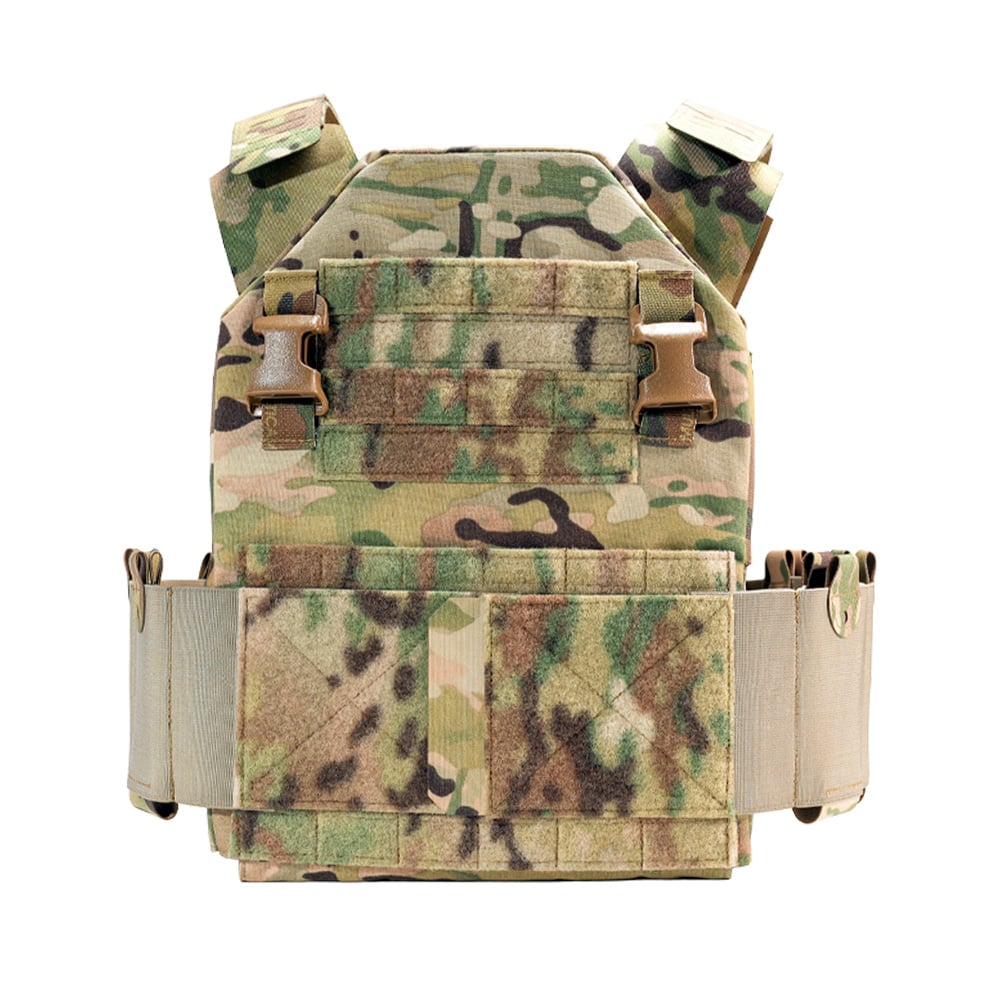
On a plate carrier, admin pouches usually go above the front mag pouches on the chest plate area. The admin pouch sits at sternum height where it is reachable but does not interfere with shouldering the rifle.
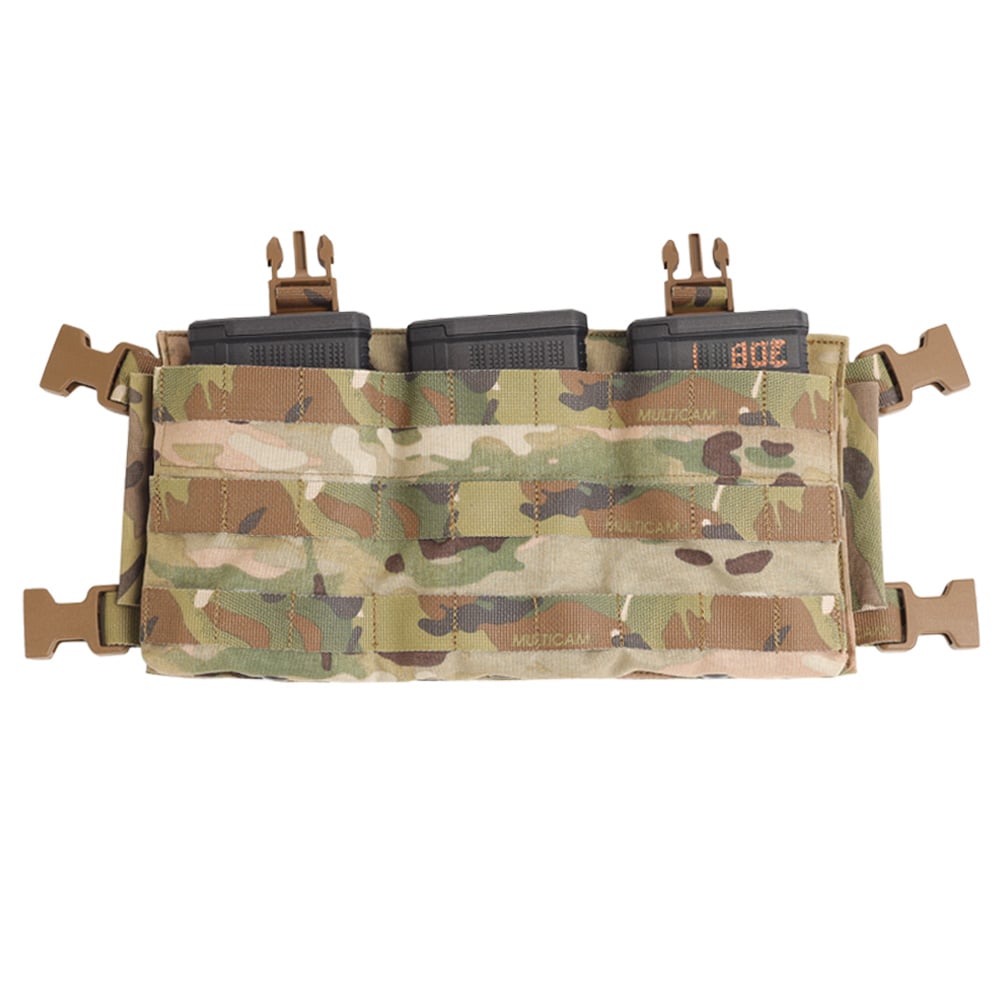
On a chest rig, the admin pouch usually mounts on a wing or in the centerline above the mag layout. Chest rigs typically have less square footage for admin gear than plate carriers, so a smaller admin format (like the Admini Pouch) is often the right call on a rig.
Low Profile Admin Setups
For users running concealed or low-profile carriers, a full admin pouch on the front of the carrier defeats the purpose of low-vis kit. Two approaches:
- Use the Admini single-pen format: the slim profile of the Admini Pouch stays inside the visual silhouette of a low-profile carrier without adding bulk.
- Carry admin items off-body: in a pocket or back-of-belt pouch where the admin gear is not part of the front-side silhouette.
For executive protection, plain-clothes detective work, or any role where the carrier has to disappear under a jacket, the admin gear usually moves off the carrier entirely.
What’s in My Admin Pouch
To make this concrete, here is what we typically run in an admin pouch on a tactical loadout:
- Two pens (one black, one red)
- Permanent marker (for tourniquet time markings)
- Folded DOPE card with rifle zero data
- Small notebook with waterproof paper
- Spare CR123A batteries (for weapon light or red dot)
- Zip ties (for restraint or improvised repairs)
- Small Swiss-Army-style multitool
Total weight: around 6 ounces. Total value: dramatically more than the cost of the pouch when you actually need any of those items.
Bottom Line
For minimalist single-pen admin storage, the Admini Pouch is our recommendation. For larger admin needs that include a notebook and multitool, repurposing the GP 5x5x2 Clamshell EMT Pouch works well thanks to its clamshell opening. For a slim profile that mimics a mag pouch silhouette, the GP 4x6x2 Single Mag Pouch works as a slim admin format.
For the complete picture on every pouch type and how they work together on a carrier or chest rig, see our complete pouches guide.
FAQ
An admin pouch is a small organizer pouch that mounts on a plate carrier, chest rig, or belt and holds the non-weapon items you reach for throughout the day: pens, notebook, ID, multitool, batteries. The format originated in military use for keeping range cards and writing tools accessible.
An admin pouch has internal organization (pen slots, document sleeves, smaller pockets) sized for the specific items LEO and military users need to reach for routinely. A GP (general purpose) pouch is a single open compartment without internal organization. You can use a GP pouch as an admin pouch, but a dedicated admin pouch keeps your gear organized rather than tumbled together.
Most users mount the admin pouch on the centerline of the plate carrier or chest rig, above the mag pouches. This position is reachable with either hand and central to the field of view. Strong-side wing and cummerbund-edge positions also work depending on your loadout.
If you carry pens, notebooks, range cards, or small tools as part of your kit, an admin pouch keeps them organized and accessible. If you carry nothing but rifle mags and a TQ, you do not need one. LEO and military users almost always have a use case; civilian shooters split roughly half-and-half on whether the admin pouch earns its place on the front of the carrier.
The standard format is roughly 6×4 to 7×5 inches, sized to hold a small notebook plus pens and a multitool. Single-pen formats like the Admini Pouch work for buyers who want minimal real estate consumed. Larger formats are available for buyers who carry citation books or hardback notebooks.
“Admin pouch” usually refers to a standalone MOLLE pouch that mounts on a carrier or chest rig. “Admin pocket” can mean either the same thing or a built-in pocket on a chest rig or carrier. The terms are often used interchangeably; check the product description to know which is meant.
For a first admin pouch, start with the Admini single-pen format if you only need to carry a pen and a folded note. If you carry more (notebook, multitool, batteries), step up to a standard format. Avoid oversizing; an admin pouch sized for items you don’t carry just adds weight and bulk.
No. Admin pouches lack the rapid-access design and rip-away capability that IFAKs need. Use a dedicated IFAK for medical gear; medical gear has to be accessible to a partner if you are the casualty, and admin pouches are not built for that use case.
Ops-Core FAST SF Gen II Guide: Sizing, Weight, Protection and Setup
Ops-Core makes the FAST helmet, the high cut design most of the market has copied since. Ops-Core is part of Gentex Corporation, and its helmets are…
Ops-Core FAST SF Gen II vs PGD ARCH GEN3: Which High Cut Helmet to Buy
We carry two high cut ballistic helmets: the Ops-Core FAST SF Gen II and the PGD ARCH GEN3. Both are rated NIJ Level IIIA, both have…
Custom Soft Armor: How to Get Inserts That Actually Fit Your Carrier
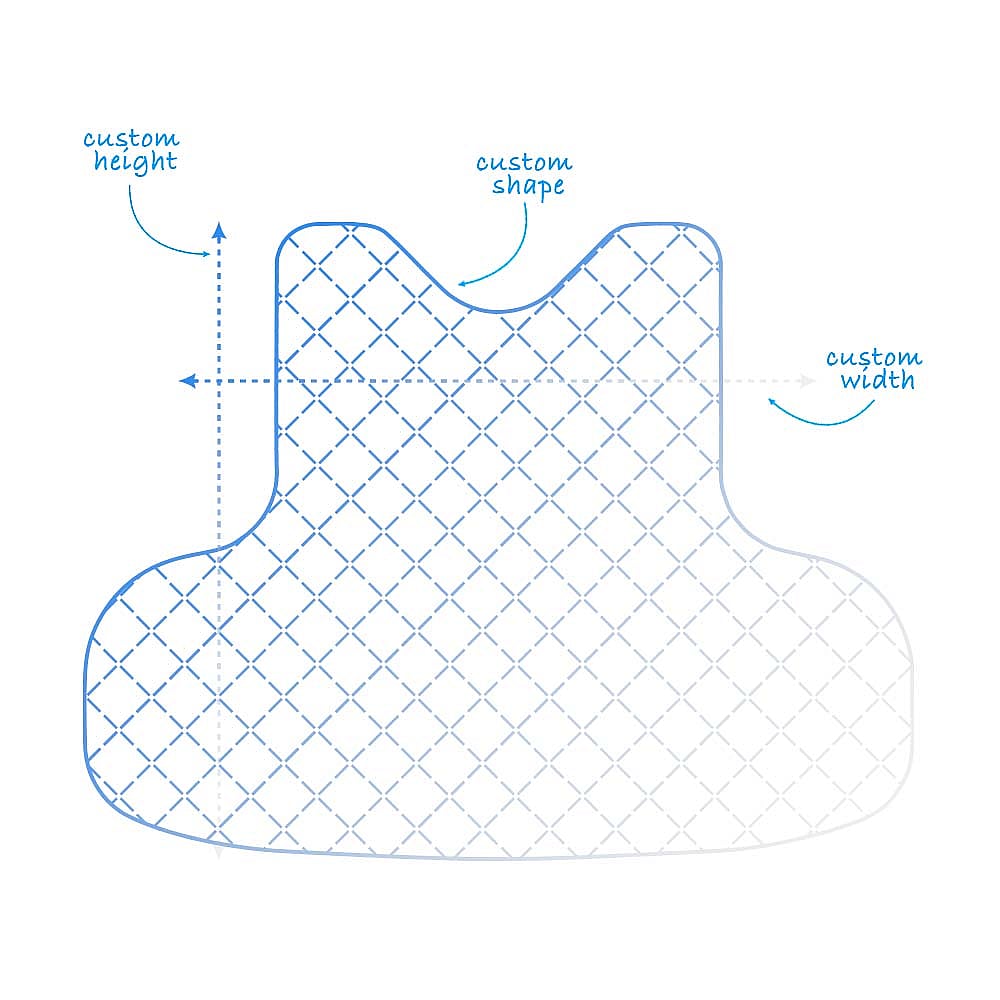
Most soft armor doesn't fit the carrier you actually own. Here's how our Custom Soft Armor program solves the fit problem and when to choose custom…