



MOLLE Pouches: The Complete Guide to Mag, Utility, Admin, and Medical Pouches
The complete guide to tactical pouches. Mag pouches, GP, utility, SAW, drop pouches, placards. Retention styles, mounting systems, sizing, and how to build a complete front panel. Every pouch handmade in Knoxville, Tennessee.
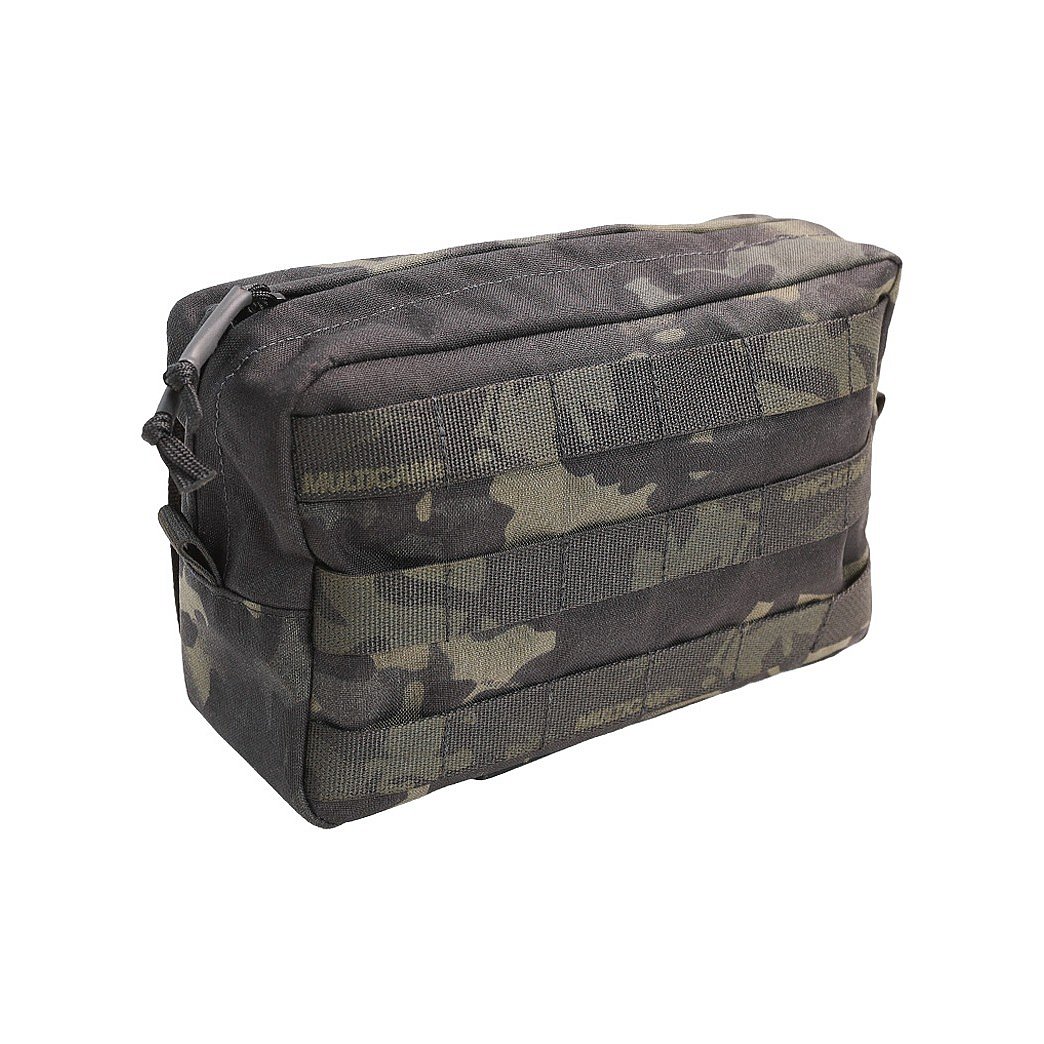
Pouches are the most-used piece of tactical gear in any setup. You grab at them under stress, in the dark, with gloves on, in the rain, sometimes bleeding. A bad pouch costs you time you cannot get back. A good one disappears into the workflow and lets you focus on the task instead of the gear.
We are a family-owned shop that has been designing and manufacturing tactical pouches in Knoxville, Tennessee for over a decade. Every GP pouch, mag pouch, utility pouch, and specialty pouch in our lineup is built on our machines by our team. Berry Compliant nylon, American-sourced hardware, American manufacturing end to end. Not by accident. By design.
This is the complete reference on our pouch lineup and how to pick the right ones for your setup. Mag pouches in every capacity. Utility pouches sized for every payload. Specialty configurations for NVGs, gas masks, and bulk storage. Retention styles, mounting systems, material deep dives, front panel loadout examples, and the common mistakes we see buyers make. If you are building out a carrier or chest rig, start here.
What a Pouch Actually Does
A pouch is a storage container designed to mount to a load-bearing platform. The platform is a plate carrier, chest rig, belt, or backpack. The pouch adds modular capacity to that platform so you can configure your loadout for the mission.
Three functions every good pouch has to nail:
Retention. The pouch has to hold its contents through movement, jostling, and the full range of activity the wearer puts it through. A pouch that dumps mags when you run is worse than no pouch at all because you thought you had capacity you did not. Retention is about mechanical design: how the pouch grips, where the pressure is applied, and how the grip changes under movement.
Access. You have to be able to get to the contents fast when you need them. Access speed depends on closure style, pouch position on the carrier, and how well the design matches your hand geometry under stress. A pouch that is technically accessible but awkward to work under gloves or fatigue fails at this function.
Durability. The pouch has to survive use. Real tactical pouches take abuse that consumer nylon does not. Stitching, webbing, hardware, and fabric all have to earn their place on a loadout that is going to be worn hundreds of times, dropped, dragged, and exposed to weather and chemicals.
Get all three right and the pouch becomes invisible. You stop thinking about it. That is the goal.
Mag Pouches: The Highest-Touch Gear
Mag pouches are purpose-built for rifle or pistol magazines. They are the highest-touch pouch on any setup, and they deserve dedicated design attention.
Single Mag Pouches
One mag per pouch. This sounds restrictive but it is the right call in a surprising number of scenarios.
Home defense setups. You are not planning to fight through multiple magazines in your own house. One mag in the gun, one reload on the carrier, and you have covered 99% of realistic scenarios. A single mag pouch keeps the carrier light and fast to don.
EDC truck guns or low-profile carriers. When weight matters and concealment matters, one pouch is often the right call. Pair with a chest rig or hip pouch for additional mags stored separately from the carrier.
Specialty slots. A single pouch in a side pocket or on a cummerbund can carry one odd-size mag (a .308, a drum-fed pistol caliber, a specialty round) when your primary mag load is handled elsewhere.
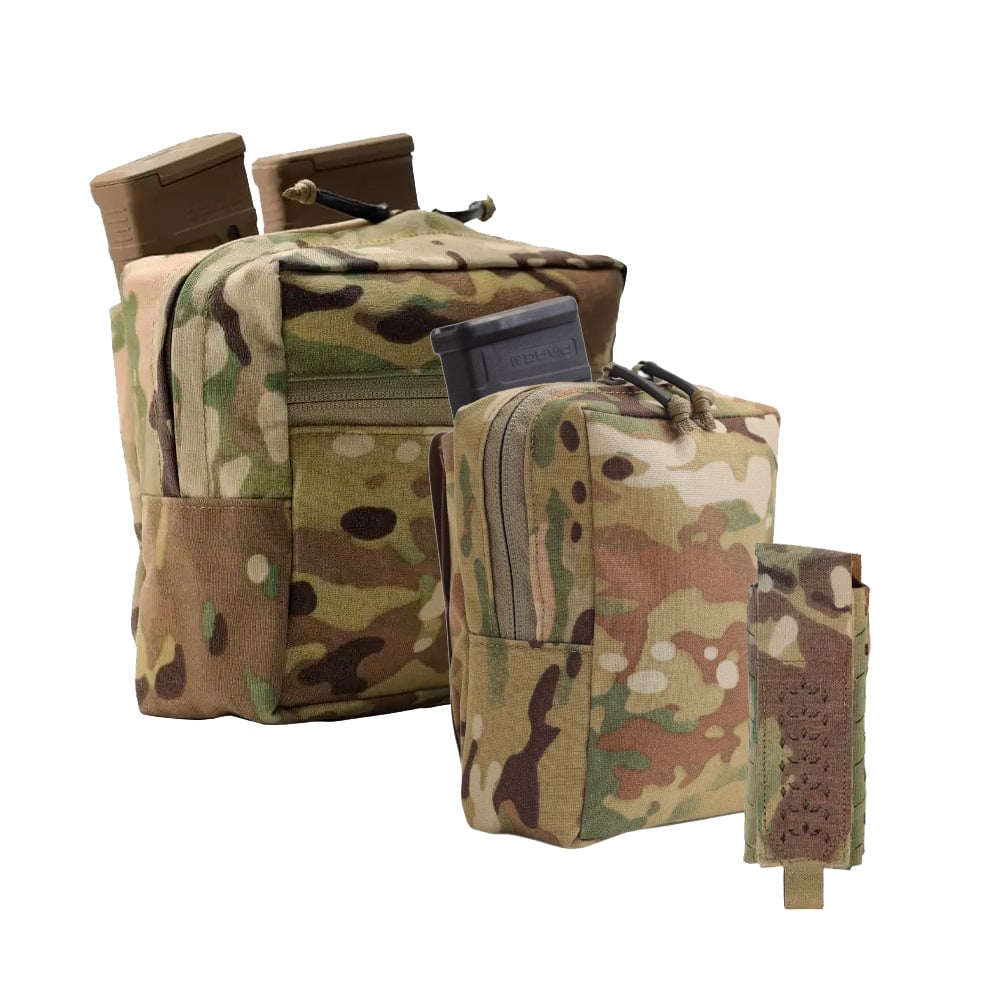
Our GP 4x6x2 Single Mag Pouch is built for exactly these cases. 4 inches wide, 6 inches tall, 2 inches deep. Uses 2 columns and 6 rows of integrated laminate MOLLE so it slots into tight spots where a double-wide pouch will not. Takes a 5.56 mag on a Hook and Elastic insert, or swap in the .308 insert if you are running larger rifle mags. Interior loop lining accepts hook-backed accessories like our 5-Cell Battery Holder for internal organization. Belt pass-through on the back lets it mount to a duty belt or battle belt in addition to MOLLE.
Double Mag Pouches
Two mags per pouch. This is the workhorse configuration for most carriers and the setup we recommend as the default for anyone who is not sure.
Why it works: two mags on the carrier plus one in the weapon covers the round count most civilian defensive scenarios require. It balances well on the carrier because you can center the pouch or run it slightly off-center without throwing off weight distribution. And on the front panel, a double pouch takes up less real estate than two singles side by side, leaving room for admin, lights, or medical.
Our GP Double Mag Pouch 7x6x3 is the best-selling pouch in our lineup. The design decision that makes it work is the removable elastic sleeve. The sleeve holds two 5.56 mags inside a general-purpose pouch body, which means when you are not running full combat loadout, you pull the sleeve and have a full-size GP pouch for anything else. One piece of gear, two roles.
Mounts via MOLLE/PALS on both traditional webbing and laser-cut systems. Integrated belt pass-through for belt-mounted setups. Same pouch works on a plate carrier, a chest rig, or a duty belt depending on where you need it. Integrates seamlessly with our Hilo Laser Recon Chest Rig V2 on either side wing or front center, or on the Laser Triple Mag Front Placard and MOLLE Triple Mag Front Placard in multi-mag configurations.
Triple Mag Placards
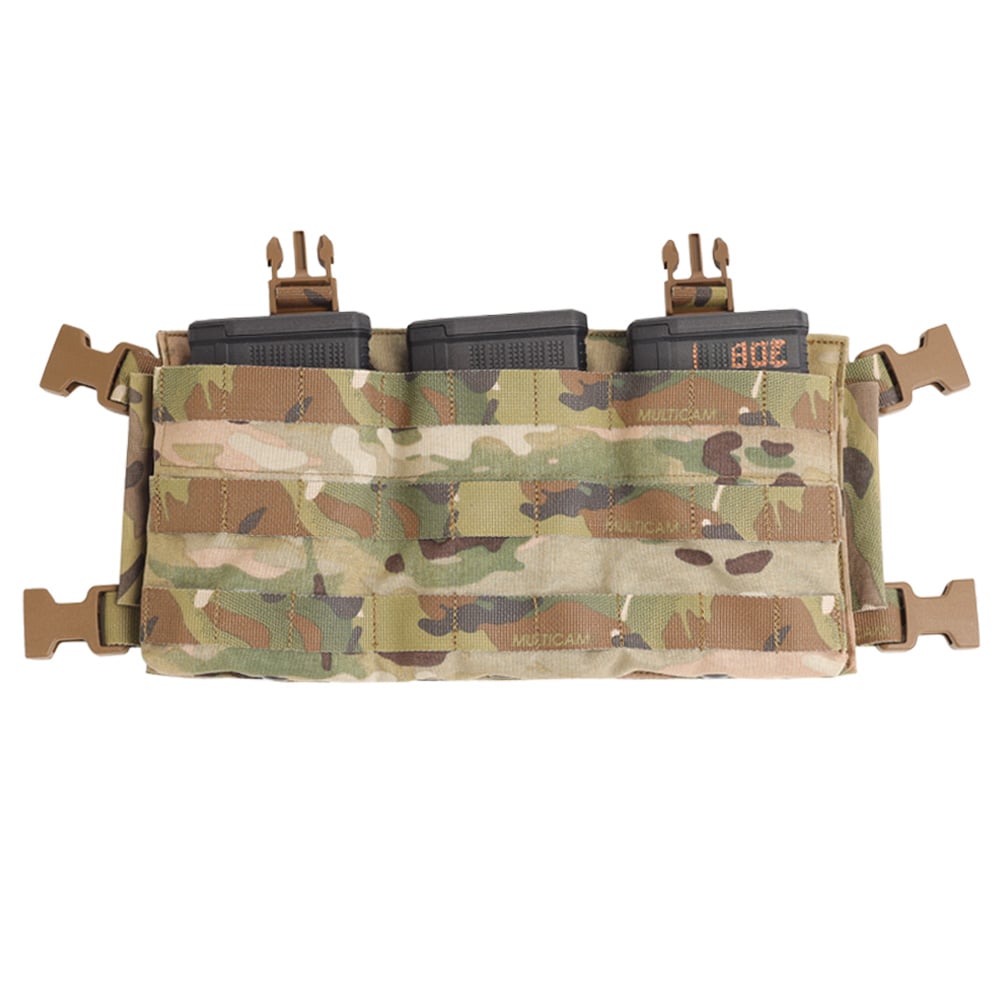
Three mags side by side on a single front panel. Dedicated triple mag placards are cleaner than three individual pouches because they are purpose-built for consistent retention, spacing, and access geometry.
LEO patrol setups that follow department SOP calling for a specific rifle mag count. Tactical roles with realistic expectation of sustained engagement. Training environments where you are running multiple drills back-to-back without reloading breaks. For civilian defensive use, triple is usually more than you need, but for users who specifically need the capacity, a placard is the right answer.
Our MOLLE Triple Mag Front Placard and its laser-cut counterpart give you three mags in a single-piece front panel with consistent retention across all three. The placard itself mounts to most common carrier attachment systems via hook-and-loop plus quick-detach. Swap the placard out for a different loadout (admin-heavy, medical-heavy) without rebuilding the whole front of your carrier.
For more on picking between single, double, and triple configurations, read our Mag Pouch Guide.
Capacity Reference by Role
- Home defense / minimalist setup: 1-2 mags total (one in gun, one on carrier)
- Civilian defensive / training: 3 mags total (one in gun, two on carrier via double pouch)
- LEO patrol: 3-4 mags total (one in gun, two or three on carrier)
- Tactical / specialty: 4-6 mags, typically via triple placard plus cummerbund pouches
- Military / sustained engagement: 6-8 mags, including rear storage and drop pouch integration
Retention Styles and Mechanics
Retention is how the pouch holds contents during movement. Three main styles, each with different trade-offs.
Elastic Retention
An elastic band or sleeve that grips the mag by tension. The mag slides in and out under direct pull force. No flap, no hardware, no adjustment needed.
Pros: fastest draw, lowest profile, accommodates mag length variation naturally, silent on the draw, works with any mag body shape. The elastic adapts to mag geometry, which means the same pouch works with PMAGs, Lancers, HKs, and USGI aluminum without adjustment.
Cons: elastic loses tension over years of use, less secure retention in aggressive movement (running, vehicle rollover, water crossings), and the mag can shift position inside the pouch if not seated properly.
When it works: most carrier and chest rig applications where the wearer is not dropping through windows or actively wrestling. Default choice for speed-focused civilian and LEO setups.
Kydex Retention
Molded kydex inserts that grip the mag by friction and mechanical hold. Usually requires a specific push to release.
Pros: positive retention that will not loosen with age, adjustable tension on quality kydex setups, quiet (though not silent) on draw, highly secure in aggressive movement.
Cons: mag-specific (a kydex insert cut for PMAG does not fit Magpul D60 drums or HK mags well), higher cost, can wear the mag finish over time, makes noise if you bump against obstacles.
When it works: setups where mag security trumps every other concern. Water operations, aggressive movement environments, military and LEO tactical roles.
Flap Retention
A fabric flap over the top of the pouch, usually closed by velcro, a buckle, or a snap. The flap is the retention mechanism.
Pros: absolute retention until you open the flap, protects the mag from weather and debris, quiet, works with any mag shape.
Cons: slowest draw style by a meaningful margin, adds a step to the reload, velcro flaps make noise if you need to stay quiet on approach.
When it works: utility pouches where you are not reloading under time pressure, spare mags stored for resupply, long-duration wear where debris and weather are a real concern.
For scenarios where you want flap flexibility without the full commitment to a flap-only pouch, our Recon Rifle Mag Flap adds a retention flap to compatible pouches. Use it when the environment calls for it, remove it when speed matters.
Hook and Elastic Insert Systems
Hybrid approach combining a fabric pouch body with a swappable internal insert. The insert handles retention; the pouch body handles payload variation when you pull the insert for non-mag use.
Our GP pouches use this system. 5.56 insert for standard rifle mags. .308 insert for larger mags. Pull the insert entirely for general utility storage. The design gives you the form factor and mounting consistency of a single pouch family across different weapons and use cases.
Utility Pouches
General-purpose and specialty utility pouches carry everything that does not fit neatly into a mag pouch. Admin gear, medical, comms, sensitive equipment, boxed ammo, specialty items.
General Purpose (GP) Pouches
Our GP pouches are sized across a range to cover different payloads. Three main sizes cover most needs.
GP 4x6x2 (Small). Compact footprint, 4 inches wide, 6 inches tall, 2 inches deep. Ideal for single items: one mag, a small radio, a compact light, a folding knife, a phone, or a dedicated tourniquet. Good spot for the support-hand side of a chest rig or plate carrier where you want admin access without bulk. See the GP 4x6x2 Single Mag Pouch.
GP 6x5x2 (Medium). The most versatile size. Wide enough for two mags side by side, a small admin kit, a fixed-blade knife, or a compact IFAK. Tall enough to fit standard-size batteries, spare magazines, or small comms gear without cramming. See the GP 6x5x2 Pouch.
GP 7x6x3 (Large). Takes two mags via sleeve insert, or full-size admin loadouts, or bulkier gear like a full-size flashlight plus spare batteries. Double mag capacity when you want it, full-size utility pouch when you pull the sleeve. See the GP Double Mag Pouch 7x6x3.
All GP pouches share common design elements: MOLLE/PALS attachment, belt pass-through, loop-lined interior walls, and compatibility with our insert system for mag conversion. Build out a setup with GP pouches and you have flexibility to reconfigure by mission without buying new hardware.
SAW Padded Utility Pouch
The SAW Padded Utility Pouch is our purpose-built large utility. Designed for boxed ammunition, compact gas masks, NVGs, and other heavier or sensitive equipment.
TEGRIS collapsible sides hold the pouch shape under load. Padded front panel protects sensitive payloads from impact. The front mag area holds up to 6 rifle mags, and the rear cavity stages 2 more, giving a total 8-mag capacity if used for bulk ammo. 1-inch buckle and flap for fast one-handed operation. Adjustable cinch strap for variable load heights. Four-leg MOLLE attachment plus belt pass-through. Interior walls are loop-lined for attaching organizer inserts. Side laser grid accepts additional accessories directly on the pouch.
This is the pouch that solves the problem of “I need to carry something that does not fit in a GP.” Gas masks. Night vision goggles in their rigid case. Specialized comms gear. Bulk boxed ammunition for resupply. Large medical kits. The SAW is sized and built for gear that cheaper utility pouches either cannot accommodate or cannot protect.
Drop Pouch
The Hilo Drop Pouch handles the problem of where empty mags go during sustained engagement. Integrates with our chest rigs via insert or Tubes attachment. Rides low and out of the way until you need it. Stows flat when empty to avoid adding bulk.
Drop pouches are often overlooked in civilian setups and consistently present in military and LEO tactical loadouts. If you train for sustained engagement or are in a role with realistic multi-mag scenarios, a drop pouch is essential. Without one, empty mags end up on the ground where you lose them, or stuffed into cargo pockets where they rattle and slow you down.
For more on utility pouch sizing and selection by use case, read our Utility Pouches Guide.
Mounting Systems
All of our pouches use multiple mounting options on a single design so the same pouch moves between platforms without buying duplicates.
Traditional MOLLE / PALS
The 1-inch webbing ladder system with 1.5-inch row spacing that has been the standard on tactical nylon for twenty years. Our pouches attach via integrated straps that weave through the PALS grid on the host platform (carrier, chest rig, belt).
When selecting pouches for a MOLLE platform, verify that your pouch’s attachment straps are the right length for your carrier’s webbing rows. Most modern gear standardizes around 3-row and 4-row attachment. Pouches with straps too short do not engage securely. Pouches with straps too long flop and flap.
Laser-Cut MOLLE
Newer carriers and rigs use laser-cut slots instead of sewn webbing. Lower profile, cleaner aesthetics, lighter weight. Our pouches attach to laser-cut systems via the same strap geometry without modification.
Compatibility note: most modern pouches work on both traditional and laser-cut MOLLE, but older pouches with non-standard strap widths may not engage cleanly with laser-cut grids. Verify before buying if you are mixing older pouches with newer laser-cut carriers.
Belt Pass-Through
Integrated channel on the back of the pouch accepts 1.75-inch or 2-inch duty belt webbing. Mount the pouch directly to a duty belt, battle belt, or plate carrier belt system without needing a separate mount or adapter.
Belt pass-through is a feature that adds real flexibility. The same GP 4x6x2 that rides on your plate carrier front panel can move to your duty belt for a patrol shift without modification. One pouch, multiple mounting options, consistent performance across platforms.
Placard Mount
Swappable front panels that mount to the carrier via a quick-detach attachment system. You build out multiple placards for different loadouts (mag-heavy, admin-heavy, medical-heavy) and swap them by mission.
A triple mag placard is often cleaner than three individual pouches MOLLE-mounted to the front panel. The placard is purpose-built, consistent, and swaps in and out of the carrier as a single unit. This is particularly valuable for wearers who rotate between mission profiles regularly.
For the full breakdown on how MOLLE and PALS work and how to mount pouches securely, read our Complete MOLLE and PALS Guide.
Materials and Construction
Cordura Weights
500D and 1000D Cordura are the common weights for tactical nylon. The number refers to the denier, which is a measure of the thread thickness. Higher denier equals heavier, more abrasion-resistant fabric.
500D is lighter and more flexible, good for lightweight utility pouches where weight savings matter more than extreme abrasion resistance. Typical use: admin pouches, small utility pouches, concealable applications.
1000D is heavier and more rigid, the default for pouches that need to hold shape under load or survive aggressive abrasion. Typical use: mag pouches, large utility pouches, SAW-class pouches carrying heavier payloads.
For pouches that need to hold shape under load, 1000D (or equivalent reinforcement like TEGRIS) is the more durable choice. For light utility where weight matters, 500D is fine. Most of our pouches are 500D or 1000D depending on the role, sourced from American Cordura manufacturers.
Laminate Materials
Modern tactical pouches increasingly use laminate materials instead of, or in combination with, traditional Cordura. Laminates are composites of multiple material layers bonded together. They offer superior weight-to-strength ratios and enable laser-cut MOLLE grids.
Common laminate brands include Squadron, TegrisTT, and similar engineered materials. Properties vary by composition, but in general: lighter than equivalent Cordura, more dimensionally stable (holds shape better), enables precise laser cutting for MOLLE slots, slightly more expensive.
Our laser-cut MOLLE gear uses laminate for exactly these reasons. The material is structurally stable enough to hold MOLLE geometry without needing the backing webbing that traditional MOLLE requires, which saves weight and creates cleaner aesthetics.
Hardware
Buckles, ladder locks, and webbing hardware should be American-made from brands like ITW or Duraflex. These hold up under load, in cold weather, and under repeated cycling.
Cheap plastic hardware cracks in cold temperatures and fails under aggressive movement. A failed buckle on a mag pouch means the mag falls out. A failed buckle on a flap-closure utility pouch means contents scatter. Hardware is not the place to save money.
Stitching
Stitching is where cheap pouches fail first. Look for tight, even stitch spacing, reinforced box stitching at stress points (attachment strap bases, flap hinge points), and heavy-duty thread that matches the load the stitching is meant to bear.
Our pouches are sewn on our machines in Knoxville by our team. Every pouch is inspected before it ships. This is different from production-line pouches built on automated machines with inconsistent quality control.
Berry Compliance
Berry Compliance means the product meets the Berry Amendment requirements for Department of Defense procurement, which effectively means all components (fabric, thread, hardware, labor) are sourced and manufactured in the United States.
Why it matters for pouches specifically: cheap imported nylon often uses petroleum-based fabrics with inconsistent quality control, Chinese-made hardware that fails cold weather tests, and thread from unknown sources that degrades faster than American-made alternatives. Berry Compliance is a guarantee of American supply chain integrity.
Our pouches are Berry Compliant end-to-end. This is not a marketing claim. It is a sourcing and manufacturing practice that adds cost but ensures supply chain integrity and American jobs. For LEO and military buyers whose procurement regulations require Berry Compliance, this matters directly. For civilian buyers, it is a quality signal.
Building a Complete Front Panel
Most setups combine pouches to build out the front of the carrier. Four common patterns cover most real-world loadouts.
Pattern 1: Balanced Loadout (Most Users)
- Center: GP Double Mag Pouch 7x6x3 (two mags)
- Support-hand side: GP 4x6x2 Single Mag Pouch (third mag or admin)
- Dominant-hand side: GP 6x5x2 Pouch (admin, medical, or light)
Three mags ready, one admin slot, one utility slot. Clean layout, room to breathe, balances weight across the front panel. Default recommendation for most civilian and LEO setups.
Pattern 2: Mag-Heavy Loadout
- Center: MOLLE Triple Mag Front Placard (three mags)
- Support-hand cummerbund: GP 4x6x2 Single Mag (fourth mag)
- Dominant-hand cummerbund: GP 6x5x2 Pouch (admin)
Four mags ready, admin on cummerbund. Good for LEO patrol, training with extended drills, and specialty roles requiring higher ready round count.
Pattern 3: Minimalist Loadout
- Center: GP Double Mag Pouch (two mags)
- Support-hand side: GP 6x5x2 Pouch (admin with keys, phone cable)
- Dominant-hand side: empty or light pouch only
Two mags, one admin. Keeps the carrier light for home defense or short-duration wear. Donning time matters more than capacity.
Pattern 4: Specialty / Sensitive Payload
- Center: SAW Padded Utility Pouch (NVGs, gas mask, or specialty gear)
- Cummerbund: GP pouches and mag placards for mags
- Back panel: IFAK, hydration, specialty gear
Used when payload type drives the configuration. Mag capacity moves to the cummerbund to free the front panel for the specialty item.
Mag Compatibility Matrix
Pouches are often marketed as “rifle mag” compatible, which is true in a general sense and false in the specifics. Here is what actually fits.
5.56 / .223 Mags
The default rifle mag. Most pouches are sized and tensioned for this family. PMAGs, Lancer, HK, standard USGI aluminum, and the various polymer variants all fit 5.56-spec pouches without modification.
Our standard 5.56 inserts work with all major 5.56/.223 mag formats. No adjustment needed.
.308 / 7.62 NATO Mags
Longer and usually wider than 5.56 mags. A pouch sized for 5.56 will either not fit a .308 mag or will hold it with the bottom protruding.
Our GP pouches use an insert system for exactly this reason. Same pouch body, different internal insert. 5.56 insert for standard rifle mags. .308 insert for larger mags. Order the insert separately if you need to run both on the same carrier.
AK-Pattern Mags
7.62×39 AK mags have a distinctive curve and often require AK-specific pouches to seat correctly. A 5.56 pouch will accept an AK mag but the curve will not sit flush, and the mag may rock inside the pouch. Dedicated AK pouches with a matching curve are the right call.
Pistol Mags
Pistol mag pouches are a separate category. They are shorter, narrower, and usually single-stack or thin double-stack sized. Do not try to use a rifle mag pouch for pistol mags. The mag will drop to the bottom, rattle, and the retention will not work.
Drum Mags
60-round drums, 100-round Beta mags, and similar high-capacity drums need dedicated drum carriers. These do not fit standard rifle mag pouches. If drums are part of your loadout, plan a dedicated pouch for them.
What Separates Our Pouches From Imports
You can buy imported tactical pouches for 40% of the price of American-made. We know. Here is what you give up for that savings.
Materials. We use Berry Compliant Cordura and laminate materials sourced from American mills. Imports use whatever nylon blend the factory had on hand. The difference shows up in abrasion resistance, UV stability, and stitching performance over time.
Hardware. We use American-made buckles, webbing, and hardware throughout. Imports typically use lower-grade plastic hardware that cracks under cold weather or fails under repeated use.
Stitching. Our pouches are sewn on our machines by our team in Knoxville. Every pouch is inspected before it ships. Imports are sewn in volume on production lines with inconsistent quality control. Stitching failures are the most common complaint on imported pouches.
Design. We iterate designs based on field feedback from our customers. When a feature does not work in real use, we fix it. Imports ship whatever the factory tooled up for, regardless of whether the design actually makes sense.
Warranty and support. A Midwest Armor pouch with a manufacturing defect gets replaced. An imported pouch from a large retailer gets a credit, maybe, if you can prove the defect within the 30-day window. Our warranty backs the gear for the lifetime of normal use.
The cost difference is real. So is the quality difference. For gear you are betting your life on, the math works in favor of quality every time.
Common Mistakes
Wrong Pouch for the Payload
The single most common mistake. Stuffing oversized items into a pouch that cannot close, or rattling small items around in a pouch too large. Measure your intended payload before buying. If you are not sure, buy the size up. Empty space inside a pouch is less of a problem than not being able to close it.
Overloading the Front Panel
Pouches covering every inch of front-panel MOLLE. Creates a front-heavy carrier that rocks forward and fatigues unevenly. Distribute weight across the back panel and cummerbund.
Mismatched Pouch and Mag
Running .308 mags in 5.56 pouches, PMAGs in USGI-cut pouches, or AK mags in AR pouches. The mag does not seat correctly, retention is inconsistent, and the draw is unpredictable. Use the insert system or buy pouches sized for the mag you run.
All Pouches on the Front
Loading every inch of front-panel MOLLE with pouches creates a front-heavy carrier. Distribute weight across the back panel (IFAK, hydration) and cummerbund (radio, secondary mags) to keep the carrier balanced.
Cheap Pouches on Expensive Carriers
A $300 plate carrier loaded with $12 imported pouches is a setup problem. Retention fails, stitching comes apart under load, and the mag you absolutely need at the moment you need it is not where it should be. Pouches are not the place to save money.
All-Utility Loadout With No Organization
One large GP pouch full of unsorted miscellany. You spend minutes rummaging for the one thing you need. Better approach: multiple smaller pouches each with a specific purpose, or one larger pouch with loop-lined interior walls and organizer inserts that separate items by category.
Ignoring Retention Style
Buying a flap pouch for a scenario that requires speed reloads, or an open-top pouch for a scenario where mag security matters more than draw speed. Pick the retention that matches the actual use case, not the one that looks cool.
Our Full Pouch Lineup
See the complete pouch catalog at midwestarmor.com/product-category/pouches. Mag pouches, utility pouches, specialty pouches, placards, and accessory hardware.
Every pouch is handmade in Knoxville. Berry Compliant materials. American-made hardware. Lifetime warranty against manufacturing defects. The gear we build for our customers is the same gear we run ourselves.
Deep Reading
- How to Choose a Mag Pouch: Single, Double, Triple, and What Actually Fits Your Carrier
- Utility Pouches Explained: GP, SAW, and How to Pick the Right One
- The Complete MOLLE and PALS Guide
- Plate Carriers: The Complete Guide
- Tactical Chest Rigs: The Complete Guide
- How to Choose the Right Body Armor: The Complete Guide
- How to Set Up a Plate Carrier
- Battle Belt Setup: Building Your First-Line Gear
- Tourniquet Holder Guide
- Gunshot Wound First Response
- QuikClot and Hemostatic Gauze
- Pressure Dressing vs Israeli Bandage
Questions? We Answer Them
If you are building out a setup and are not sure which pouches fit your platform, your mags, or your use case, reach out. Text us at 865.859.9850 or email support@midwestarmor.com. Tell us what you run, what you need to carry, and what the setup is for. We will point you at the right configuration. It is what we do.
FAQ
Depends on role. Home defense: 2 to 3 pouches (one mag, one admin, optional third for medical or light). Training or civilian defensive: 3 to 4 pouches. LEO patrol: 4 to 6 pouches depending on department SOP. Military and tactical: 6 to 10 pouches depending on role. The rule: only gear that earns its place. Every pouch adds weight you carry for every minute of wear.
Yes, if it has dual mounting options. Our GP pouches all include MOLLE attachment plus belt pass-through, so the same pouch moves between a plate carrier front panel and a duty belt without modification. Some brands sell MOLLE-only pouches that cannot belt-mount, so verify before buying if cross-platform use matters.
PALS (Pouch Attachment Ladder System) is the physical grid of webbing rows on the carrier or chest rig. MOLLE (Modular Lightweight Load-carrying Equipment) is the broader system that includes PALS plus the pouches, accessories, and attachment hardware that work with PALS. In practice, the terms are used interchangeably. Full breakdown in our MOLLE and PALS Guide.
Only if your use case specifically demands it. Kydex provides positive retention that does not loosen with age, which matters for water operations, aggressive movement, or environments where dropping a mag has serious consequences. For most civilian and LEO setups, elastic retention is faster and adequate for security. Kydex is a specialty choice for specialty needs.
Elastic retention loses tension over time with repeated use. This is normal aging. Quality elastic maintains serviceable tension for several years of daily use. When retention degrades past the point where the mag feels insecure, replace the pouch. Our pouches use commercial-grade elastic that outlasts budget alternatives by years.
Do not machine-wash. The agitation and heat damage the MOLLE webbing, the velcro, and the stitching. Wipe down with a damp cloth and mild soap. Air dry completely. Heat and detergent are the enemies of tactical nylon longevity.
Berry Compliant means every component (fabric, thread, hardware, labor) is sourced and manufactured in the United States. It costs more because American materials and labor cost more than imported alternatives. For LEO and military procurement, Berry Compliance is often a regulatory requirement. For civilian buyers, it is a quality signal and a vote for American manufacturing.
Check the stitching (tight, even, reinforced at stress points), the hardware (American-made like ITW or Duraflex), the fabric (Cordura or quality laminate, not generic nylon), and the retention (consistent, secure, appropriately tuned). If the pouch feels light and flimsy, the materials are probably thin. If the stitching is uneven or sparse, quality control is poor. Price is a rough proxy: $15 pouches are usually imports, $30-60 pouches are usually quality American-made.
Lifetime warranty against manufacturing defects. If the stitching fails, the hardware fails, or the fabric tears under normal use, we replace the pouch. Does not cover damage from abuse, chemical exposure, or modification. Contact support@midwestarmor.com or text 865.859.9850 to start a warranty claim.
Usually yes, if the pouch has standard MOLLE attachment straps. Most modern pouches work on both systems. The reverse is also usually true: traditional MOLLE pouches attach to laser-cut carriers via the webbing straps. Mixing is fine. Verify the strap geometry matches before buying if you are combining older pouches with newer laser-cut gear.
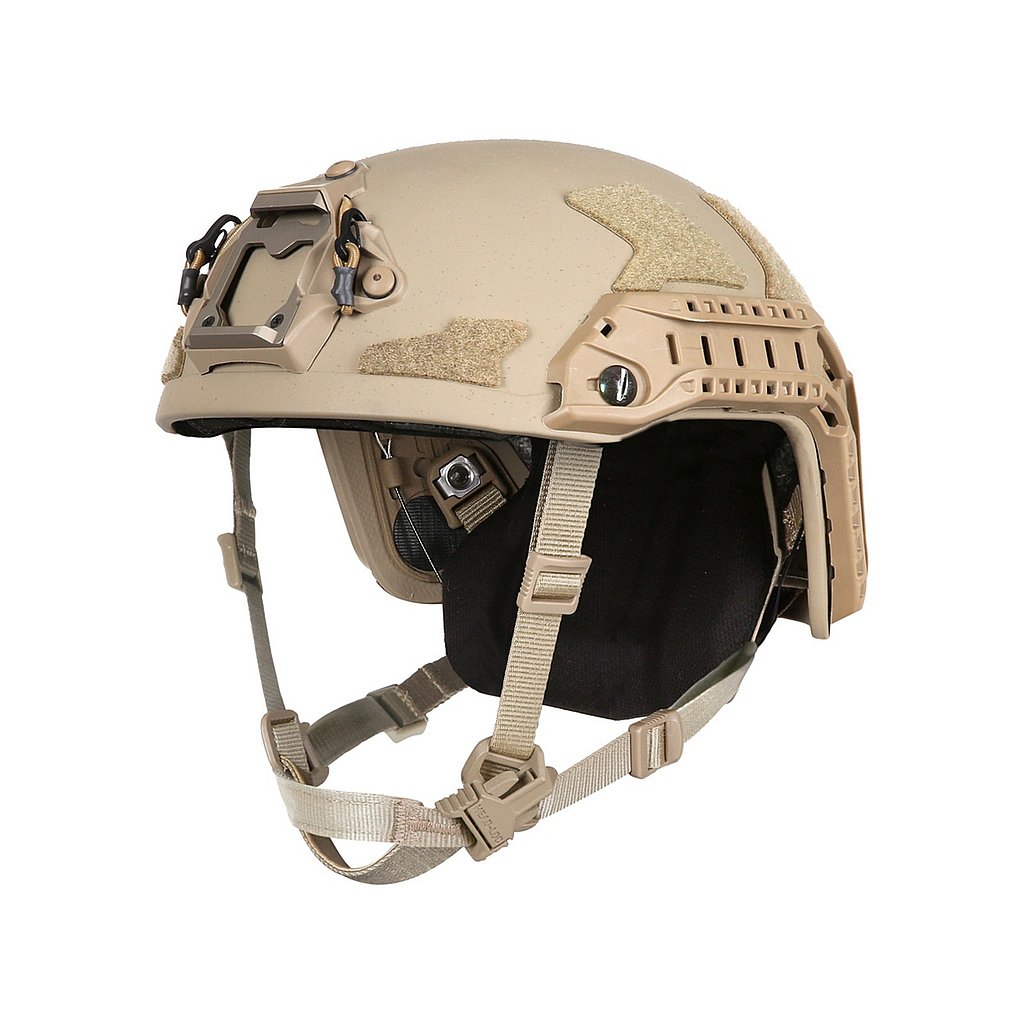
Ops-Core FAST SF Gen II Guide: Sizing, Weight, Protection and Setup
Ops-Core makes the FAST helmet, the high cut design most of the market has copied since. Ops-Core is part of Gentex Corporation, and its helmets are…
Ops-Core FAST SF Gen II vs PGD ARCH GEN3: Which High Cut Helmet to Buy
We carry two high cut ballistic helmets: the Ops-Core FAST SF Gen II and the PGD ARCH GEN3. Both are rated NIJ Level IIIA, both have…
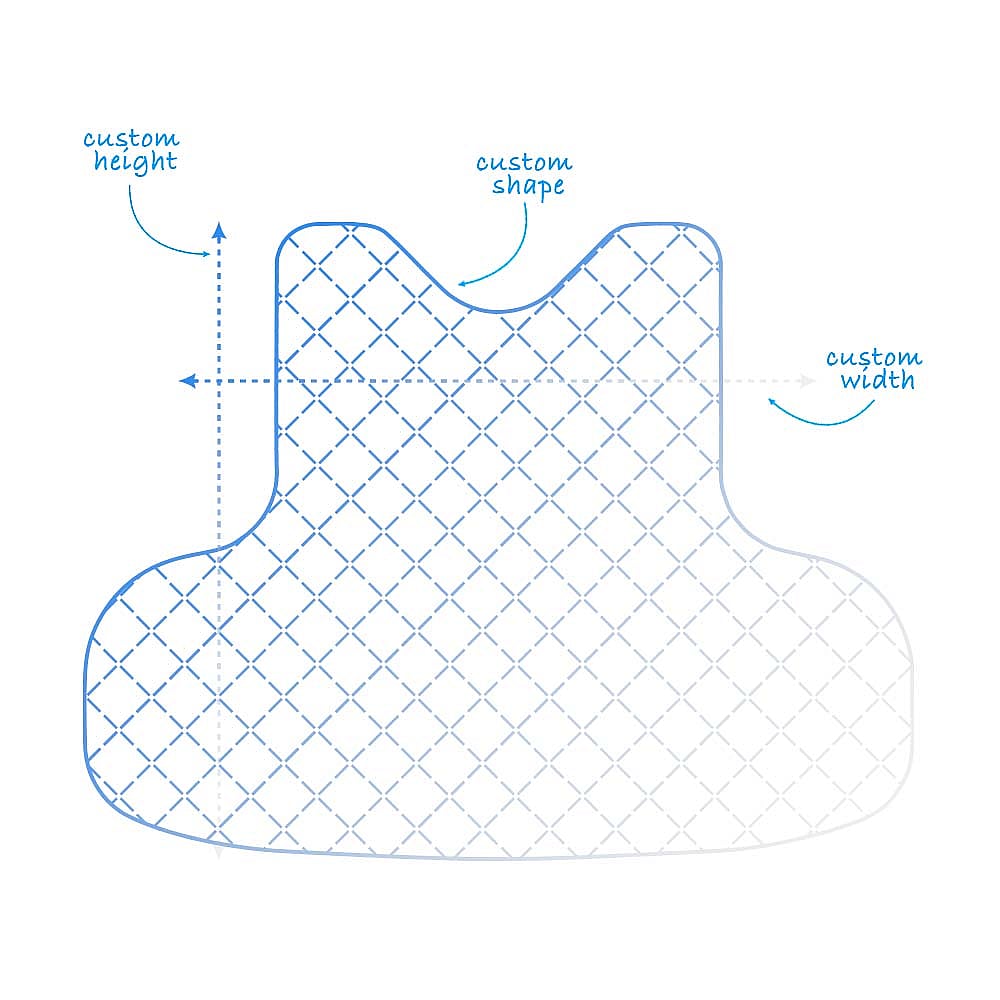
Custom Soft Armor: How to Get Inserts That Actually Fit Your Carrier
Most soft armor doesn't fit the carrier you actually own. Here's how our Custom Soft Armor program solves the fit problem and when to choose custom…