



How Does Night Vision Work?
How does night vision work? An explanation of image intensification, the generations, white vs green phosphor, and how night vision mounts to a helmet.
Night vision lets you see in near-total darkness, and the technology behind it is genuinely clever. It does not create light or read heat the way many people assume. It amplifies the tiny amount of existing light, starlight, moonlight, ambient glow, thousands of times over until a dark scene becomes visible. This guide explains how image-intensification night vision works, the generations, the white-versus-green phosphor question, and how night vision mounts to a helmet.
Note up front: we are a tactical gear company, not a night vision dealer. We do not sell the goggles themselves. We do sell the helmet mounting solutions and the helmet setup that night vision rides on, which we cover at the end. This article is the educational explainer.
Image Intensification: The Core Idea
The most common night vision (the kind in goggles like the well-known PVS-14 and dual-tube setups) works by image intensification. Here is the chain of events inside the tube:
- Light enters the objective lens. Even on a dark night there is some ambient light: starlight, moonlight, distant glow. The lens gathers it.
- A photocathode converts light to electrons. The incoming photons strike a photocathode, which releases electrons in proportion to the light hitting it. The image is now a pattern of electrons.
- A microchannel plate multiplies the electrons. The electrons pass through a microchannel plate, a disc with millions of tiny channels, where each electron knocks loose many more. This is the amplification step, multiplying the signal thousands of times.
- A phosphor screen converts electrons back to light. The multiplied electrons strike a phosphor screen that glows where they hit, recreating the original image, now massively brightened. This is why the view is monochrome (traditionally green).
The result is a visible image built from light that was always there but too faint for the naked eye. This is fundamentally different from thermal imaging, which reads heat rather than amplifying light. Image-intensification night vision needs at least some ambient light to work, which is why a true zero-light environment (a sealed cave) defeats it unless paired with an infrared illuminator.
The Generations
Night vision is categorized into generations that reflect the technology’s evolution:
- Gen 1 is the oldest consumer-grade image intensification. Affordable but limited: dimmer, shorter usable range, and image distortion at the edges. Common in inexpensive “starter” night vision.
- Gen 2 added the microchannel plate, dramatically improving brightness, clarity, and lifespan over Gen 1. A real step up in capability.
- Gen 3 introduced a gallium arsenide photocathode and improvements that deliver much better low-light performance and longer tube life. Gen 3 is the standard for serious military and professional use.
- Beyond Gen 3, modern high-end tubes (sometimes marketed as Gen 3+ or with specific performance figures) push image quality, low-light sensitivity, and tube lifespan further. At the top end, performance is measured by specific tube metrics rather than just the generation label.
Generation alone does not tell the whole story at the high end, where specific tube specifications matter more than the gen number. But as a general guide, higher generation means better low-light performance and a higher price.
White Phosphor vs Green Phosphor
Traditional night vision shows a green image, because green phosphor was the standard and the human eye distinguishes the most shades of green. Newer tubes offer white phosphor, which renders the image in black-and-white (grayscale) instead.
White phosphor is often preferred by users who find the grayscale image easier on the eyes over long periods and better for distinguishing detail and contrast. Green phosphor remains widely used and capable. The choice is partly performance and partly personal preference; both work. White phosphor tubes generally command a higher price.
Single Tube vs Dual Tube
Night vision comes in single-tube units (like the PVS-14, worn over one eye) and dual-tube units (a tube for each eye). Single-tube units are more affordable and let you keep one eye dark-adapted for natural vision, but they lack depth perception through the device. Dual-tube units provide depth perception and a more natural binocular view, at significantly higher cost and weight. The weight difference is one reason dual-tube setups make a helmet counterweight especially important.
How Night Vision Mounts to a Helmet
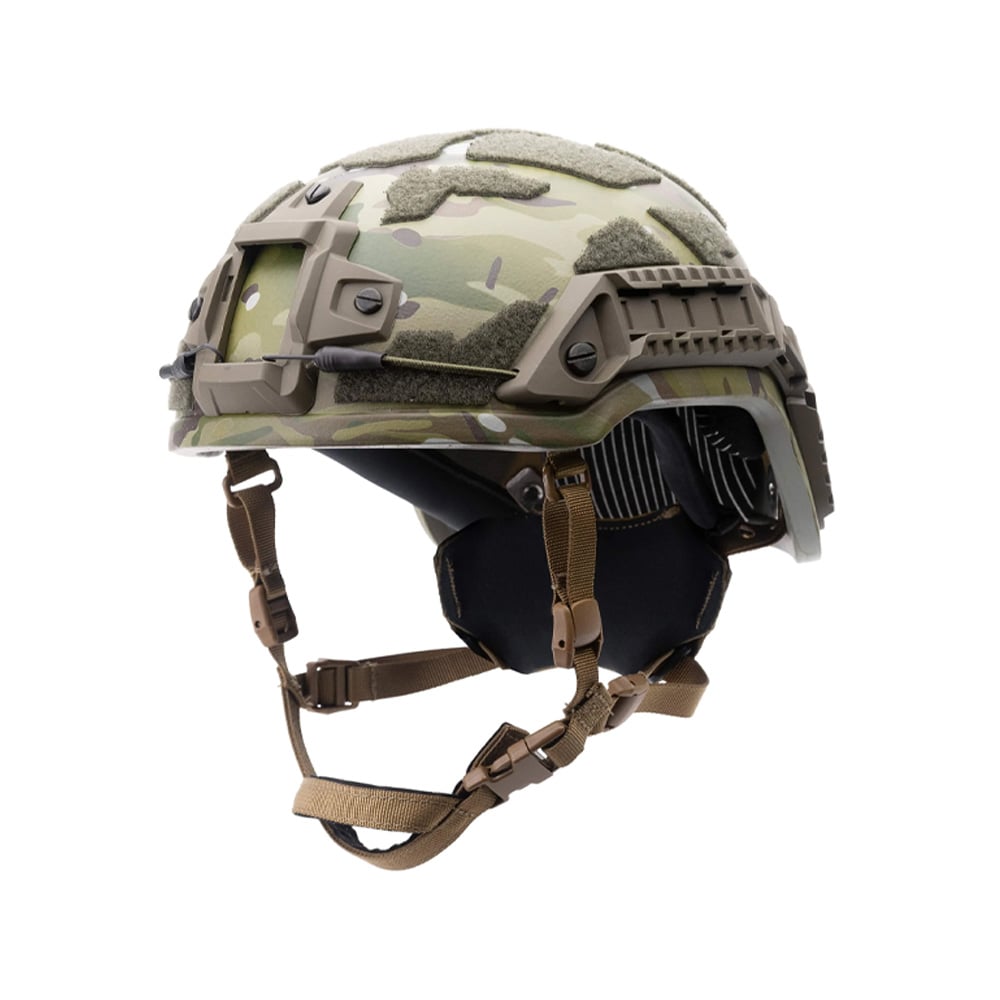
This is where the gear we make comes in. Night vision attaches to a helmet through a chain of mounting components: a shroud on the front of the helmet, a mount or arm that connects to the shroud, and the device itself. The mount lets you flip the night vision up out of the way when not in use and adjust its position in front of your eyes.
We carry the Wilcox G24 Night Vision Mount, a proven helmet mount for night vision. Running night vision also makes two other pieces of helmet setup important: a solid retention system to keep the helmet stable under the front load, and a rear counterweight to balance that load so it does not strain your neck. We cover both in our helmet counterweight guide and helmet accessories and setup guide.
Bottom Line
Night vision works by amplifying existing ambient light through image intensification, not by creating light or reading heat. Higher generations and white phosphor deliver better performance at higher cost, and dual-tube setups add depth perception and weight over single-tube units. However the device is configured, it rides on the helmet through a mount, and the helmet needs solid retention and a counterweight to carry it well.
We carry the helmet mounting and setup side: the Wilcox G24 Night Vision Mount and the full helmet accessories lineup. For balancing the load, see our helmet counterweight guide.
FAQ
Most night vision uses image intensification: it gathers the small amount of ambient light (starlight, moonlight), converts it to electrons, multiplies those electrons thousands of times through a microchannel plate, then converts them back to a brightened image on a phosphor screen. It amplifies existing light rather than creating light or reading heat.
No. Image-intensification night vision amplifies existing visible and near-infrared light and needs some ambient light to work. Thermal imaging detects heat and works in total darkness but renders a different kind of image. They are different technologies with different strengths.
Green phosphor renders the image in shades of green, the traditional standard. White phosphor renders it in black-and-white grayscale. Many users find white phosphor easier on the eyes and better for contrast over long periods, though both work well. White phosphor tubes typically cost more.
Generations track the technology’s evolution. Gen 1 is the oldest and most limited, Gen 2 added the microchannel plate, and Gen 3 brought major low-light and lifespan improvements and is the professional standard. At the high end, specific tube specifications matter more than the generation label.
Image-intensification night vision needs at least some ambient light. In true zero-light conditions (a sealed cave), it needs an infrared illuminator to provide light the device can amplify. Outdoors, even starlight is usually enough for it to function.
Through a shroud on the front of the helmet, a mount or arm that connects to it, and the device itself. The mount lets you flip the unit up when not in use. Running night vision also makes a solid retention system and a rear counterweight important to keep the helmet stable and balanced.
Ops-Core FAST SF Gen II Guide: Sizing, Weight, Protection and Setup
Ops-Core makes the FAST helmet, the high cut design most of the market has copied since. Ops-Core is part of Gentex Corporation, and its helmets are…
Ops-Core FAST SF Gen II vs PGD ARCH GEN3: Which High Cut Helmet to Buy
We carry two high cut ballistic helmets: the Ops-Core FAST SF Gen II and the PGD ARCH GEN3. Both are rated NIJ Level IIIA, both have…
Custom Soft Armor: How to Get Inserts That Actually Fit Your Carrier
Most soft armor doesn't fit the carrier you actually own. Here's how our Custom Soft Armor program solves the fit problem and when to choose custom…