



Battle Belt Setup: Building Your First-Line Gear
A battle belt is your first-line gear: the pistol, tourniquet, and mags that stay on you when the plate carrier comes off. Here is how to set one up without overloading it.
A battle belt is a reinforced belt rig that carries your most essential gear: the pistol, spare magazines, a tourniquet, and a dump pouch. It is called first-line gear because it is the layer that stays on your body when everything else comes off. The plate carrier might come off to sleep, to drive, to work. The battle belt stays. It is the equipment you keep closest because it is the equipment you cannot afford to be without.
This guide covers what a battle belt is, how the first-line gear concept works, how to set one up without overloading it, and the products we build and stock for the job. Whether you call it a battle belt, a war belt, or a duty belt, the setup principles are the same.
What Is a Battle Belt?
A battle belt is a stiffened, padded belt worn over or instead of a regular belt, built to carry the weight of a holstered pistol and mission-essential gear without sagging or rolling. It is structurally different from a normal belt: an inner belt threads through your trouser loops, and the battle belt itself attaches to that inner belt with hook-and-loop, so the whole rig is rigid, stays put, and can be taken on and off as a unit.
The battle belt carries gear on a belt line rather than on the chest. That keeps the chest and torso clear, keeps weight off the shoulders, and puts the pistol and reloads exactly where trained hands expect them. It is the foundation layer of a tactical loadout.
First-Line, Second-Line, Third-Line Gear
Tactical loadouts are organized into three lines, a concept borrowed from military load-bearing doctrine. Understanding the three lines is the key to setting up a battle belt correctly.
- First-line gear is what is on your body: the battle belt and what it carries. Pistol, pistol mags, a tourniquet, a knife, sometimes a rifle mag and a dump pouch. This is the gear you never voluntarily take off in the field.
- Second-line gear is your fighting load: the plate carrier or chest rig with armor, rifle mags, IFAK, and comms. This comes off to rest but is worn for the fight.
- Third-line gear is your sustainment load: the pack with water, food, shelter, and extended supplies. This comes off whenever the mission allows.
The principle: if you got separated from everything else, first-line gear is what keeps you in the fight and keeps you alive. That is why the battle belt carries the pistol (your backup weapon) and the tourniquet (your life-saving medical). Set the belt up with that priority in mind.
The Battle Belt System: Inner and Outer Belt
A proper battle belt is a two-part system.
The inner belt is a rigid belt that threads through your trouser belt loops. It holds your pants up and provides the anchor surface for the outer belt. The inner belt usually has a hook-and-loop exterior.
The outer belt (the battle belt itself) carries all the gear. Its interior is lined with the matching hook-and-loop, so it locks onto the inner belt and does not shift, rotate, or sag under load. The outer belt can be taken off as a complete unit with all gear attached, then put back on in seconds, without ever undoing your trousers.
This two-part design is what separates a real battle belt from just threading pouches onto a regular belt. The rigidity and the hook-and-loop lock are what let the belt carry a loaded pistol and several pounds of gear without rolling or drooping.
Our Battle Belt Lineup
XOS Tactical Battle Belt
The XOS Tactical Battle Belt is our core battle belt. It is the rigid, padded outer belt that carries the loadout: a stiffened belt body with full MOLLE real estate for mounting holsters, mag pouches, tourniquet holders, and dump pouches, and a comfortable padded interior for all-day wear. Built for the first-line role.
This is the belt to start with for most users building a first-line setup.
Battle Belt Ballistics IIIA
The Battle Belt Ballistics IIIA adds a ballistic dimension to the belt line. It is a Level 3A soft armor component designed to integrate with the belt setup, adding a measure of ballistic protection at the belt line for buyers who want it. This is a niche addition, not standard kit, but it is there for users whose threat profile justifies belt-line ballistic coverage.
How to Set Up a Battle Belt
A battle belt is set up around the body’s natural reach zones. Think of the belt as a clock face, with your belt buckle at 12 and the small of your back at 6.
The Pistol (Strong-Side Hip)
The holster goes on your strong-side hip, roughly the 3 or 4 o’clock position for a right-handed shooter. This is the single most important placement on the belt. Everything else is arranged around keeping the holster draw clean and unobstructed.
Pistol Magazines (Support-Side Front)
Pistol mag pouches go on the support side, forward of the hip, roughly 9 to 10 o’clock for a right-handed shooter. This puts fresh magazines where the support hand can reach them naturally during a reload. Two pistol mags is standard; some users carry three.
Tourniquet (Reachable by Either Hand)
The tourniquet holder goes somewhere reachable by either hand, because you do not know which arm will be wounded. Common placement is centerline front or just forward of the support-side hip. The belt-mounted tourniquet is one of the strongest arguments for a battle belt: it is on your body whenever the belt is on, independent of whether you are wearing a plate carrier. Use a dedicated holder; our tourniquet holder guide covers the options.
Dump Pouch (Support-Side Rear)
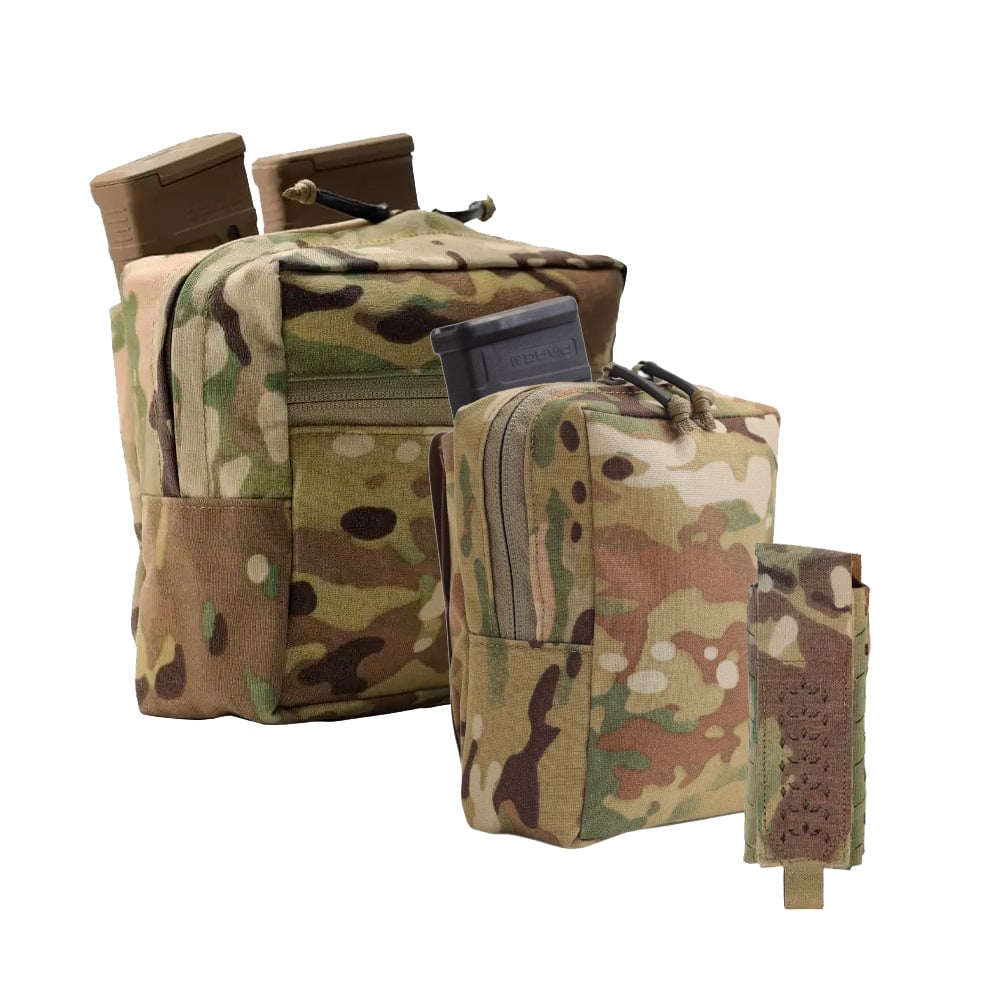
A dump pouch goes on the support side toward the rear, roughly 7 to 8 o’clock. It is out of the way until needed, then swings into reach for stowing spent magazines. The Drop Pouch is our standard dump pouch and mounts cleanly on the belt. See our dump pouch guide for the full breakdown.
Rifle Magazine (Optional, Centerline or Strong-Side Rear)
Some users carry one rifle magazine on the belt as a last-ditch reload independent of the plate carrier. If you carry one, mount it centerline front or strong-side rear where it does not interfere with the holster draw. This is optional; many first-line setups keep rifle mags entirely on the second-line carrier.
Knife and Small Gear (Wherever It Fits Cleanly)
A fixed-blade or folding knife, a multitool, and similar small items fill the remaining belt real estate. Keep the small of the back (5 to 7 o’clock) relatively clear: gear there digs into your spine when you sit, drive, or go prone.
Sample Battle Belt Loadouts
Minimalist Civilian First-Line
- XOS Tactical Battle Belt
- Pistol holster, strong-side hip
- 2 pistol mag pouches, support-side front
- Tourniquet in a dedicated holder, centerline
This is the lean civilian setup: pistol, reloads, tourniquet. Nothing else. It pairs with a plate carrier when the situation calls for one, and stands alone the rest of the time.
Full Tactical First-Line
- XOS Tactical Battle Belt
- Pistol holster, strong-side hip
- 2-3 pistol mag pouches, support-side front
- 1 rifle mag pouch, centerline or strong-side rear
- Tourniquet in a dedicated holder
- Drop Pouch, support-side rear
- Fixed-blade knife and multitool
This is the complete first-line layer for tactical, LEO, and serious training use. It carries everything needed to fight and survive independent of the plate carrier.
Common Battle Belt Mistakes
- Overloading the belt. The belt is first-line essentials, not a second plate carrier. Every pouch you add is weight on your hips and a snag risk. Keep it lean.
- Gear at the small of the back. Anything mounted at 5 to 7 o’clock digs into your spine when you sit, drive, or go prone. Keep that zone clear.
- Skipping the inner belt. Threading pouches onto a regular belt is not a battle belt. Without the rigid two-part system, the belt rolls and sags under a loaded holster.
- Holster placement that fights the carrier. If you run a plate carrier over the belt, make sure the carrier does not block the holster draw. Test the draw with the full loadout on.
- No tourniquet on the belt. The belt-mounted tourniquet is one of the main reasons to run a battle belt. Do not leave it off.
Bottom Line
A battle belt is your first-line gear: the pistol, reloads, and tourniquet that stay on your body when everything else comes off. Build it lean, place the holster first and arrange everything around it, keep the small of the back clear, and always carry a tourniquet.
The XOS Tactical Battle Belt is our core first-line belt. For deeper detail on the gear that goes on it, see our tourniquet holder guide and dump pouch guide. For the second-line layer, see our complete plate carriers guide.
FAQ
A battle belt is a reinforced, padded belt rig that carries first-line gear: the pistol, spare magazines, a tourniquet, and a dump pouch. It is built rigid with a two-part inner and outer belt system so it can carry a loaded holster and several pounds of gear without sagging or rolling.
They are the same thing. “Battle belt,” “war belt,” and “gun belt” are used interchangeably for the reinforced belt rig that carries first-line gear. “Duty belt” usually refers to the LEO version of the same concept. The setup principles are identical.
At minimum: a pistol holster, two pistol mag pouches, and a tourniquet. A fuller setup adds a dump pouch, a rifle mag, and a knife. Keep it to first-line essentials; the belt is not a second plate carrier.
Yes, for a proper setup. The inner belt threads through your trouser loops and provides the rigid hook-and-loop anchor surface for the outer battle belt. Without it, the belt rolls and sags under a loaded holster. The two-part system is what makes a battle belt function.
The pistol holster goes on your strong-side hip, roughly the 3 to 4 o’clock position for a right-handed shooter. This is the anchor placement; everything else on the belt is arranged around keeping the holster draw clean.
Yes, that is the standard setup. The battle belt is first-line gear and the plate carrier is second-line gear; they are designed to layer. Make sure the carrier does not block the holster draw, and test the full loadout together.
A lean first-line setup (pistol, two mags, tourniquet) is a few pounds. A full setup with a dump pouch, rifle mag, and knife is heavier but should still be manageable on the hips. If the belt is dragging your pants down or fatiguing you, it is overloaded; strip it back to essentials.
Because the battle belt is the layer that stays on your body. A tourniquet on the belt is with you whenever the belt is on, independent of whether you are wearing a plate carrier. First-line placement means your most important medical gear is always on you.
Ops-Core FAST SF Gen II Guide: Sizing, Weight, Protection and Setup
Ops-Core makes the FAST helmet, the high cut design most of the market has copied since. Ops-Core is part of Gentex Corporation, and its helmets are…
Ops-Core FAST SF Gen II vs PGD ARCH GEN3: Which High Cut Helmet to Buy
We carry two high cut ballistic helmets: the Ops-Core FAST SF Gen II and the PGD ARCH GEN3. Both are rated NIJ Level IIIA, both have…
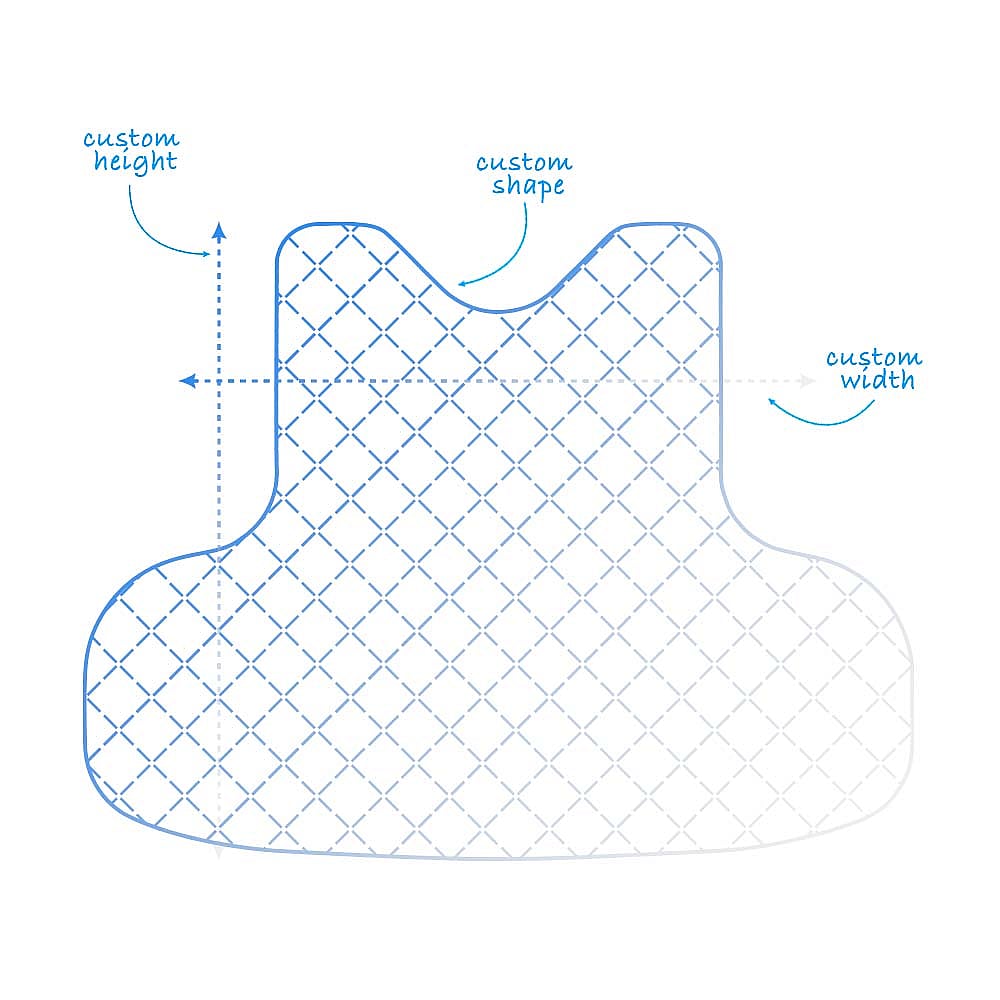
Custom Soft Armor: How to Get Inserts That Actually Fit Your Carrier
Most soft armor doesn't fit the carrier you actually own. Here's how our Custom Soft Armor program solves the fit problem and when to choose custom…