



How to Choose a Mag Pouch: Single, Double, Triple, and What Actually Fits Your Carrier
Single vs double vs triple, elastic vs kydex, open-top vs flap, 5.56 vs .308. A straight breakdown of how to pick mag pouches that fit your carrier, your mission, and the mags you actually run.
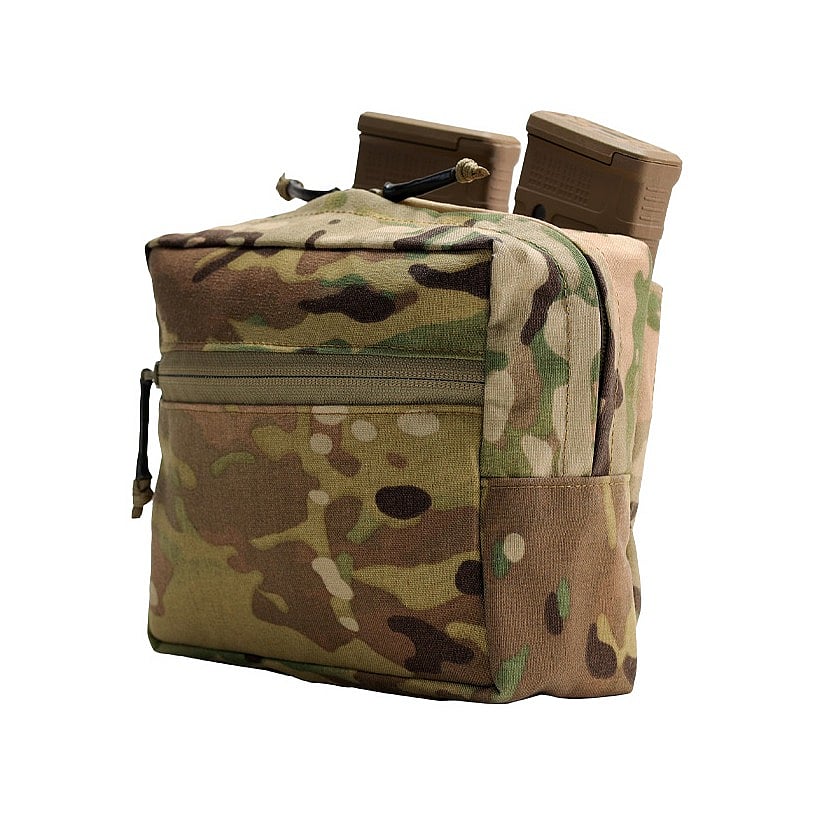
Mag pouches are the most-touched piece of gear on your plate carrier. You drill with them. You reload under pressure with them. You grab at them under fatigue, in the dark, with gloves on, under stress. A good mag pouch disappears into the workflow. A bad one costs you fractions of a second every time, and those fractions add up.
We have been building mag pouches in Knoxville for over a decade, and we see the same setup mistakes repeatedly. Wrong capacity for the role. Wrong retention style for the environment. Wrong mounting method for the carrier. Wrong pouch for the mag. Each one is fixable, but the fix starts with understanding what actually matters when you pick a pouch.
This guide walks through single, double, and triple configurations, the retention styles available, the fit considerations for different mags and carriers, and how to think about capacity for your actual use case. At the end you will know exactly which pouch fits your setup and why.
Single, Double, or Triple: Picking Your Capacity
Capacity is the first decision, and most people get it wrong in one of two directions. They either carry too few mags for their actual role, or they carry too many and end up with a carrier that rocks forward and fatigues unevenly.
Single Mag Pouches
One pouch, one mag. This sounds restrictive but it is the right call in a surprising number of scenarios.
Home defense setups. You are not planning to fight through multiple magazines in your own house. One mag in the gun, one reload on the carrier, and you have covered 99% of realistic scenarios. A single mag pouch keeps the carrier light and fast to don.
EDC truck guns or low-profile carriers. When weight matters and concealment matters, one pouch is often the right call. Pair with a chest rig or hip pouch for additional mags stored separately from the carrier.
Specialty slots. A single pouch in a side pocket or on a cummerbund can carry one odd-size mag (a .308, a drum-fed pistol caliber, a specialty round) when your primary mag load is handled elsewhere.
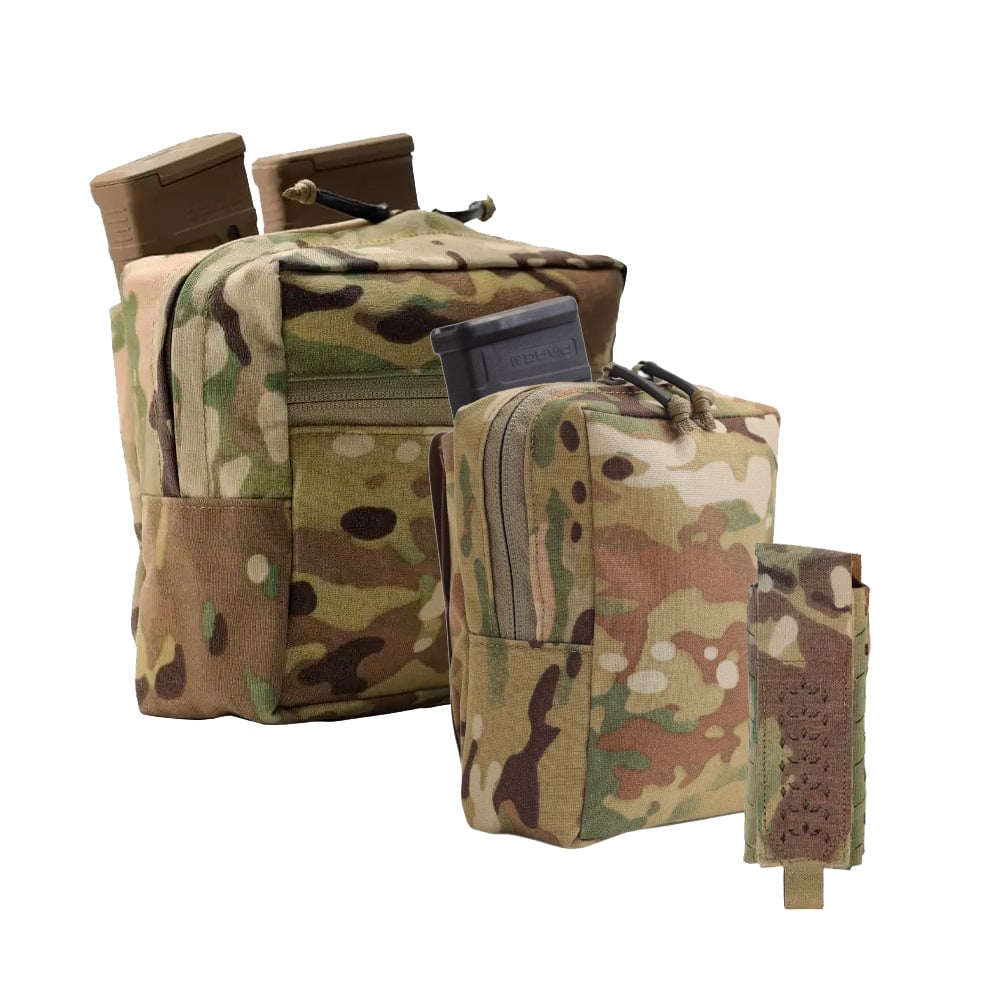
Our GP 4x6x2 Single Mag Pouch is built for exactly these cases. 4 inches wide, 6 inches tall, 2 inches deep. Uses 2 columns and 6 rows of integrated laminate MOLLE so it slots into tight spots where a double-wide pouch will not. Takes a 5.56 mag on a Hook and Elastic insert, or swap in the .308 insert if you are running larger rifle mags.
Double Mag Pouches
Two mags per pouch. This is the workhorse configuration for most carriers and the setup we recommend as the default for anyone who is not sure.
Why it works: two mags on the carrier plus one in the weapon covers the round count most civilian defensive scenarios require. It balances well on the carrier because you can center the pouch or run it slightly off-center without throwing off weight distribution. And on the front panel, a double pouch takes up less real estate than two singles side by side, leaving room for admin, lights, or medical.
Our GP Double Mag Pouch 7x6x3 is the best-selling pouch in our lineup, and the design choice that makes it work is the removable elastic sleeve. The sleeve holds two 5.56 mags inside a general-purpose pouch, which means when you are not running full combat loadout, you pull the sleeve and have a full-size GP pouch for anything else. One piece of gear, two roles.
Mounts via MOLLE/PALS on both traditional and laser-cut systems. Integrated belt pass-through for belt-mounted setups. Same pouch works on a plate carrier, a chest rig, or a duty belt depending on where you need it.
Triple Mag Configurations
Three mags side by side, usually on a placard or a dedicated front panel.
LEO patrol setups that follow department SOP calling for a specific rifle mag count. Tactical roles with realistic expectation of sustained engagement. Training environments where you are running multiple drills back-to-back without reloading breaks.
For civilian defensive use, triple is usually more than you need. The extra mag weight is real, and unless your threat profile genuinely requires a 90-round ready loadout on the carrier, the weight-to-capability trade-off starts losing ground.
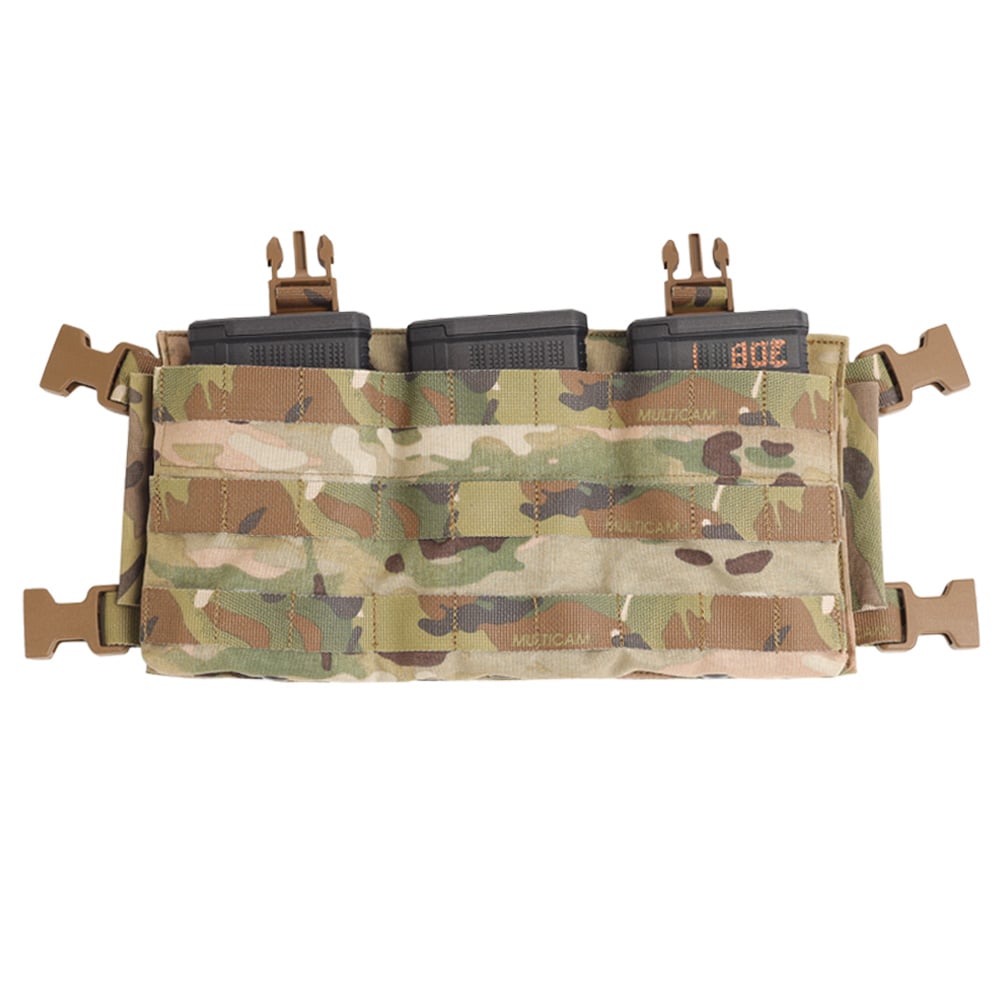
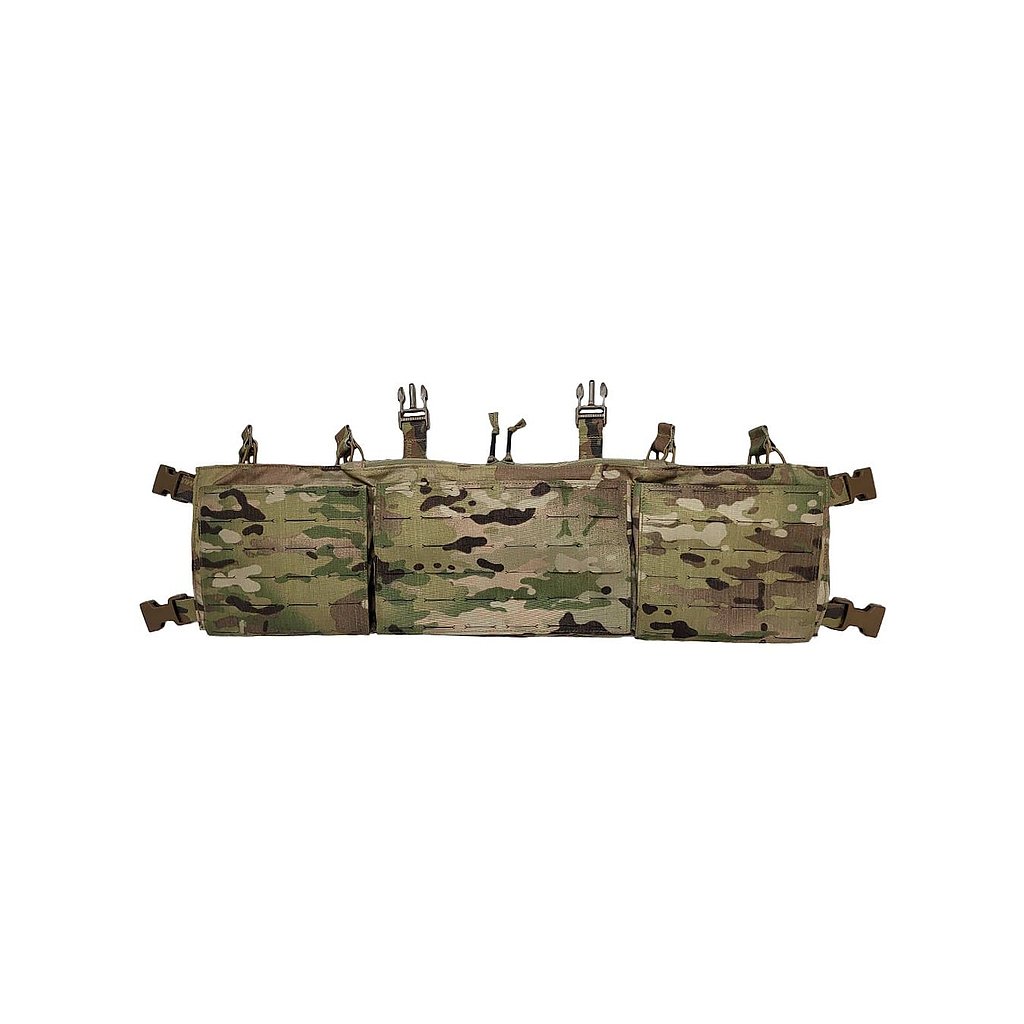
If you need triple capacity, a dedicated triple mag placard is cleaner than running three singles. Our MOLLE Triple Mag Front Placard and its laser-cut counterpart give you three mags in a single-piece front panel with consistent retention across all three. Cleaner than three singles, faster to load out, and the placard itself mounts to most common carrier attachment systems.
Quick Capacity Reference
- Home defense / minimalist setup: 1-2 mags total (one in gun, one on carrier)
- Civilian defensive / training: 3 mags total (one in gun, two on carrier via double pouch)
- LEO patrol: 3-4 mags total (one in gun, two or three on carrier)
- Tactical / specialty: 4-6 mags, typically via triple placard plus cummerbund pouches
Retention: Elastic, Kydex, or Flap
Retention is how the pouch holds the mag when you are moving, and how it releases when you pull. Three main styles, each with trade-offs.
Elastic Retention
An elastic band or sleeve that grips the mag by tension. The mag slides in and out under direct pull force. No flap, no hardware, no adjustment needed.
Pros: fastest draw, lowest profile, accommodates mag length variation naturally, silent on the draw, works with any mag body shape.
Cons: elastic loses tension over time, less secure retention in aggressive movement (running, vehicle rollover, water crossings), and the mag can shift position inside the pouch if not seated properly.
When it works: most carrier and chest rig applications where the wearer is not dropping through windows or actively wrestling. Default choice for speed-focused civilian and LEO setups.
Kydex Retention
Molded kydex inserts that grip the mag by friction and mechanical hold. Usually requires a specific push to release.
Pros: positive retention that will not loosen with age, adjustable tension on quality kydex setups, quiet (though not silent) on draw, highly secure in aggressive movement.
Cons: mag-specific (a kydex insert cut for PMAG does not fit Magpul D60 drums or HK mags well), higher cost, can wear the mag finish over time, makes noise if you bump against obstacles.
When it works: setups where mag security trumps every other concern. Water operations, aggressive movement environments, military and LEO tactical roles.
Flap Retention
A fabric flap over the top of the pouch, usually closed by velcro, a buckle, or a snap. The flap is the retention mechanism.
Pros: absolute retention until you open the flap, protects the mag from weather and debris, quiet, works with any mag shape.
Cons: slowest draw style by a meaningful margin, adds a step to the reload, velcro flaps make noise if you need to stay quiet on approach.
When it works: utility pouches where you are not reloading under time pressure, spare mags stored for resupply, long-duration wear where debris and weather are a real concern.
For scenarios where you want flap flexibility without the full commitment to a flap-only pouch, our Recon Rifle Mag Flap adds a retention flap to compatible pouches. Use it when the environment calls for it, remove it when speed matters.
Mag Compatibility: 5.56 vs .308 and Everything Else
Pouches are often marketed as “rifle mag” compatible, which is true in a general sense and false in the specifics. A pouch designed for a 5.56 PMAG fits that mag well. Put a longer, wider .308 mag in the same pouch and it sits proud, wobbles, or does not seat at all.
5.56 / .223 Mags
The default rifle mag. Most pouches are sized and tensioned for this family. PMAGs, Lancer, HK, standard USGI aluminum, and the various polymer variants all fit 5.56-spec pouches without modification.
.308 / 7.62 NATO Mags
Longer and usually wider than 5.56 mags. A pouch sized for 5.56 will either not fit a .308 mag or will hold it with the bottom protruding. You need a pouch either specifically sized for .308 or one with a swappable insert system that accommodates the larger mag body.
Our GP pouches use an insert system for exactly this reason. Same pouch body, different internal insert. 5.56 insert for standard rifle mags, .308 insert for larger mags. You get the form factor and mounting consistency of a single pouch family across different weapons.
AK-Pattern Mags
7.62×39 AK mags have a distinctive curve and often require AK-specific pouches to seat correctly. A 5.56 pouch will accept an AK mag but the curve will not sit flush, and the mag may rock inside the pouch. Dedicated AK pouches with a matching curve are the right call.
Pistol Mags
Pistol mag pouches are a separate category. They are shorter, narrower, and usually single-stack or thin double-stack sized. Do not try to use a rifle mag pouch for pistol mags. The mag will drop to the bottom, rattle, and the retention will not work.
Drum Mags
60-round drums, 100-round Beta mags, and similar high-capacity drums need dedicated drum carriers. These do not fit standard rifle mag pouches. If drums are part of your loadout, plan a dedicated pouch for them.
Mounting: MOLLE, Laser-Cut, Belt, and Placard
A pouch is only as useful as its ability to mount where you need it. Four main mounting systems cover most modern tactical gear.
Traditional MOLLE / PALS
The classic 1-inch webbing ladder system with 1.5-inch row spacing. If you want the full breakdown on MOLLE and PALS, we have a dedicated guide on the system. For pouch selection, the thing to verify is that your pouch’s MOLLE straps are the right length for your carrier’s webbing rows. Most modern gear standardizes around 3-row and 4-row attachment.
Laser-Cut MOLLE
Newer carriers use laser-cut attachment points instead of sewn webbing. Lower profile, lighter, and cleaner visually. Most quality pouches with MOLLE straps will work on laser-cut systems, but the strap geometry has to match. Our pouches are designed to mount on both traditional and laser-cut MOLLE without modification.
Belt Mount
For duty belts, battle belts, and hybrid plate carrier setups where you want mags on the belt rather than the plate carrier front. Integrated belt pass-throughs on the back of the pouch let it mount directly to 1.75-inch or 2-inch belt webbing without requiring a separate mount or adapter.
Our GP pouches include belt pass-through as a standard feature. One pouch, multiple mounting options.
Placard Mount
Swappable front panels that mount to the carrier via a quick-detach attachment system. You build out multiple placards for different loadouts (mag-heavy, admin-heavy, medical-heavy) and swap them by mission.
A triple mag placard is often cleaner than three individual pouches MOLLE-mounted to the front panel. The placard is purpose-built, consistent, and swaps in and out of the carrier as a single unit.
Building a Complete Front Panel
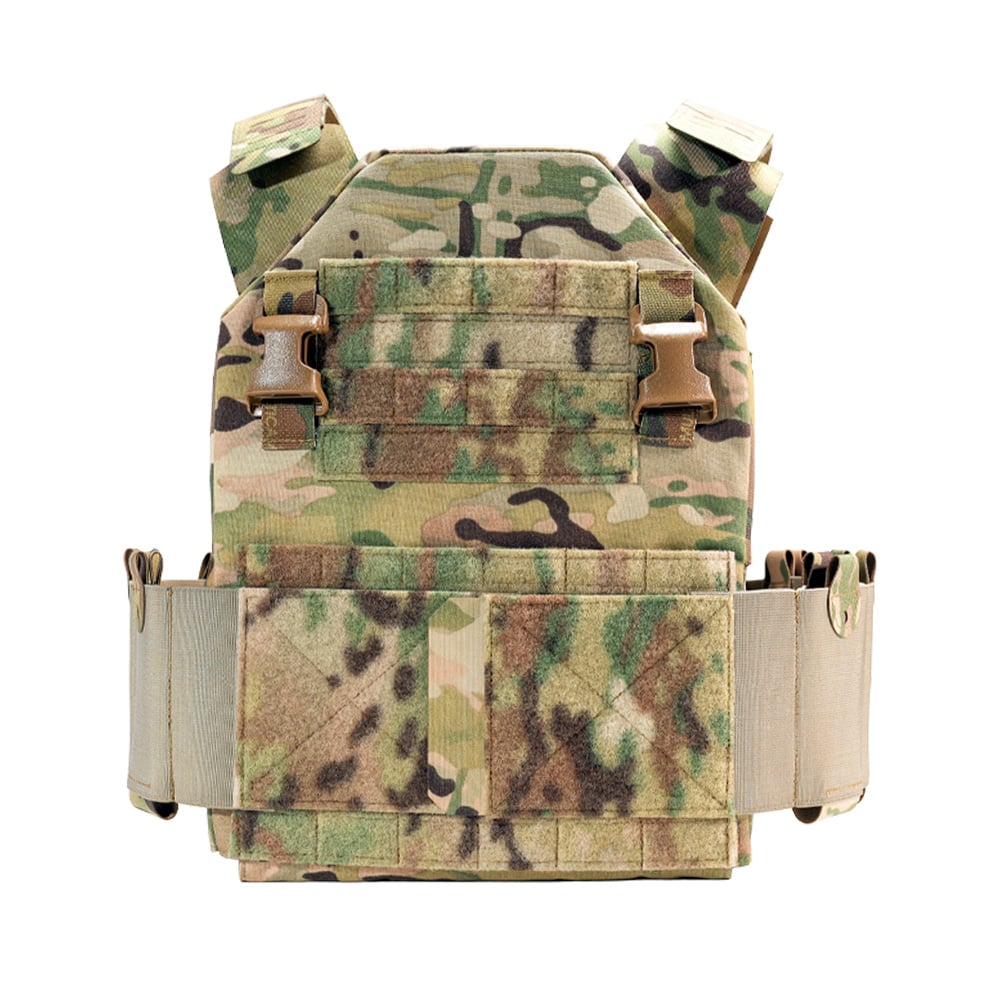
Most setups combine pouches to build out the front of the carrier. A common pattern we see work well:
- Center: Double mag pouch (or triple placard for heavier loadouts). Mags are the primary real estate and deserve the center position.
- Support-hand side: Admin pouch or single mag pouch for a third mag. Easier to reach with the support hand.
- Dominant-hand side: Small utility pouch, medical, or a light pocket. Items you access less frequently under pressure.
For a specific pattern that works well on our gear: one GP Double Mag Pouch center-front, plus one GP 4x6x2 Single Mag Pouch on the support-hand side, plus one GP 6x5x2 Pouch on the dominant-hand side. Three mags, one admin slot, clean layout, room to breathe.
Or for heavier loadouts: MOLLE Triple Mag Front Placard center-front, plus a single mag or admin pouch on one cummerbund side. Up to 4 mags ready, plus additional real estate for radio, medical, or tools.
Common Mistakes
Buying More Capacity Than You Need
A loaded 5.56 mag weighs roughly 1 pound. Three extra mags on the carrier adds 3 pounds of weight you will carry for every minute of wear. If your realistic scenario does not require 90 rounds ready on the carrier, those pounds are fatigue for no benefit.
Mismatched Pouch and Mag
Running .308 mags in 5.56 pouches, PMAGs in USGI-cut pouches, or AK mags in AR pouches. The mag does not seat correctly, retention is inconsistent, and the draw is unpredictable. Match the pouch to the mag family.
All Pouches on the Front
Loading every inch of front-panel MOLLE with pouches creates a front-heavy carrier that rocks forward when you move. Distribute weight across the back panel (IFAK, hydration) and cummerbund (radio, secondary mags) to keep the carrier balanced. A balanced carrier fatigues you less over the same wear time.
Ignoring Retention Style
Buying a flap pouch for a scenario that requires speed reloads, or an open-top pouch for a scenario where mag security matters more than draw speed. Pick the retention that matches the actual use case, not the one that looks cool.
Cheap Pouches on Expensive Carriers
A $300 plate carrier loaded with $12 imported pouches is a setup problem. Retention fails, stitching comes apart under load, and the mag you absolutely need at the moment you need it is not where it should be. Pouches are not the place to save money. Buy well-built, American-made nylon from manufacturers who test their gear.
What We Build at Midwest Armor
Every pouch in our lineup is handmade in Knoxville, Tennessee by our family-owned shop. Berry Compliant nylon, American-sourced hardware, sewn on our machines by our team. We build these because we use them, and because the imported alternatives fail in ways that cost our customers more than they saved on the price tag.
Our full pouch lineup is at midwestarmor.com/product-category/pouches. Single mag, double mag, general-purpose utility, admin, and specialty configurations, all built to the same standard.
If you are not sure which pouches fit your setup or your mission, text us at 865.859.9850 or email support@midwestarmor.com. Tell us what carrier you run, what mags you run, and what you are using the setup for. We will point you at the right configuration. It is what we do.
For the broader category overview, read our Tactical Pouches Guide covering every pouch type and how they fit together. For the setup picture, read our Plate Carrier Setup Guide for fit, positioning, and load balance, or the Complete MOLLE and PALS Guide for the full attachment system breakdown.
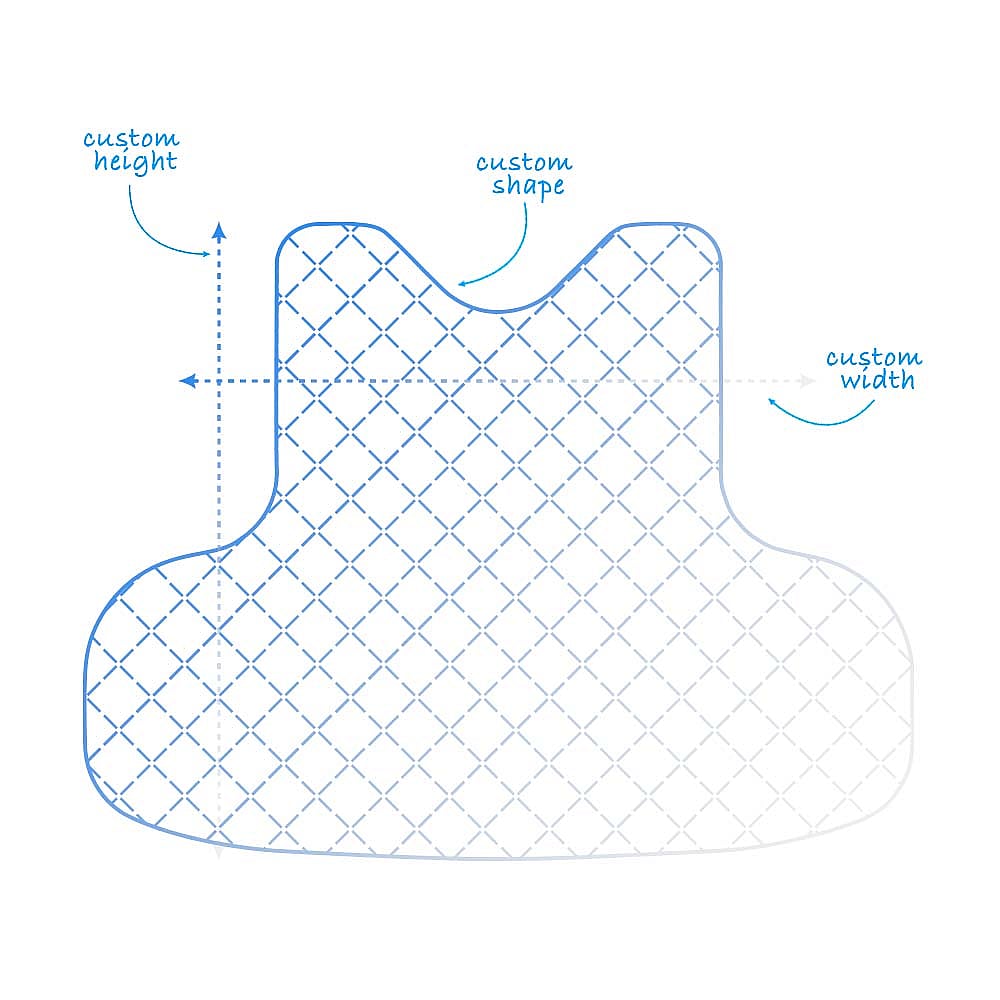
Custom Soft Armor: How to Get Inserts That Actually Fit Your Carrier
Most soft armor doesn't fit the carrier you actually own. Here's how our Custom Soft Armor program solves the fit problem and when to choose custom…
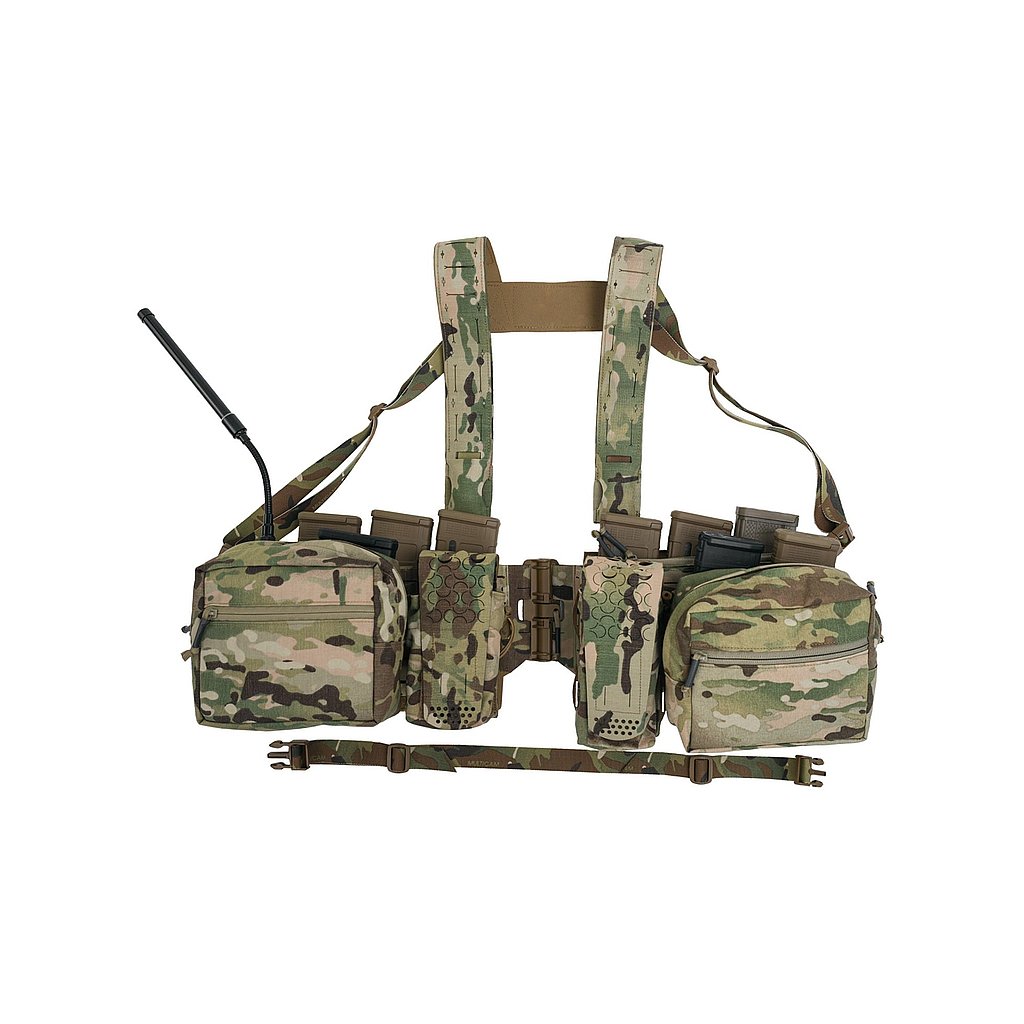
Layering a Chest Rig Over a Plate Carrier: When and How
Layering a chest rig over a plate carrier gives you ballistic protection plus high-capacity gear carriage. The SRV Split Chest Rig is purpose-built for this layered…
Best Chest Rig: How to Pick the Right Rig for Your Role
The best chest rig is the one that matches your role, mag count, and platform. Here is how to pick between continuous, modular, split, and minimalist…