



How to Size a Plate Carrier: Fit, Plates, and Common Mistakes
Plate carrier sizing trips up more first-time buyers than anything else. Here is how to size the plates, fit the carrier, and avoid the mistakes that leave armor riding wrong.
Plate carrier sizing trips up more first-time buyers than any other part of the purchase. A carrier that is the wrong size, or set up with the wrong plate size, rides badly, protects the wrong area, and ends up uncomfortable enough that it sits in a closet. Getting the sizing right is what makes the difference between armor you actually wear and armor you bought once and never put on again.
This guide covers how plate sizing works, how to size the carrier itself, how tight a plate carrier should be, and the fit mistakes to avoid.
Two Separate Sizing Decisions
Plate carrier sizing is actually two decisions that people often confuse:
- Plate size is the dimensions of the hard armor plates themselves. This determines how much of your torso is covered.
- Carrier size is the fit of the carrier garment: the cummerbund length and the shoulder strap adjustment range. This determines whether the carrier fits your body.
You size the plates to your torso coverage needs, and you size the carrier to hold those plates and fit your body. Get both right and the carrier rides correctly.
Sizing Hard Plates
Hard plates come in standardized SAPI (Small Arms Protective Insert) sizes. The four standard sizes:
- Small: 7.25 x 11.5 inches
- Medium: 9.5 x 12.5 inches, the most common size for adult males
- Large: 10.125 x 13.25 inches
- Extra Large: 11 x 14 inches
Most adult men run a Medium SAPI plate. The 10×12 plate, a slightly different sizing convention common in the civilian market, is also widely used and fits most adults. The plate should cover from roughly your suprasternal notch (the dip at the base of your throat between the collarbones) down to about the navel. It should be wide enough to protect the vital organs but not so wide it interferes with arm movement or shouldering a rifle.
The key sizing rule for plates: the top edge of the front plate should sit at the suprasternal notch, not higher. A plate set too high rides into the throat and limits head movement. A plate set too low leaves the upper chest exposed. Size and position the plate so the top edge lands at that notch.
SAPI Cut vs Shooter’s Cut
Plates also come in different corner cuts. Standard SAPI cut has moderately clipped upper corners. Shooter’s cut (sometimes called swimmer’s cut) has more aggressively angled upper corners, which frees up shoulder and arm movement for shouldering a rifle at the cost of slightly less coverage area. Most civilian and tactical shooters prefer shooter’s cut for the mobility. The cut does not change the size category; a Medium shooter’s cut and a Medium SAPI cut have the same nominal footprint.
Sizing the Carrier
The carrier has to do two things: hold the plate size you have chosen, and fit your body. Carrier fit comes down to two adjustment systems.
Cummerbund
The cummerbund wraps around your midsection and connects the front and back of the carrier. It needs to fit your chest and waist circumference. Most carriers ship with an adjustable cummerbund or offer cummerbund sizing options. Measure around your torso at the level the carrier will sit, and match that to the carrier’s cummerbund range.
Shoulder Straps
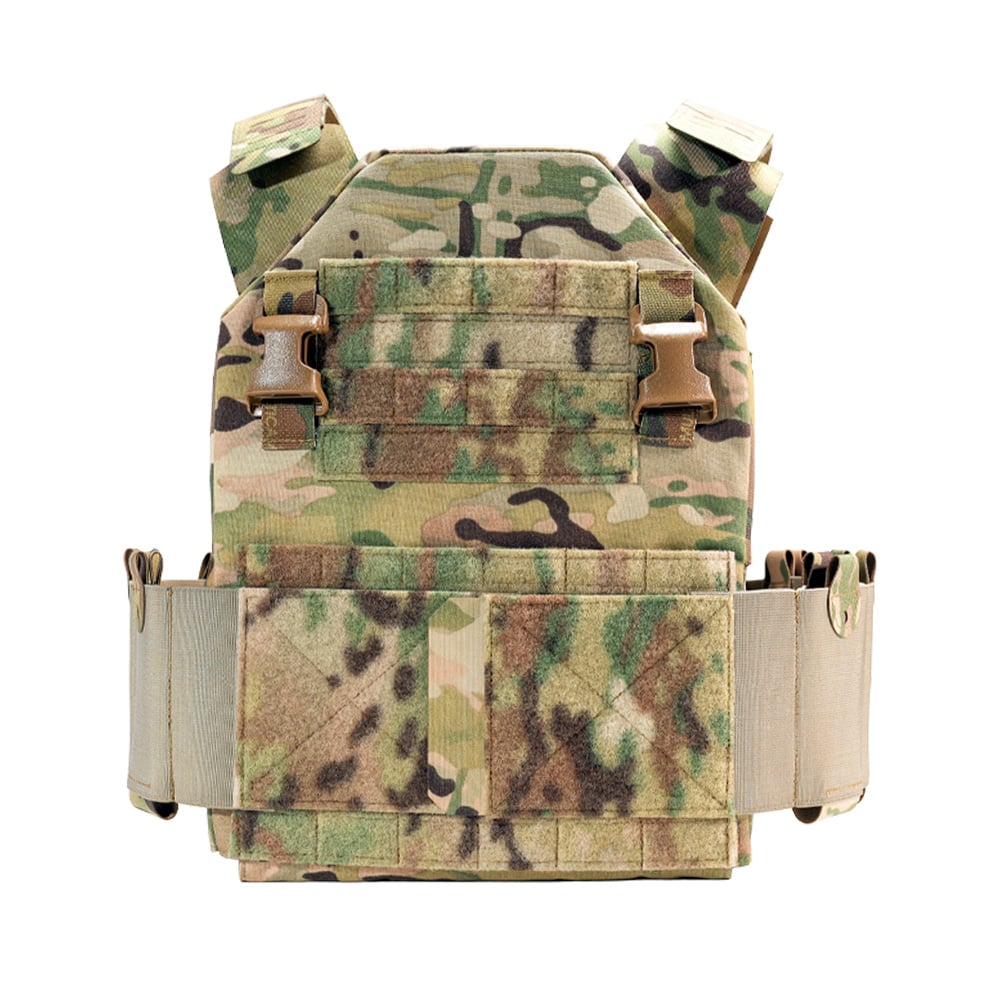
The shoulder straps set how high the carrier rides. They adjust to position the front plate at the suprasternal notch. Torso length, not just chest size, determines where the carrier sits. A long-torso wearer and a short-torso wearer with the same chest size need different shoulder strap settings.
Most quality carriers, including our Sentry, Lancer, and Leap carriers, have enough adjustment range in the shoulders and cummerbund to fit a wide range of body types once you have the right plate size.
How Tight Should a Plate Carrier Be?
A correctly fitted plate carrier is snug but not constricting. The test most instructors use: with the carrier on and adjusted, you should not be able to make a fist and fit it between your body and the carrier, but you should be able to take a full deep breath without the carrier restricting your lungs.
Too loose, and the carrier bounces when you move, the plates shift out of position, and the armor is not where it needs to be when you need it. Too tight, and it restricts breathing and movement, which fatigues you faster and limits your effectiveness. The carrier should move with your body as one unit, not flop around and not crush you.
The front plate should sit at the suprasternal notch up top and end around the navel at the bottom. The back plate sits slightly lower than the front, protecting from the base of the neck down. The plates should feel like they are riding with your torso, centered over the vital organs.
How to Wear a Plate Carrier Correctly
Once sized, wearing the carrier correctly is about position:
- Front plate at the suprasternal notch. Top edge at the throat notch, not riding into the neck, not sagging onto the belly.
- Back plate slightly lower than the front. This is correct, not a mistake. It protects the upper back and allows you to tip your head back.
- Cummerbund level. The cummerbund should sit level around the torso, not riding up in front or sagging in back.
- Shoulder straps carrying the load evenly. Weight should sit on the meat of the shoulders, not dig into the neck.
For the full carrier loadout walkthrough beyond fit, see our plate carrier loadout guide.
Common Plate Carrier Sizing Mistakes
- Plate set too high. A plate riding into the throat limits head movement and is uncomfortable. Top edge goes at the suprasternal notch.
- Oversizing the plate. A plate too large for your torso interferes with arm movement and shouldering a rifle. Bigger is not better; match the plate to your frame.
- Carrier too loose. A loose carrier bounces and lets plates shift. Snug it down until it moves as one unit with your body.
- Carrier too tight. Over-tightening restricts breathing and fatigues you faster. You should be able to take a full deep breath.
- Ignoring torso length. Two people with the same chest size but different torso lengths need different shoulder strap settings. Adjust for where the plate sits, not just chest fit.
- Expecting hard plates to be custom-fit. Hard plates come in fixed SAPI sizes. Only soft armor can be custom-cut. Pick the SAPI size closest to your frame.
Bottom Line
Plate carrier sizing is two decisions: size the plates to your torso (most adults run Medium SAPI or 10×12), then size the carrier to hold those plates and fit your body via the cummerbund and shoulder straps. Fit it snug but breathable, with the front plate at the suprasternal notch. Get this right and the carrier becomes gear you actually wear.
If you are between sizes or unsure, contact us before ordering; phone sizing guidance is faster than returns. For carrier options, see our complete plate carriers guide, and for the threat-level side of the decision, our complete body armor guide.
FAQ
Most adult men run a Medium SAPI plate (9.5 x 12.5 inches) or a 10×12 plate, in a carrier with a cummerbund and shoulder straps adjusted to fit their torso. Size the plate to your torso coverage, then size the carrier to hold that plate and fit your body. When between sizes, contact us before ordering.
Snug but not constricting. You should not be able to fit a fist between your body and the carrier, but you should be able to take a full deep breath without restriction. The carrier should move with your torso as one unit, not bounce around and not crush you.
The top edge of the front plate should sit at your suprasternal notch, the dip at the base of your throat between the collarbones. The bottom of the plate ends around the navel. Set too high it rides into the throat; set too low it leaves the upper chest exposed.
SAPI cut has moderately clipped upper corners. Shooter’s cut (also called swimmer’s cut) has more aggressively angled upper corners that free up shoulder and arm movement for shouldering a rifle, at the cost of slightly less coverage. Most shooters prefer shooter’s cut. The cut does not change the size category.
The carrier itself adjusts via the cummerbund and shoulder straps to fit a wide range of bodies. Hard plates come in fixed SAPI sizes and cannot be custom cut. Soft armor, however, can be custom-cut to your exact measurements and carrier. Pick the closest SAPI size for hard plates.
This is correct, not a mistake. The back plate sits slightly lower than the front so it protects the upper back while still allowing you to tip your head back freely. The front plate sits higher to protect the upper chest and cover the heart.
Weight affects comfort and fatigue more than fit, but a correctly sized and adjusted carrier distributes weight properly across the shoulders and torso, which makes the load feel lighter. A poorly fitted carrier concentrates weight in the wrong places and feels heavier than it is.
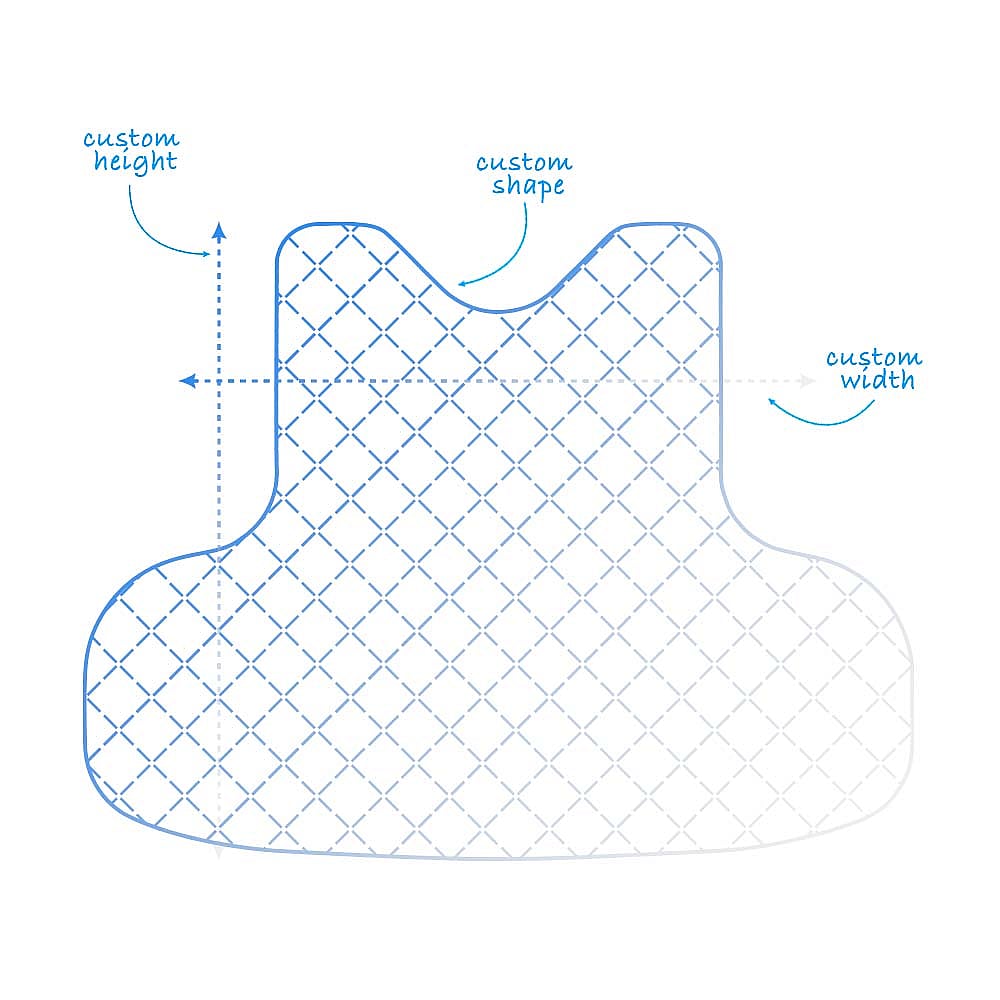
Custom Soft Armor: How to Get Inserts That Actually Fit Your Carrier
Most soft armor doesn't fit the carrier you actually own. Here's how our Custom Soft Armor program solves the fit problem and when to choose custom…
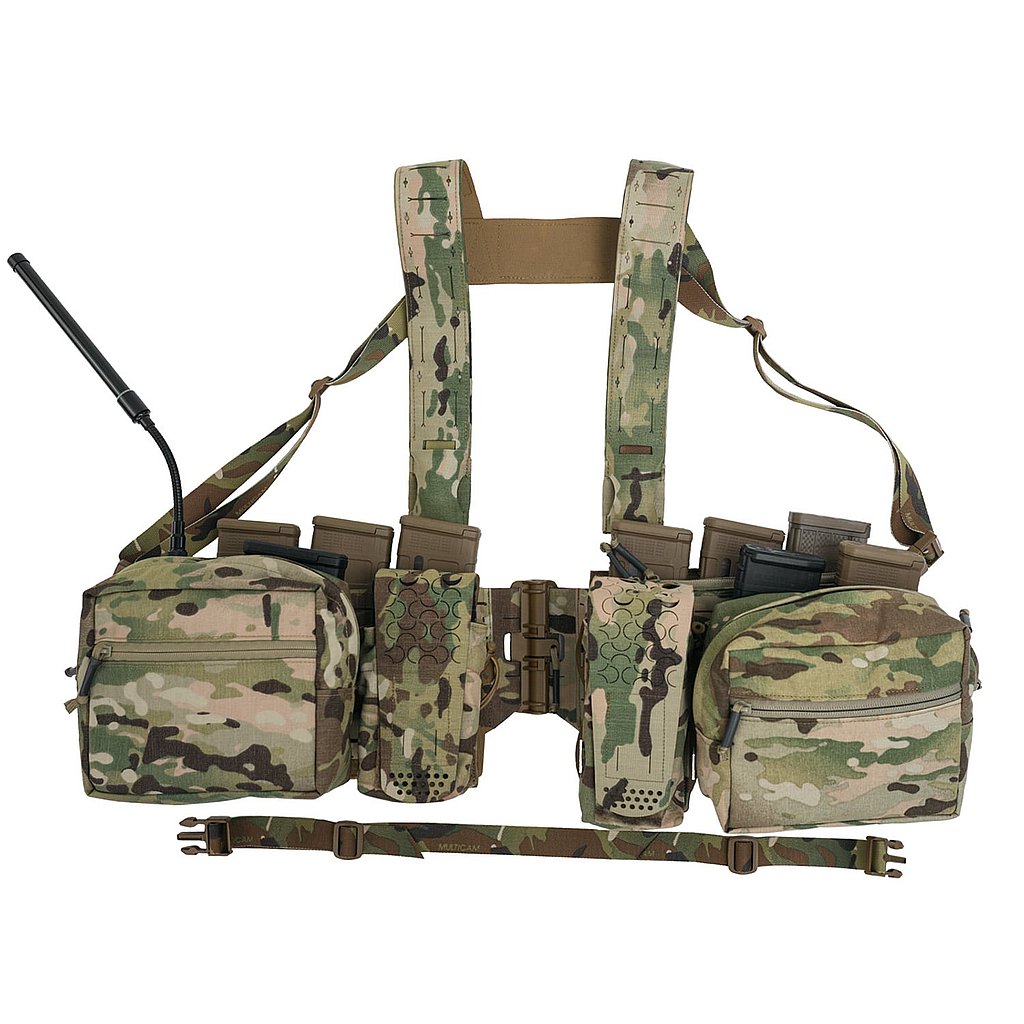
Layering a Chest Rig Over a Plate Carrier: When and How
Layering a chest rig over a plate carrier gives you ballistic protection plus high-capacity gear carriage. The SRV Split Chest Rig is purpose-built for this layered…
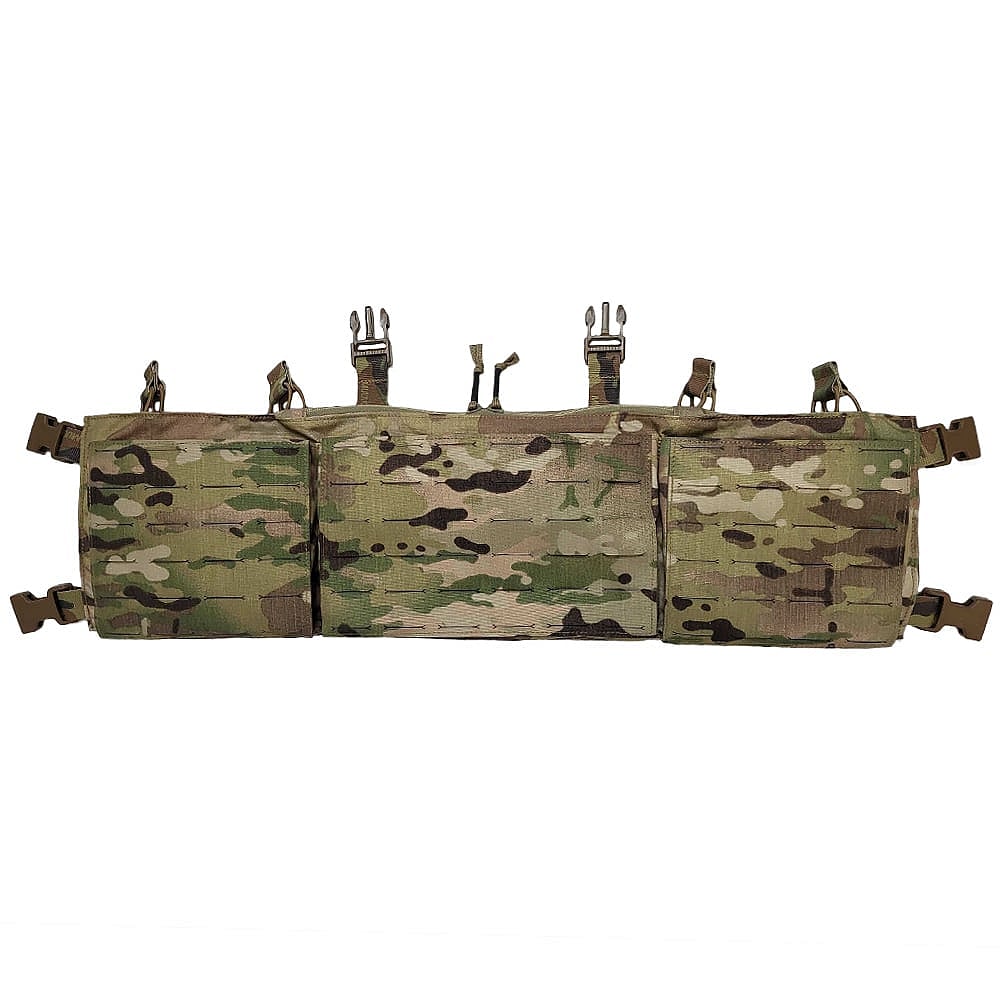
Best Chest Rig: How to Pick the Right Rig for Your Role
The best chest rig is the one that matches your role, mag count, and platform. Here is how to pick between continuous, modular, split, and minimalist…