



IFAK: The Complete Guide to Individual First Aid Kits
An IFAK (Individual First Aid Kit) is the personal trauma kit you carry to treat life-threatening injuries. Here's what goes in one, the MARCH protocol that drives the contents list, and how to pick the right pouch and components.
An IFAK (Individual First Aid Kit) is the personal trauma kit you carry to treat life-threatening injuries on yourself or a teammate before professional help arrives. The military pioneered the format. Law enforcement and serious civilian shooters adopted it. Today an IFAK is standard kit for anyone who carries a firearm, works in a high-risk environment, or wants to be prepared for traumatic bleeding emergencies in everyday life.
This guide covers what an IFAK is, what goes in it, the MARCH protocol that drives the contents list, how to pick the right IFAK pouch, and the kits and components we stock for buyers building their own.
What Is an IFAK?
IFAK stands for Individual First Aid Kit. The term originated in US military doctrine (specifically the IFAK II and the more recent IFAK III issued to soldiers). An IFAK is purpose-built for one job: keep a wounded person alive long enough for professional medical care to arrive.
This is different from a household first aid kit. A household first aid kit handles cuts, scrapes, blisters, and minor burns: things that are uncomfortable but not life-threatening. An IFAK handles massive bleeding, airway obstruction, tension pneumothorax, and other immediately fatal injuries. The contents are specifically chosen to address the leading causes of preventable death from trauma, in the order in which they will kill someone.
If you carry a firearm, you should carry an IFAK. The presence of a firearm in any incident dramatically increases the chance someone needs immediate trauma care, and that someone might be you.
The MARCH Protocol: What an IFAK Has to Solve
Every IFAK we sell or recommend is built around the MARCH protocol, the trauma assessment framework used by military medics, tactical medical providers, and emergency medicine. MARCH is the order in which preventable trauma deaths happen, and treating them in this order saves the most lives.
- M – Massive hemorrhage. Severe bleeding from arterial wounds. Treated with tourniquets, pressure dressings, and hemostatic gauze.
- A – Airway. Obstructed airway from facial trauma, unconsciousness, or swelling. Treated with nasopharyngeal airways (NPAs).
- R – Respiration. Breathing problems, including tension pneumothorax (collapsed lung) from chest wounds. Treated with chest seals.
- C – Circulation. Shock from blood loss. Maintained by managing bleeding and keeping the patient warm.
- H – Hypothermia / Head injury. Body temperature management and head injury care.
A complete IFAK has tools to address each MARCH category. The minimum viable IFAK addresses M, A, and R – the three issues that will kill a casualty in minutes if untreated.
IFAK Contents: What to Put in an IFAK
Here is the standard IFAK contents list, organized by MARCH priority. This is the contents list our pre-built IFAKs follow, and what you should aim for if building your own.
Massive Hemorrhage
Tourniquet (one minimum, two preferred). The single most important item in any IFAK. We stock the Combat Application Tourniquet (CAT) as the gold standard. The SOF Tactical Tourniquet is an excellent alternative with a metal windlass favored by some military units. Buy a real CAT or SOF-T, never a knockoff. Counterfeit tourniquets fail when you need them most.
Hemostatic gauze. Gauze impregnated with a clotting agent for wounds that cannot be tourniquet-treated (junctional wounds, neck, groin). We stock Combat Gauze LE, the law enforcement variant of the QuikClot Combat Gauze used by the US military.
Pressure dressing / Israeli bandage. Used to apply direct pressure to wounds. The Emergency Trauma Dressing (ETD) is the standard pressure dressing in our kits, with an integrated pressure bar for one-handed application.
Airway
Nasopharyngeal airway (NPA). A flexible tube that maintains an open airway in an unconscious casualty. Sized 28F is the standard adult size. We stock the NPA as a single-pack.
Respiration
Chest seal (vented preferred, two seals). For sucking chest wounds. Vented seals (with a one-way valve) are preferred over non-vented because they prevent tension pneumothorax. We recommend pairs because exit wounds are common with gunshot trauma. We stock the Hyfin Vent Compact Chest Seal Twin Pack as the standard chest seal in our kits.
Circulation and Hypothermia
Survival/space blanket. Maintains body temperature to prevent hypothermia, which dramatically worsens shock outcomes.
Trauma shears. Cut clothing and seatbelts to expose wounds. We stock NAR Trauma Shears, the same shears North American Rescue ships in their professional kits.
Optional but Recommended
Wound packing gauze. Plain gauze for packing deep wounds where hemostatic gauze is overkill. NAR Wound Packing Gauze is what we stock.
Surgical tape. For securing dressings, NPAs, or improvised splints. NAR Surgical Tape.
Nitrile gloves. Protection for the responder and the casualty.
Permanent marker. For writing tourniquet application time on the casualty’s forehead. Sounds morbid; saves lives.
Pre-Built IFAKs vs Building Your Own
You have two paths: buy a pre-built IFAK that includes all the components, or buy the pouch and components separately and build your own. Both approaches work. Here is the tradeoff.
Pre-Built IFAKs
Pre-built kits arrive with everything sized, packed, and ready to deploy. Faster, simpler, and the components are matched to the pouch volume. We stock several pre-built options.
- Individual Bleeding Control Kit: focused on the M-A-R minimum (tourniquet, hemostatic gauze, chest seal, gloves). The right starting kit for most buyers.
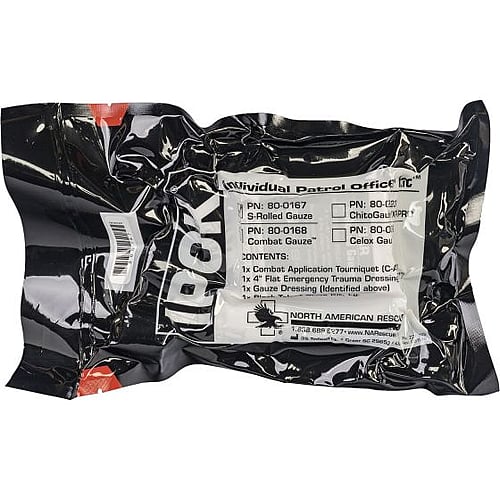
- Individual Patrol Officer Kit (IPOK): built specifically for LEO loadouts with the components patrol officers need most.
- Micro IFAK Aid Kit: smaller footprint for civilian carry, vehicle, or backpack.
- MyFak First Aid Kit: My Medic’s premium IFAK with comprehensive contents in a quality pouch.
- MyFak Mini: smaller MyFak option for everyday carry.
- MyFak Large: large-format MyFak for vehicle, range bag, or stationary kit.
Building Your Own IFAK
Building your own gives you control over every component, brand, and quantity. Worth it if you have specific preferences (e.g., SOF-T over CAT, or a particular pouch geometry that fits your carrier perfectly). Start with the pouch and the MARCH-priority components.
Choosing the Right IFAK Pouch
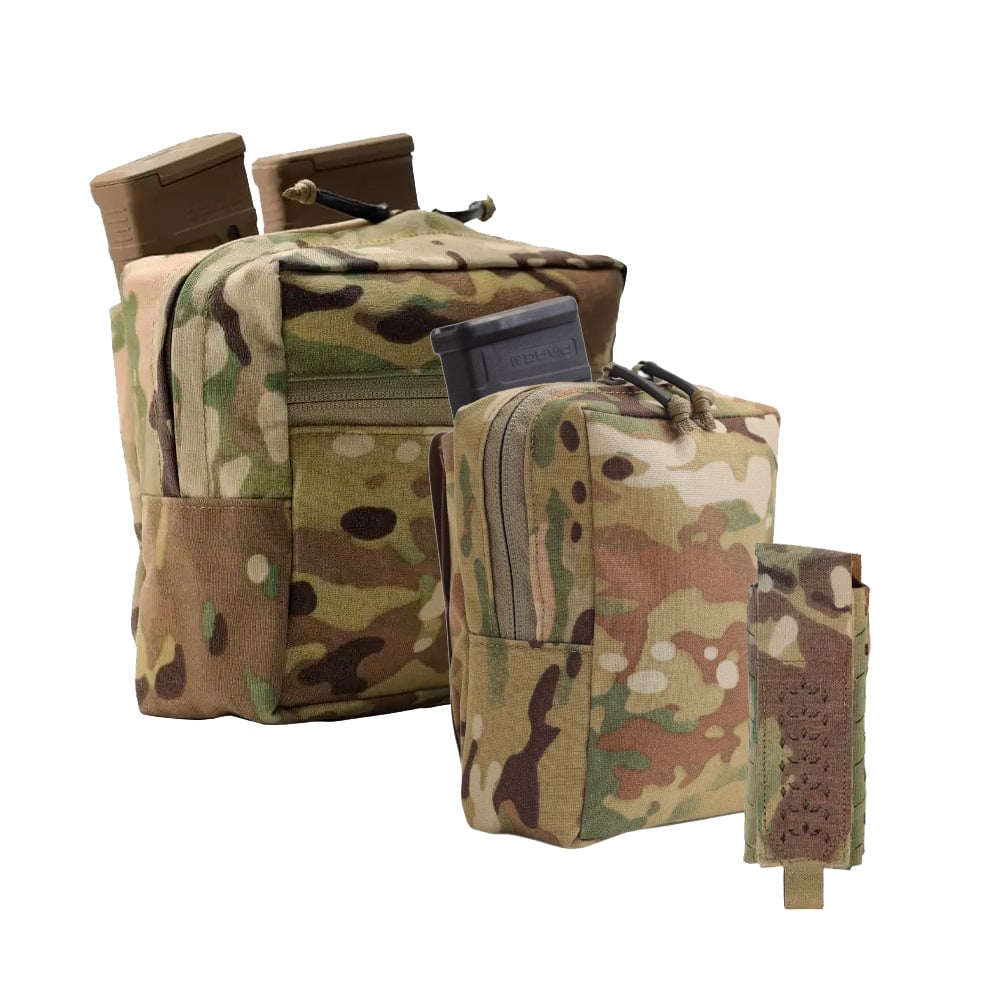
The pouch is half the decision. The wrong pouch costs you precious seconds when you need to deploy your kit. The right pouch has three properties: rapid access, secure retention, and the right footprint for where you carry it.
Rip-Away Pouches
The most common IFAK pouch format. The pouch attaches to a MOLLE backer with hook-and-loop, and the pouch itself rips away from the backer in one motion. This means a partner can grab your IFAK off your back without unfastening anything. Critical when the casualty is the IFAK owner.
Our standard rip-away pouch is the Rip Away Personal Med Pouch, built in Knoxville from Berry Compliant Cordura. The pouch attaches via hook-and-loop to a MOLLE backer that mounts to your carrier or belt, and the pouch itself rips away in one motion when a partner needs to pull it off your back.
Belt-Mounted Tourniquet Holders
For users who want a tourniquet always immediately accessible without opening a pouch, a dedicated belt-mounted tourniquet holder is the right call. We stock the Elastic Tourniquet Holder (low profile, quiet) and the RIGID Gen 7 CAT TQ Case (positive retention, weather-protected). Both are sized for the CAT tourniquet.
Clamshell EMT Pouches
Clamshell pouches open flat like a book, exposing all contents at once. Faster to inventory and access than zip-top pouches. Our GP 5x5x2 Clamshell EMT Pouch V2 is the right format for users who want to see everything at a glance.
IFAK Placement: Where to Carry It
Where you carry your IFAK matters as much as what’s in it. The two competing principles: easy for you to access vs easy for a partner to access if you’re the casualty.
- Centerline back of belt: classic LEO position. Accessible by partner, out of the way of duty gear. Works well with rip-away pouches.
- Side of plate carrier or chest rig: tactical position. Accessible by you with both hands and by a partner standing beside you.
- Strong-side ankle: minimum-footprint civilian option. Slow to deploy and partner-inaccessible, but invisible under pants.
- Vehicle / range bag / backpack: stationary kit. Larger format options like the MyFak Large work here. Always paired with a personal IFAK on the body.
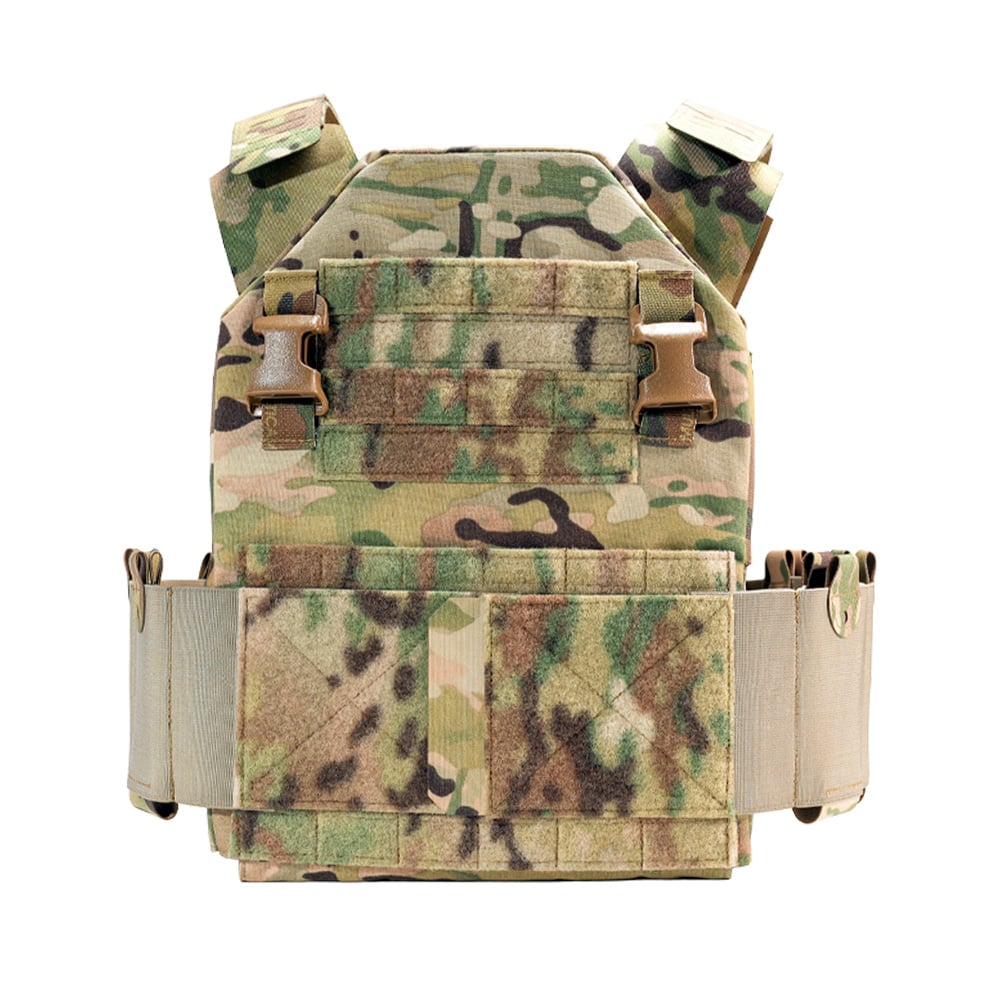
For most plate carrier and chest rig users, the kidney area on the back of the cummerbund is the standard IFAK position. Out of the way of magazines and admin gear, accessible by a partner reaching from behind, and the rip-away comes off cleanly with one pull.
Training Matters More Than the Kit
An IFAK is only as good as the person using it. A perfect kit on someone who has never trained with it is worse than a basic kit on someone who has. Take a Stop the Bleed course (free, 90 minutes, available in most cities). Take a TCCC class (Tactical Combat Casualty Care) if you carry as part of your job. Practice tourniquet application until you can do it one-handed under stress.
Replace your tourniquets every two to five years (CAT manufacturer recommends every five). Inspect chest seals annually for adhesive degradation. Replace medications and consumables on schedule. The components in an IFAK have a shelf life and an expired component is unreliable.
How to Buy
For most buyers, our recommendation is the Individual Bleeding Control Kit as a starting IFAK, plus a tourniquet holder for an immediately-accessible secondary tourniquet. LEO buyers should look at the IPOK first. Civilian everyday carry buyers should look at the Micro IFAK or the MyFak Mini.
Browse the full medical lineup at our medical category, including tourniquets, chest seals, hemostatic gauze, and the My Medic ecosystem of mods and pre-built kits. For pouches and how they fit on a carrier or chest rig, see our complete pouches guide.
FAQ
IFAK stands for Individual First Aid Kit. The term originated in US military doctrine and refers to a personal trauma kit carried to treat life-threatening injuries before professional help arrives. The term is now used broadly across military, law enforcement, and civilian contexts to describe any compact personal trauma kit.
A regular first aid kit handles cuts, scrapes, blisters, and minor burns. An IFAK handles life-threatening trauma: massive bleeding, airway obstruction, tension pneumothorax. They’re built for completely different problems. Most homes need both: an IFAK for emergencies, a regular kit for daily injuries.
The bare minimum is a tourniquet. If you only carry one item, it should be a CAT or SOF-T tourniquet. Adding hemostatic gauze, an Israeli bandage, and a pair of vented chest seals covers the M-A-R of the MARCH protocol and addresses the leading causes of preventable death from trauma.
A serious pre-built IFAK runs $90 to $250 depending on contents and pouch. Building your own costs roughly the same once you add up real-brand components. Avoid IFAKs under $50; they almost always include knockoff tourniquets that will fail under load.
The CAT (Combat Application Tourniquet) is a tested, NAEMT-approved device with a documented track record. Knockoff tourniquets sold cheaply online often have inferior windlass clips that break under load, weak Velcro that releases under tension, or undersized straps that won’t fit large limbs. They’re sold at a fraction of the price specifically because they cut corners that matter when someone’s bleeding out.
Most plate carrier and chest rig users carry their IFAK on the back of the cummerbund or kidney area, where a partner can grab it from behind. LEOs often carry on the centerline back of the duty belt. Civilians who carry concealed often use ankle holsters or pocket-sized micro IFAKs. The principle: accessible to both you and someone helping you.
Vented (one-way valve) chest seals are preferred. They allow air to escape from the chest cavity while preventing more from entering, which helps prevent tension pneumothorax. Non-vented seals are still vastly better than no seal at all if vented are unavailable, but vented is the standard recommendation in modern TCCC doctrine.
Tourniquets: every 5 years per CAT manufacturer guidance, sooner if exposed to UV, heat, or moisture. Chest seals: annually for adhesive integrity. Hemostatic gauze: per manufacturer expiration. NPAs: rarely expire but inspect packaging integrity. Consumables (medications, ointments): per labeled expiration.
You should buy the IFAK and take the class. Don’t wait. Stop the Bleed is free and 90 minutes. Most fire departments and hospitals offer it. TCCC classes for civilians are increasingly available. The kit is useless without basic training; basic training takes one afternoon.
An IFAK is a specific type of trauma kit, sized for personal carry on the body. “Trauma kit” is a broader term that includes IFAKs but also larger formats like vehicle kits, range kits, and team-level medical bags. All IFAKs are trauma kits; not all trauma kits are IFAKs.
Custom Soft Armor: How to Get Inserts That Actually Fit Your Carrier
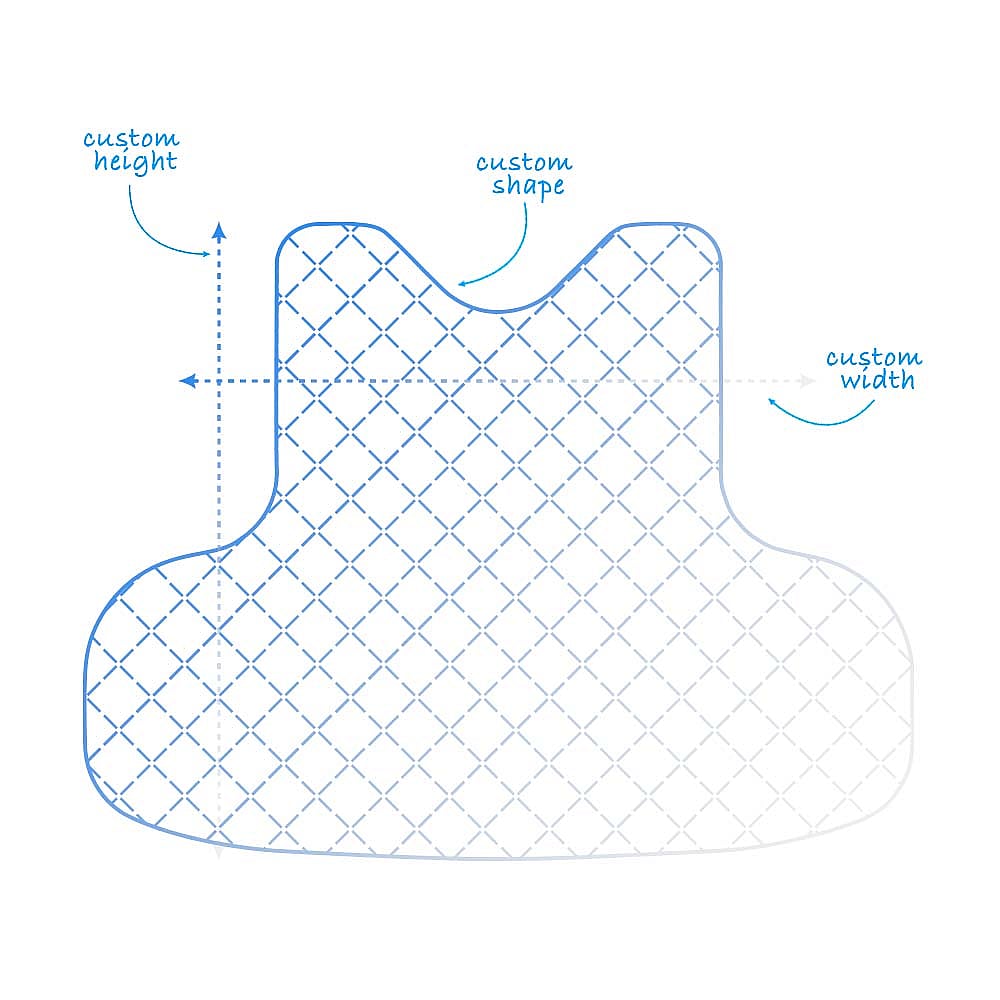
Most soft armor doesn't fit the carrier you actually own. Here's how our Custom Soft Armor program solves the fit problem and when to choose custom…
Layering a Chest Rig Over a Plate Carrier: When and How
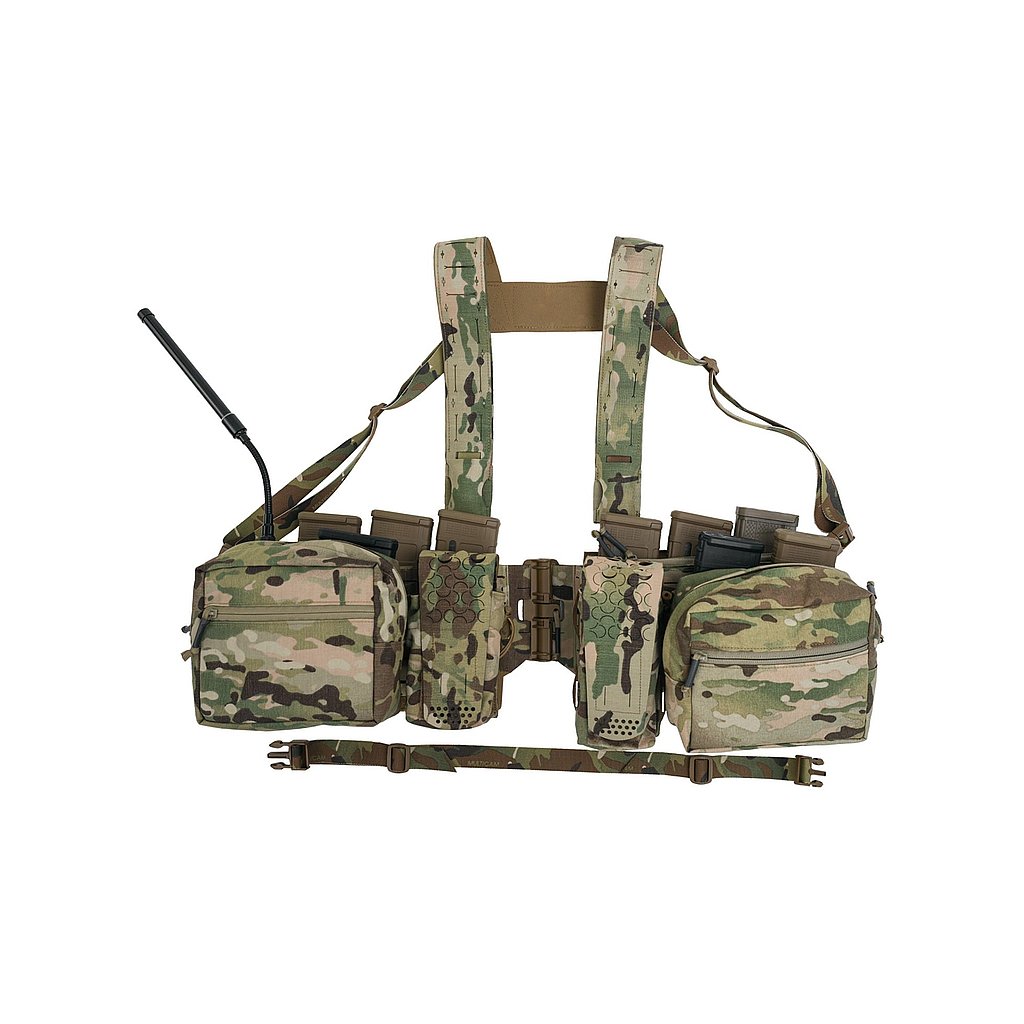
Layering a chest rig over a plate carrier gives you ballistic protection plus high-capacity gear carriage. The SRV Split Chest Rig is purpose-built for this layered…
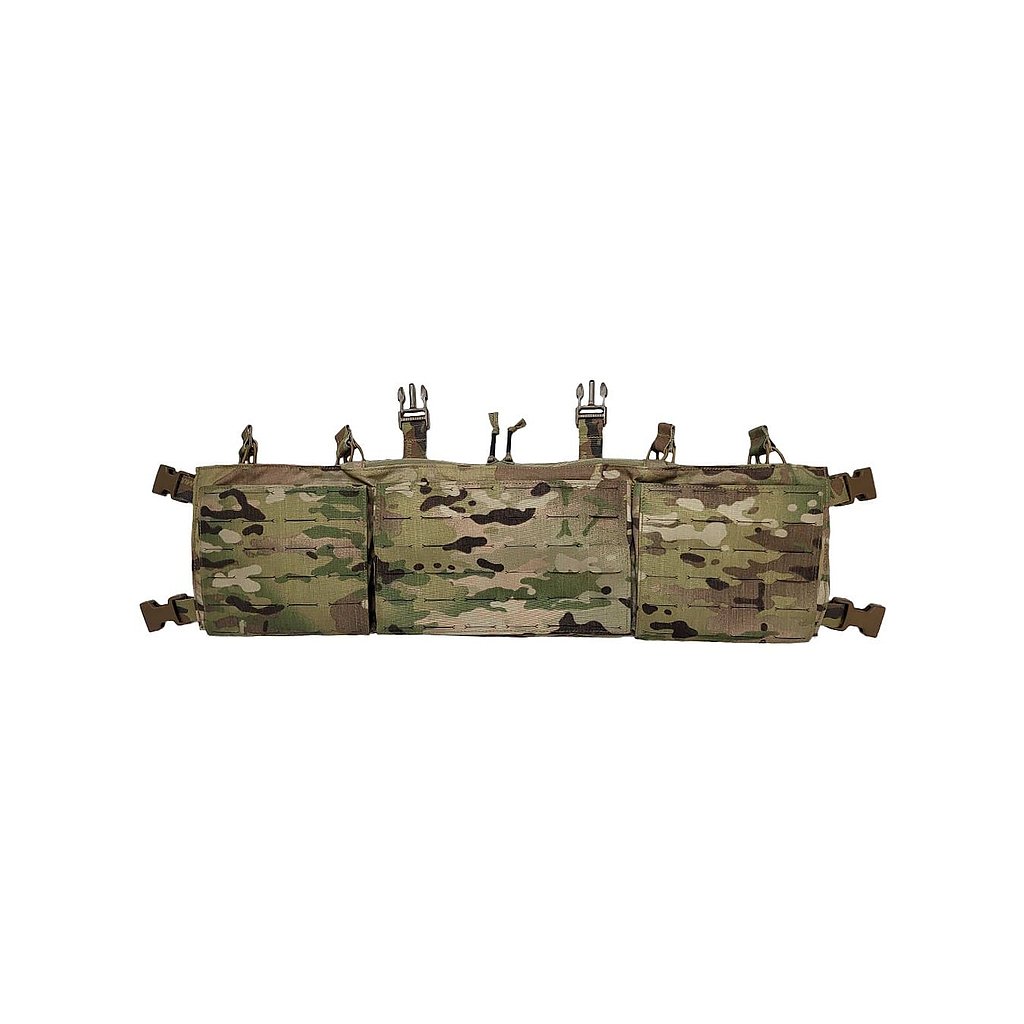
Best Chest Rig: How to Pick the Right Rig for Your Role
The best chest rig is the one that matches your role, mag count, and platform. Here is how to pick between continuous, modular, split, and minimalist…