



Utility Pouch Guide: GP, SAW, Admin, and How to Pick the Right One
Utility pouches carry everything that does not fit neatly into a mag pouch. How to pick the right size, the right closure style, and the right construction for your payload. From GP pouches to SAW-class utility for boxed ammo and gas masks.
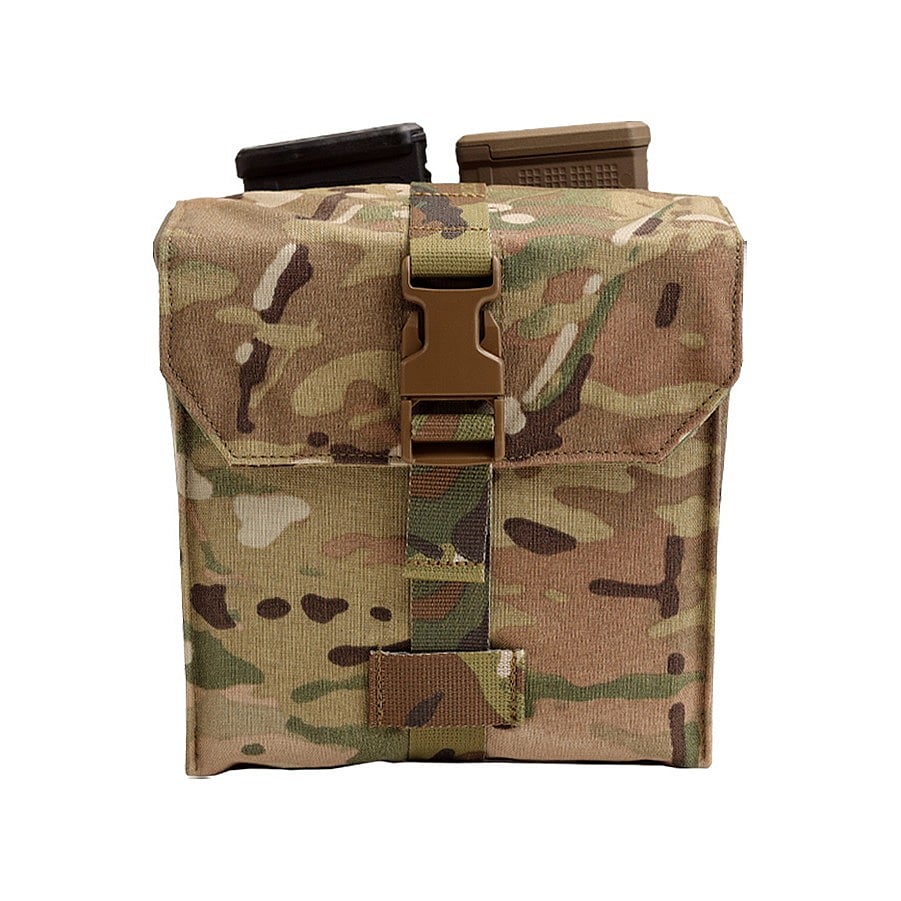
Utility pouches are the unglamorous workhorse of any serious loadout. They carry the stuff that does not fit neatly into a mag pouch, admin pouch, or medical kit. The gas mask. The spare battery. The bulk ammo. The tool kit. The comms gear. Everything that would otherwise end up in a cargo pocket or a dump pouch.
The problem is that most buyers treat utility pouches as interchangeable. They are not. A utility pouch that works for boxed ammo does not work for a compact gas mask. A pouch sized for NVGs is too small for a full-size radio. A pouch with rigid sides fails as a flexible dump pouch, and vice versa. Picking the right utility pouch for the right job matters more than most people assume.
This guide walks through what general-purpose (GP) and utility pouches are for, how to pick the right size, and what separates a quality build from the cheap imports that fail under real use. All from over a decade of building this gear as a family-owned shop in Knoxville.
What a Utility Pouch Is (and Is Not)
A utility pouch is a flexible storage container that mounts to MOLLE, a belt, or a chest rig. It is designed to carry a variety of items rather than being purpose-built for one specific piece of gear.
That flexibility is the point. A GP pouch does not assume what you are carrying. Mag, battery, snack, flashlight, notebook, tourniquet, rangefinder, or random mission essential: the pouch accepts whatever you put in it.
What a utility pouch is not: a dedicated mag pouch. You can carry a mag in a GP pouch, and many of our GP pouches are specifically designed to accept a mag insert for exactly that purpose. But a purpose-built mag pouch with dedicated retention will always hold a mag better than a general-purpose pouch with a mag insert. Pick the tool for the job.
Sizing: Match the Pouch to the Payload
Pouch dimensions matter more than almost any other factor. A pouch that is too small will not close properly or will damage items as you force them in. A pouch that is too large will let items shift, rattle, and wear against each other.
Small Utility (4x6x2 Range)
Compact footprint, 4 inches wide, 6 inches tall, 2 inches deep. Ideal for single items: one mag, a small radio, a compact light, a folding knife, a phone, or a dedicated tourniquet.
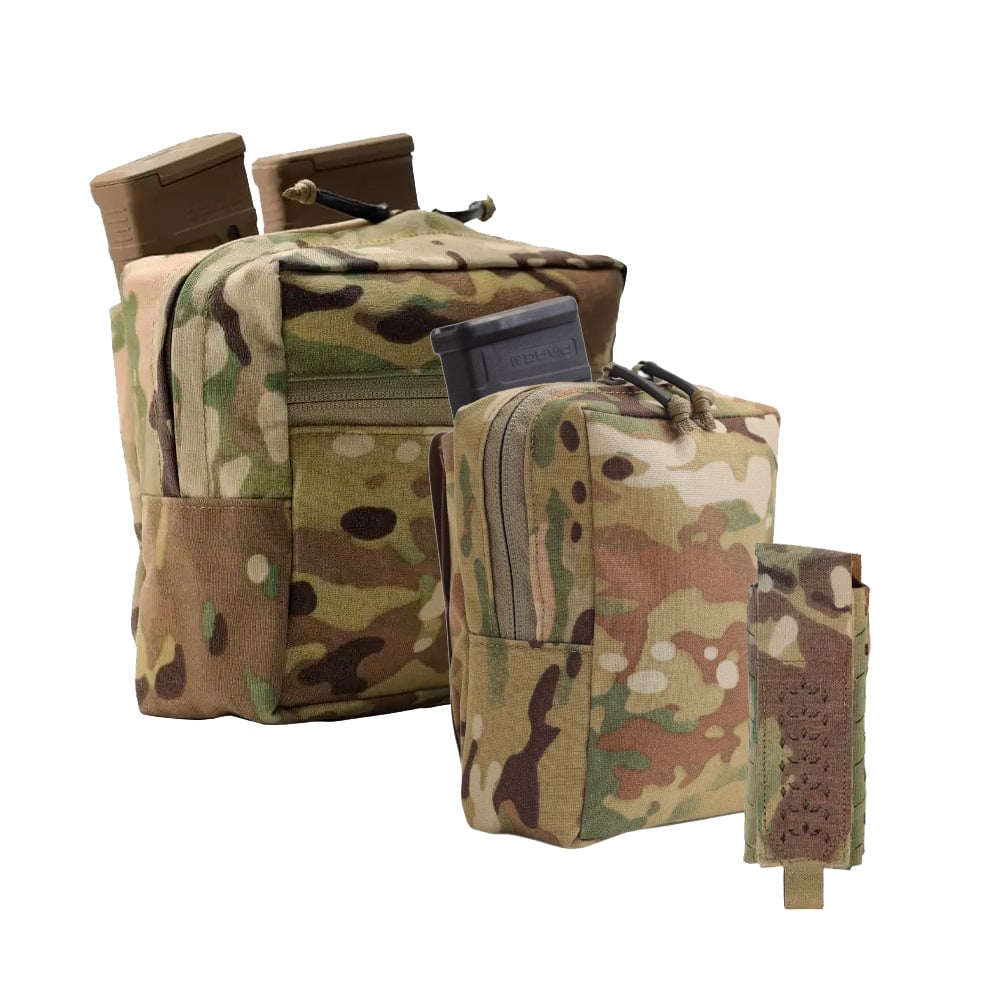
Good spot for the support-hand side of a chest rig or plate carrier where you want admin access without bulk. Our GP 4x6x2 Single Mag Pouch is a small utility with a swappable mag insert, so you have the flexibility to run it as a mag pouch or pull the insert and use it as open utility.
Medium Utility (6x5x2 Range)
The most versatile size. Wide enough for two mags side by side, a small admin kit, a fixed-blade knife, or a compact IFAK. Tall enough to fit standard-size batteries, spare magazines, or small comms gear without cramming.
Our GP 6x5x2 Pouch lives in this category. Flexible sides for varied payloads, MOLLE attachment, admin layout. Good center or flanking position on a carrier or rig.
Large Utility (Double Mag Pouch and Up)
7x6x3 and larger. Takes two mags via sleeve insert, or full-size admin loadouts, or bulkier gear like a full-size flashlight plus spare batteries. The GP Double Mag Pouch 7x6x3 is a good example: double mag capacity when you want it, full-size utility pouch when you pull the sleeve.
Extra Large Utility (SAW-Class)
This is where utility pouches start serving specialty roles. Built for boxed ammunition, compact gas masks, NVGs, large comms gear, or other heavier and more sensitive equipment. Reinforced sides to hold shape under load. Padded front to protect sensitive payloads.
Our SAW Padded Utility Pouch is our purpose-built large utility. TEGRIS collapsible sides keep the pouch from deforming when loaded. Padded front panel protects NVGs, gas masks, or other equipment from impact. The front mag area holds up to 6 rifle mags, and the rear cavity stages 2 more, giving you up to 8 mags of total capacity if you are using it for bulk ammo storage.
The SAW uses a 1-inch buckle/flap for fast one-handed operation, plus an adjustable cinch strap for variable load heights. Four-leg MOLLE attachment keeps it solidly mounted even when fully loaded. Interior walls are loop-lined for attaching organizer inserts. Side laser grid for adding accessories directly to the pouch.
Closure Styles
Flap with Buckle
The standard utility closure. A flap folds over the top, secured by a plastic or metal buckle. Fast to open with one hand if the buckle is well-designed. Protects the contents from weather and debris.
The SAW uses a 1-inch buckle specifically because the wider platform is faster to grab and release under gloves or in stress. Narrower buckles are fiddly in real use.
Flap with Velcro
Velcro closure is quieter to secure but louder to open. Works well for items you are not opening frequently during active use. Not ideal if you need to access the contents quietly.
Cinch Top
Drawstring or cinch closure at the top of the pouch. Good for variable-height loads where a flap would not close properly. Faster than a flap to open but offers less protection from weather and debris.
Open Top
No closure. Relies on the pouch’s own tension or item shape to hold contents in place. Usually combined with elastic or hook-and-loop internal retention. Fastest access, least secure.
Construction Details That Matter
Side Reinforcement
Floppy pouches collapse when empty and do not hold shape under partial loads. Reinforced sides (TEGRIS, plastic inserts, or structured stitching) keep the pouch open and accessible even when lightly loaded.
For utility pouches holding boxed ammo, compact gas masks, or other items where payload shape matters, side reinforcement is not optional. It is the difference between a pouch that works and one that becomes a bag of collapsed fabric.
Front Padding
Sensitive items (NVGs, optics, comms gear) need impact protection. A padded front panel absorbs bumps and impacts that would otherwise transfer directly to the contents. Not every utility pouch needs padding, but if you are carrying expensive or fragile gear, insist on it.
Loop-Lined Interior
Velcro loop on the interior walls lets you attach organizer inserts, small pouches, or hook-backed accessories. For users who want to build out internal organization, loop-lined interiors are a force multiplier. Without them, you are stuck with whatever the payload does on its own inside the pouch.
Attachment Points
Four-point MOLLE attachment is more stable than two-point for heavier or larger pouches. Belt pass-through on the back adds flexibility for belt-mounted setups. Dual mounting options (MOLLE and belt) mean the same pouch moves between platforms without buying a second one.
Material Weight
500D and 1000D Cordura are the common weights for tactical nylon. 500D is lighter and flexes more. 1000D is heavier and more rigid. For utility pouches that need to hold shape under load, 1000D (or equivalent reinforcement) is the more durable choice. For light utility where weight matters, 500D is fine.
Common Use Cases by Pouch Type
Admin Pouch (Small or Medium GP)
ID, keys, pen, notepad, phone charger, earplugs, small tools. The grab-bag of low-priority items you need access to without time pressure. Medium GP sits on the support-hand side of the carrier.
Medical / IFAK Supplement
While a primary IFAK lives in a dedicated medical pouch on the back of the carrier, a secondary small GP pouch on the front can carry front-of-body self-aid items: gloves, one pressure bandage, one tourniquet, chest seals. Fast access for self-treatment.
Light / Battery Kit
Flashlight, spare batteries, spare bulbs or LED modules. Small GP pouch is appropriate sizing. Side laser grid on the SAW or loop interior on GP pouches lets you organize batteries by type.
Comms Pouch
Radio, headset, spare battery pack, cables. Size depends on radio format. Hand-held radios fit medium GP. Full-size duty radios or specialty comms need large utility or SAW-class pouches. Wire guides on the harness (if you have a chest rig) route the cables cleanly.
NVG / Optics Carrier
Night vision, day optics, rangefinders, other sensitive gear. Padded front panel is required. TEGRIS or structural side reinforcement is required. This is a SAW-class use case, not a general utility pouch.
Compact Gas Mask
Specialty loadout for CBRN response or specific tactical roles. Requires padded, rigid, sized-to-fit pouch. SAW-class utility designed for masks is the appropriate format.
Bulk Ammo Storage
Boxed 5.56, 7.62, or specialty ammunition. The front mag area on the SAW holds up to 6 mags directly. The rear cavity stages 2 more. Total capacity 8 mags in one pouch, or a mix of mags and boxed ammo.
Common Mistakes
Wrong Size for the Payload
The single most common mistake. Stuffing oversized items into a pouch that cannot close, or rattling small items around in a pouch too large. Measure your intended payload before buying. If you are not sure, buy the size up. Empty space inside a pouch is less of a problem than not being able to close it.
Cheap Pouches for Expensive Contents
Budget pouches for NVGs, expensive optics, or other sensitive gear. The pouch fails, the gear gets damaged, and the few dollars saved on the pouch cost hundreds of dollars in replacement. Pouches that protect valuable payloads need to earn their protective claims. Cheap imports do not.
All Utility, No Organization
One large GP pouch full of unsorted miscellany. You spend minutes rummaging for the one thing you need. Better approach: multiple smaller pouches each with a specific purpose, or one larger pouch with loop-lined interior walls and organizer inserts that separate items by category.
Utility Pouch Doing Mag Duty (or Vice Versa)
Using an open-top utility pouch as a mag carrier, or using a dedicated mag pouch for random gear. Each tool is optimized for its intended use. Respect the design.
Building a Utility Loadout
Most well-configured carriers and chest rigs end up with 2-4 utility pouches total across the front and cummerbund. A common pattern:
- Small GP on the support-hand side of the front panel: admin items, keys, ID, pen
- Medium GP on the dominant-hand side: personal medical kit, light, small tools
- Large GP or SAW on the cummerbund or back panel: radio, spare batteries, bulk items
Adjust by mission. A range session might only need one small utility. A multi-day field exercise might need all three plus specialty gear. A plate carrier with a minimalist home defense loadout might just have a single GP on the front for house keys and a phone.
What We Build at Midwest Armor
Every GP pouch, utility pouch, and SAW in our lineup is designed and manufactured in Knoxville, Tennessee. We build these because we use them, and because imported utility pouches fail in ways that cost our customers real money in damaged gear.
Berry Compliant nylon throughout. American-sourced hardware. 500D and 1000D Cordura depending on pouch role. TEGRIS reinforcement where it matters. Sewn and finished on our machines.
Our full pouch lineup is at midwestarmor.com/product-category/pouches. If you are configuring a setup and not sure which pouches fit the gear you actually carry, text us at 865.859.9850 or email support@midwestarmor.com. Tell us what you are loading and we will point you at the right pouches.
For the complete pillar reference on every pouch type (mag, utility, admin, medical) and how they work together, see our Tactical Pouches Guide. For related reading: the Mag Pouch Guide covers dedicated mag pouches in detail, and the Plate Carrier Setup Guide walks through the full front-panel load-out strategy.
Ops-Core FAST SF Gen II Guide: Sizing, Weight, Protection and Setup
Ops-Core makes the FAST helmet, the high cut design most of the market has copied since. Ops-Core is part of Gentex Corporation, and its helmets are…
Ops-Core FAST SF Gen II vs PGD ARCH GEN3: Which High Cut Helmet to Buy
We carry two high cut ballistic helmets: the Ops-Core FAST SF Gen II and the PGD ARCH GEN3. Both are rated NIJ Level IIIA, both have…
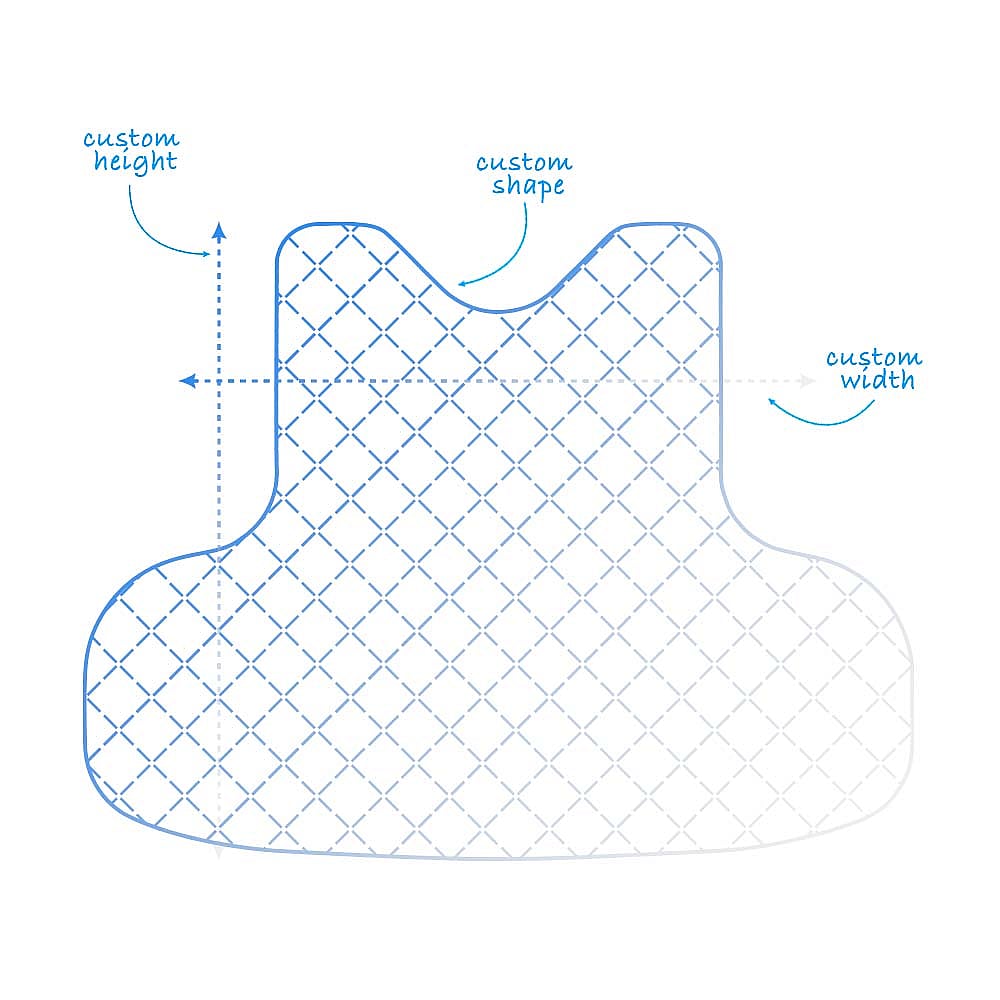
Custom Soft Armor: How to Get Inserts That Actually Fit Your Carrier
Most soft armor doesn't fit the carrier you actually own. Here's how our Custom Soft Armor program solves the fit problem and when to choose custom…