



SAPI Cut vs Shooter’s Cut vs Swimmer’s Cut: Plate Shapes Explained
SAPI cut, shooter's cut, swimmer's cut: armor plate shapes explained. What each cut trades off between coverage and mobility, and which is right for your loadout.
Shop for hard armor plates and you will see the same sizes described with different corner cuts: SAPI cut, shooter’s cut, swimmer’s cut. The cut refers to the shape of the plate’s upper corners, and it changes how the plate balances coverage against mobility. It is a small detail with a real effect on how the plate wears, and it confuses a lot of first-time buyers.
This guide explains each cut, what it trades off, and which one fits your use case.
Cut Is Shape, Not Size
First, clear up the most common confusion: cut and size are two different things. Size (Small, Medium, Large, Extra Large) is the overall footprint of the plate. Cut is the shape of the upper corners within that footprint. A Medium SAPI-cut plate and a Medium shooter’s-cut plate have the same nominal size category; they differ only in how much material is trimmed from the top corners.
The cut only affects the upper corners, because that is the part of the plate that interferes with arm and shoulder movement. The bottom of the plate is the same across cuts.
SAPI Cut
SAPI cut is the original military plate shape, named for the Small Arms Protective Insert program. It has the upper corners clipped at a moderate angle, enough to clear the shoulder pockets but conservative about it. SAPI cut prioritizes coverage: it keeps more material up top, protecting more of the upper chest and the area near the shoulders.
SAPI cut trades mobility for coverage. You get more protected surface area, particularly in the upper chest, at the cost of slightly more interference when you shoulder a rifle or raise your arms. It is the choice when maximum coverage is the priority and the wearer is not running a rifle hard.
Shooter’s Cut
Shooter’s cut takes the SAPI shape and trims the upper corners more aggressively. The steeper angle on the top corners opens up the shoulder pockets, which makes shouldering a rifle and moving the arms noticeably freer.
Shooter’s cut trades a small amount of coverage for mobility. The trimmed corners give up a modest patch of upper-chest coverage near the shoulders, but in exchange the plate does not fight you when you mount a rifle. For anyone who runs a long gun, this is usually the better compromise. Shooter’s cut is the most popular choice for civilian, tactical, and LEO rifle-response use.
Swimmer’s Cut
Swimmer’s cut is the most aggressive trim of the three. It cuts the upper corners back even further than shooter’s cut, maximizing arm and shoulder mobility. The name comes from the cut’s origin with maritime and special operations units who needed maximum upper-body range of motion.
Swimmer’s cut maximizes mobility at the cost of the most coverage. It gives up more upper-chest surface area than shooter’s cut. It is the choice for wearers who need the absolute most range of motion and accept the reduced coverage as a deliberate trade.
In practice, the line between shooter’s cut and swimmer’s cut is blurry. Different manufacturers draw the corners differently, and some use the terms almost interchangeably. The reliable approach is to look at the actual corner geometry of the specific plate rather than relying on the label alone.
Which Cut Should You Choose?
- SAPI cut if maximum coverage is the priority and you are not running a rifle hard. More protected surface area, slightly more interference with arm movement.
- Shooter’s cut for most civilian, tactical, and LEO use. The best balance: free rifle handling with only a modest coverage trade. This is the default recommendation for most buyers.
- Swimmer’s cut if you need the most upper-body mobility possible and accept the largest coverage trade. A deliberate choice for specific roles.
For most people buying a plate carrier setup, shooter’s cut is the right answer. It handles a rifle cleanly and the coverage given up is small. SAPI cut makes sense if you want every bit of coverage and mobility is secondary. Swimmer’s cut is for the wearer who specifically needs maximum range of motion.
The cut should also match your carrier and your soft armor. If you run soft armor backing behind the plate, the soft armor should be cut to match or closely follow the plate shape so the two layers sit cleanly together. Our Custom Soft Armor program cuts panels to match your plate and carrier.
Bottom Line
Plate cut is the shape of the upper corners, and it trades coverage against mobility. SAPI cut keeps the most coverage. Shooter’s cut frees up rifle handling with a small coverage trade and is the right choice for most buyers. Swimmer’s cut maximizes mobility for those who specifically need it.
For the full plate sizing picture, see our plate carrier sizing guide, and for threat levels and materials, our complete body armor guide.
FAQ
SAPI cut has moderately clipped upper corners and prioritizes coverage. Shooter’s cut trims those corners more aggressively to free up shoulder and arm movement for shouldering a rifle, giving up a small amount of upper-chest coverage in exchange. Both can be the same size category.
Swimmer’s cut trims the upper corners even more aggressively than shooter’s cut, maximizing arm and shoulder mobility at the cost of more coverage. The line between the two is blurry and varies by manufacturer; check the actual corner geometry of the specific plate.
No. Cut is the shape of the upper corners; size is the overall footprint. A Medium SAPI-cut plate and a Medium shooter’s-cut plate are the same size category, differing only in how much material is trimmed from the top corners.
Shooter’s cut or swimmer’s cut. Both trim the upper corners to free up the shoulder pockets so the plate does not fight you when you mount a rifle. Shooter’s cut is the most common choice; it handles a rifle cleanly with only a modest coverage trade.
It reduces protected surface area at the upper corners, not the protection level of the plate itself. A shooter’s-cut and a SAPI-cut plate at the same rating stop the same threats; the shooter’s cut just covers slightly less upper-chest area near the shoulders.
Yes. Soft armor backing should be cut to match or closely follow the hard plate shape so the two layers sit cleanly together in the carrier pocket without bunching or gapping. Custom soft armor can be cut to match your specific plate and carrier.
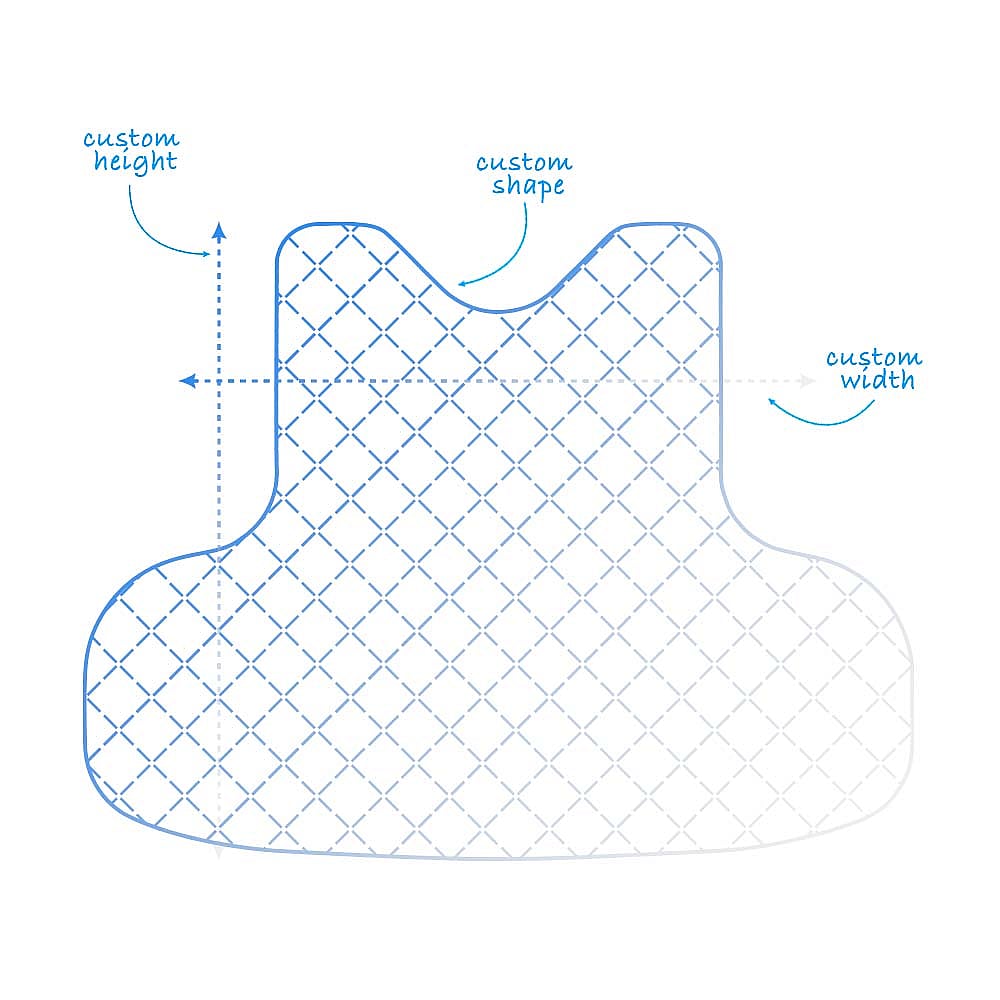
Custom Soft Armor: How to Get Inserts That Actually Fit Your Carrier
Most soft armor doesn't fit the carrier you actually own. Here's how our Custom Soft Armor program solves the fit problem and when to choose custom…
Layering a Chest Rig Over a Plate Carrier: When and How
Layering a chest rig over a plate carrier gives you ballistic protection plus high-capacity gear carriage. The SRV Split Chest Rig is purpose-built for this layered…
Best Chest Rig: How to Pick the Right Rig for Your Role
The best chest rig is the one that matches your role, mag count, and platform. Here is how to pick between continuous, modular, split, and minimalist…