



Plate Carrier Placards: Quick-Swap Front Panels Explained
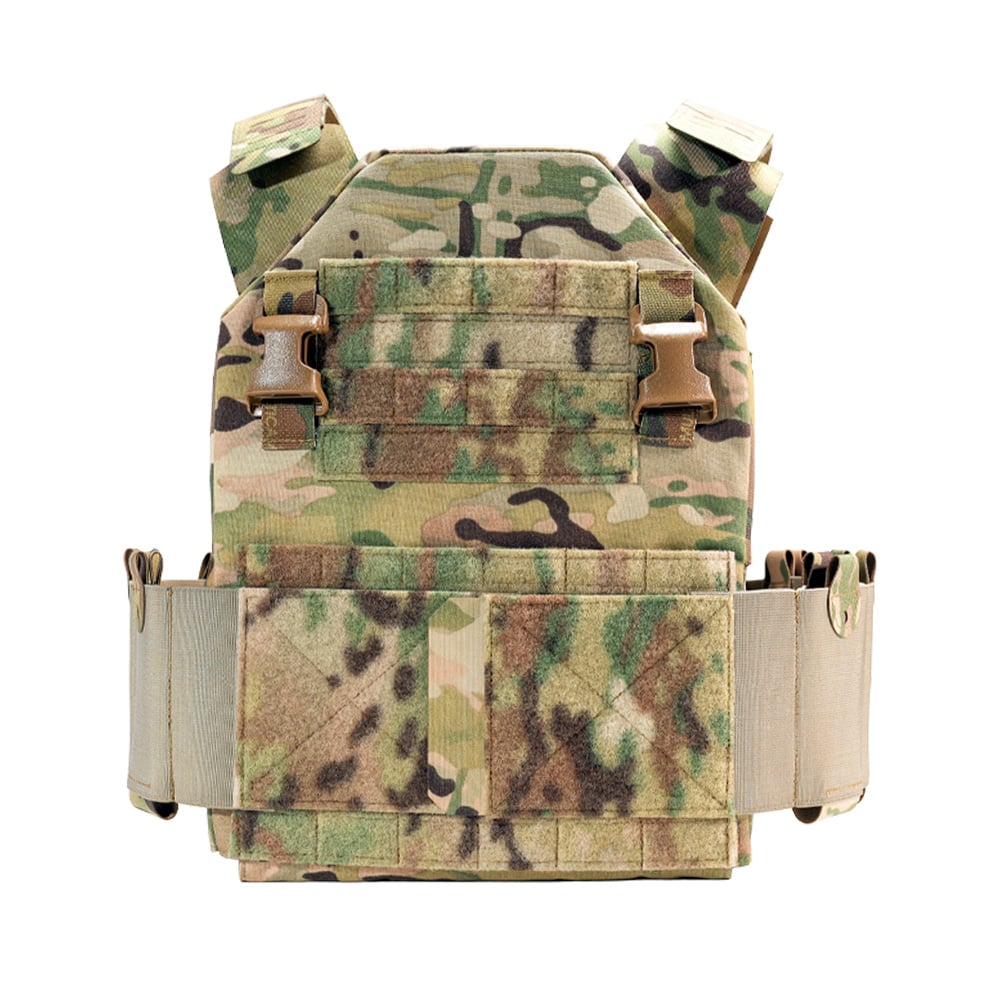
A placard is a removable front panel that lets one plate carrier handle multiple loadouts. The Leap is built around the placard system; the Starter Kit ships with the first placard included.
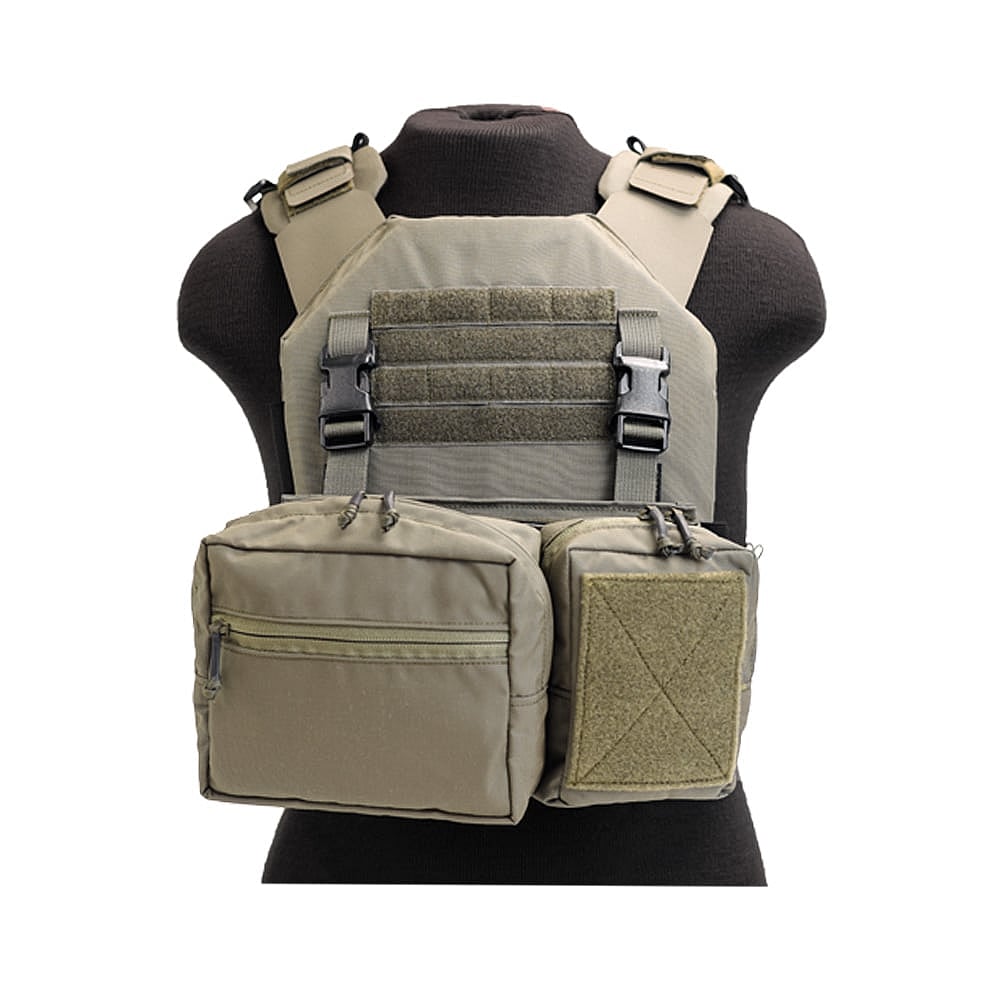
A plate carrier placard is a removable front panel that attaches to the carrier with a quick-release system, holding magazines, admin gear, or medical kit in a configurable layout. Unlike fixed-mount mag pouches that bolt to the carrier and stay there, a placard swaps in seconds without rebuilding the loadout. This lets one carrier handle multiple mission profiles by changing only the placard, not the entire setup.
Placards are not necessary for every plate carrier. They solve a specific problem (multiple loadout configurations on one carrier) and add modest cost and complexity. For buyers who want to understand whether placards are right for their setup, here is how the system works, when it earns its place, and how the Leap Plate Carrier ties everything together.
What Is a Placard?
A placard is a removable front panel for a plate carrier. It mounts to the front of the carrier through a quick-attach interface and holds your mission-essential gear (magazines, admin items, medical) in a layout you choose. The defining feature is that it comes off and swaps in seconds, so one carrier can run a rifle-mag placard for one job and a low-profile or admin placard for another, without rebuilding anything. In short: a placard is how you make a single plate carrier configurable instead of locked into one loadout.
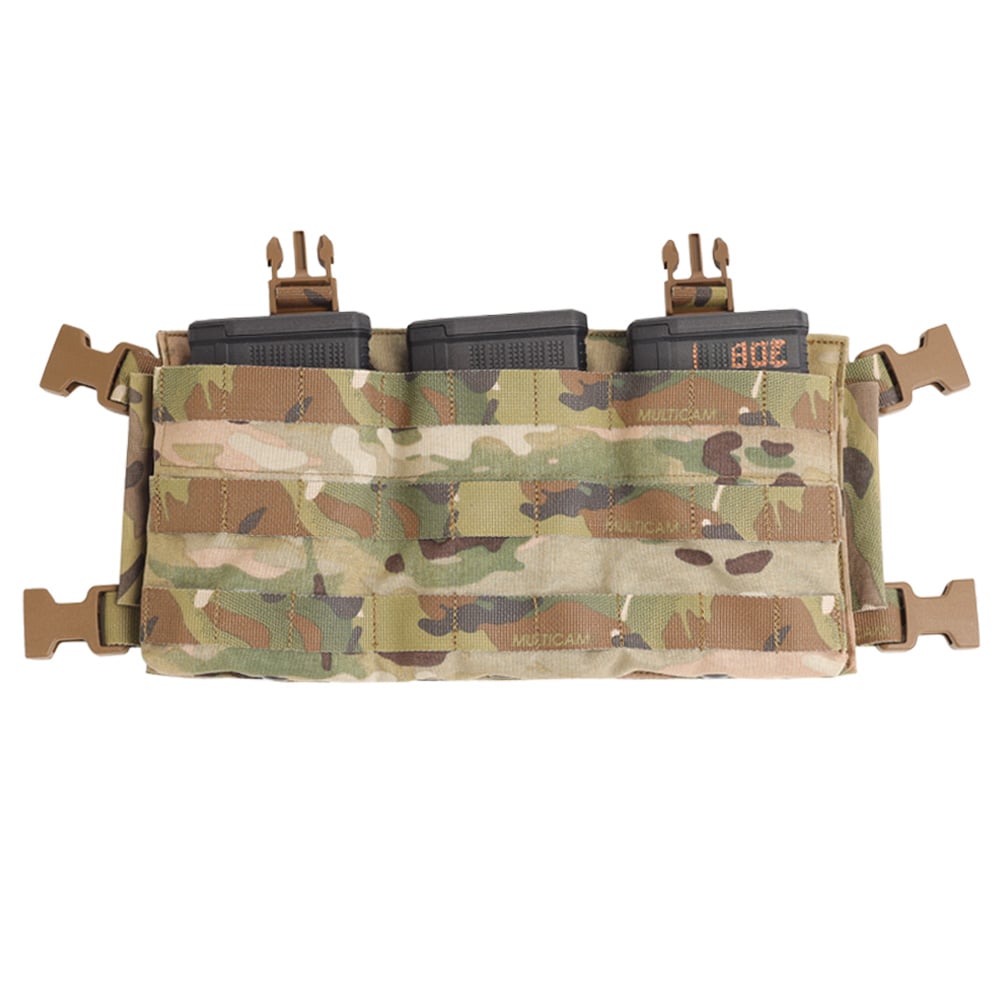
We build placards in laser-cut and MOLLE versions, including the Hilo Expandable Laser Front Placard, the Laser Triple Mag Front Placard, and the MOLLE Triple Mag Front Placard. If your carrier did not come placard-ready, the Front Placard Conversion Panel adds the quick-attach interface.
How Placards Work
A placard is a fabric panel sized to cover the front of a plate carrier, with mag pouches, admin organization, or medical kit pre-mounted on the front face. The back of the placard has a quick-release mounting system (usually hook-and-loop plus buckles or a SwiftClip system) that mates to a corresponding receiver on the carrier.
Pull the placard off, snap a different placard on, and the carrier’s front-panel configuration changes in 10-15 seconds. The placard is the modular layer; the carrier itself is the platform underneath.
Common placard configurations:
- Triple rifle mag placard: 3 rifle magazines across the front. Standard combat or training loadout.
- Mag and admin placard: 2 rifle mags plus an admin pouch. Patrol or instructor-friendly layout.
- Medical placard: chest seal, tourniquet, hemostatic gauze laid out on the front. Low-profile medical-priority loadout.
- Pistol mag placard: 4-6 pistol mags. Pistol-primary loadout where rifle mags are not the priority.
- Slick (no placard): leave the placard off entirely for a true low-profile carrier.
Buyers running multiple loadouts (training one day, patrol the next, low-profile detail later) can run one carrier with three or four placards instead of three or four full carriers.
When Placards Earn Their Place
Placards are not a universal upgrade. They make sense for some users and add unnecessary complexity for others.
Buy Placards If…
- You run multiple mission profiles regularly: training, patrol, low-profile, range work. Each profile gets its own placard.
- You share carriers across users: department issue or family-shared carriers benefit from per-user placards.
- You want to scale capacity up or down without committing to a full mag layout permanently.
- You change loadouts seasonally (winter heavy gear, summer light gear).
Skip Placards If…
- You have one consistent loadout: a fixed-mag layout sewn or laser-cut into the carrier is lighter, slightly more rigid, and one fewer thing to lose.
- You want maximum simplicity: one less component to think about during deployment.
- You are budget-constrained: placards add modest cost on top of the base carrier.
For most civilian truck rig builds, placards are optional. For LEO patrol and tactical buyers who run multiple loadouts, placards earn their place quickly.
The Leap System: Placards Built-In
The Leap Plate Carrier is built around the placard system from the ground up. The Leap accepts placards directly without aftermarket adapters, and the carrier ecosystem includes placards as core components rather than as extras.
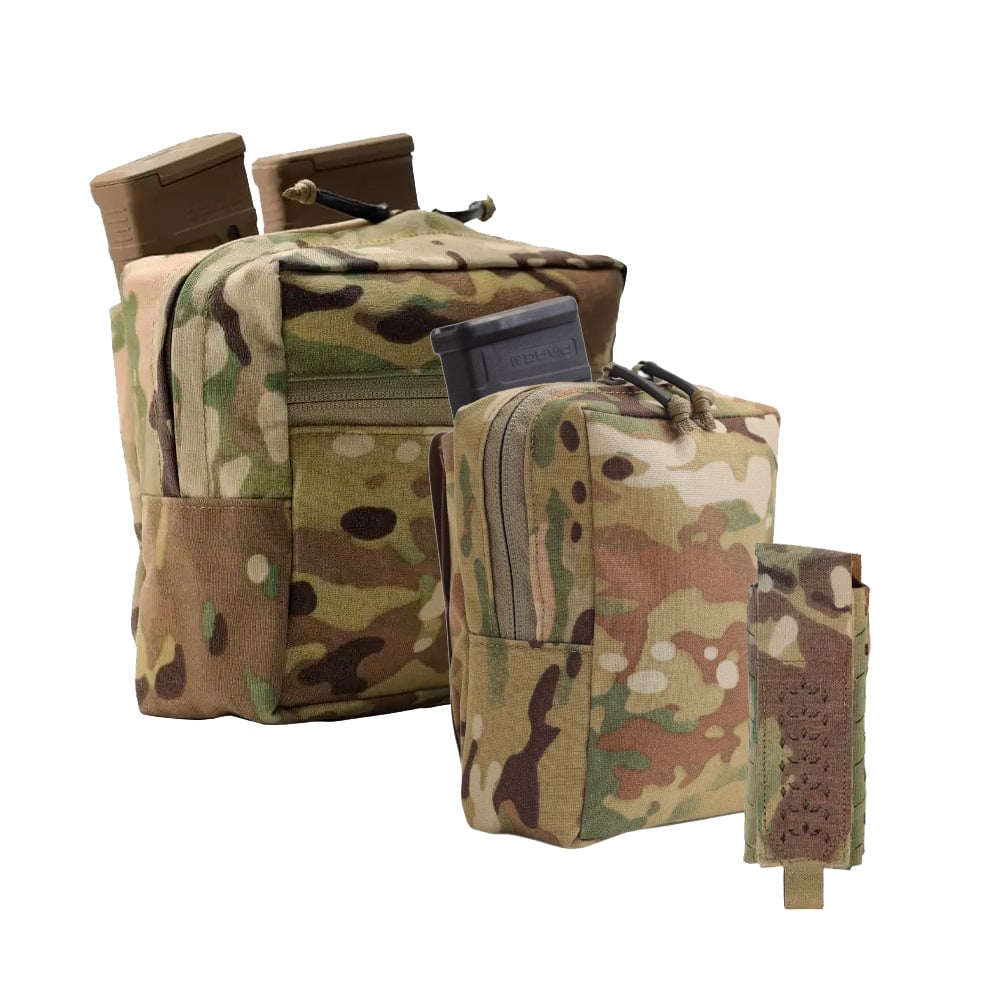
The Leap Plate Carrier Starter Kit at $299 ships with the front MOLLE placard included, plus a GP double mag pouch and a GP single mag pouch that mount to the placard for the standard 3-mag civilian loadout. This is the entry-tier complete carrier system: carrier front and back, cummerbund (elastic or skeletal), front MOLLE placard, mag pouches, and padded shoulder covers.
For buyers who want to expand the placard ecosystem beyond the kit baseline, additional placards configured for different mission profiles can be added separately. The carrier handles the swap; you just pick which placard goes on for which mission.
Placard Mounting Standards
Several placard mounting standards exist across the industry. The most common:
- SwiftClip: a hook-and-loop plus buckle system originally pioneered by Ferro Concepts and now widely emulated. Fast attachment, secure retention.
- FirstSpear Tubes: a buckle-based quick-release system used in higher-end carriers and chest rigs.
- Standard MOLLE placard: the placard itself uses MOLLE webbing on the back, which weaves into the carrier’s MOLLE field.
- Proprietary systems: some carrier brands use their own quick-release patterns that only work with their own placards.
First Order · Free Shipping
First order ships free.
Drop your email and we'll send a code for free shipping on your first order. No minimum, no threshold, and first look at every restock and drop.
- No Minimum
- Any Order
- Emailed Code
One code per customer. Free shipping on contiguous US orders. We email gear drops & restocks. Unsubscribe anytime.
Code on its way
Check your inbox.
We just sent your free-shipping code. Use it at checkout on your first order. No minimum. Contiguous US orders.
First Order · Free Shipping
You're already with us.
Looks like this email has ordered before, so the first-order offer is spent. You are on the list for drops and restocks.