



Tourniquet Guide: How to Pick, Carry, and Apply One
A tourniquet is the single most important piece of medical gear you can carry. Here's how the CAT, SOF, and RATS tourniquets work, why knockoffs fail, and how to carry one.
A tourniquet is the single most important piece of medical gear you can carry. It is the only intervention that reliably stops massive arterial bleeding fast enough to save someone’s life when seconds matter. Every IFAK, every plate carrier, every battle belt should have a tourniquet on it, and the person carrying it should know how to use it.
This guide covers what a tourniquet does, the three tourniquet designs that actually work, why knockoffs fail when you need them most, how to carry a tourniquet, and the basics of applying one. It is not a substitute for hands-on training. Take a Stop the Bleed class. Take a TCCC course. Then read this.
What a Tourniquet Does
A tourniquet is a constricting band that, when applied tightly enough, occludes arterial blood flow to a limb. The leading cause of preventable death in trauma is exsanguination from extremity wounds: severed arteries in arms or legs that bleed out faster than the body can compensate. A correctly applied tourniquet stops that bleeding by physically clamping the artery shut against the underlying bone.
Tourniquets are not a last resort. Modern combat medicine doctrine treats tourniquets as the first response to severe extremity bleeding, applied immediately and aggressively. The old myth that tourniquets cause limb loss has been definitively debunked by the past two decades of military trauma data. A correctly applied tourniquet can stay on for hours without permanent damage. A casualty bleeding out from an uncontrolled arterial wound has minutes.
The Three Tourniquet Designs That Actually Work
Three tourniquet designs have a documented track record in military and civilian trauma applications. Each works on a different mechanical principle. All three are TCCC-recommended.
CAT (Combat Application Tourniquet)
The most widely used tourniquet in modern combat medicine. The CAT tourniquet uses a wide nylon strap with a plastic windlass that you twist to tighten the strap until arterial flow stops. The windlass locks into a clip when fully torqued, and the time strip on the band allows the responder to mark application time.
The CAT is what we recommend for the IFAK of every shooter, every patrol officer, and every prepared civilian. It is one-handed applicable on yourself (you can self-apply on an arm wound using your free hand), simple enough to use under stress, and proven across millions of real-world deployments. If you only carry one tourniquet design, this is it.
SOF Tactical Tourniquet
The SOF Tactical Tourniquet uses a metal windlass instead of plastic. The metal windlass is favored by some military units because it is theoretically more durable under extreme conditions and slightly faster to torque to occlusion. The strap is wider and the buckle system is different from the CAT, but the operating principle is the same.
SOF-T is a great alternative to the CAT, especially for buyers who prefer the metal-windlass feel or who carry in extreme environments. Pick whichever feels better in your hand under simulated stress (gloves, blood, low light). Both work.
RATS Tourniquet
The RATS Tourniquet uses a different design entirely: a flat elastic band with a buckle that you wrap and lock without a windlass. RATS is not the standard recommendation for primary tourniquet duty (most TCCC guidance still favors windlass-style tourniquets for arterial occlusion of large limbs), but it has a place as a secondary or compact-carry tourniquet, especially for smaller-circumference limbs and pediatric applications. RATS is also significantly more compact than a CAT or SOF, which makes it a viable EDC option in pockets where a CAT will not fit.
Pick RATS as a backup or when extreme compactness matters more than the conservative TCCC primary-tourniquet recommendation.
Why Knockoff Tourniquets Are Dangerous
The CAT tourniquet is widely counterfeited. Knockoff tourniquets sold cheaply on Amazon and similar marketplaces look almost identical to the real product but use inferior materials throughout. The most common failure modes:
- Plastic windlass cracks under torque load. The windlass has to handle several times your bodyweight in twist force. Cheap polymer cracks before reaching arterial occlusion pressure.
- Velcro releases under tension. Counterfeit Velcro is rated for static hold, not dynamic load. When the strap is pulling against several pounds of force, the Velcro lets go.
- Strap fabric is too narrow or too thin. A narrow strap concentrates pressure on a small area and causes nerve damage or fails to fully occlude flow. A thin strap stretches and loses tension.
- Stitching fails. Cheap stitching pulls apart at the buckle attachment point under load.
Counterfeit tourniquets cost a fraction of the real thing for a reason: the manufacturer cut every corner that matters when someone is bleeding out. Buy real CAT or SOF-T tourniquets from authorized sources. The $20 you save on a knockoff is irrelevant when you find out it does not work.
We sell only authentic CAT, SOF-T, and RATS tourniquets sourced from authorized distributors.
How to Carry a Tourniquet
A tourniquet is useless if you cannot reach it in the moment you need it. Two main carry strategies:
Inside an IFAK
Most IFAKs hold one or two tourniquets along with the rest of the trauma kit. This is the right primary carry location for most users. The complete IFAK guide walks through pouch options and contents.
Dedicated Tourniquet Carrier
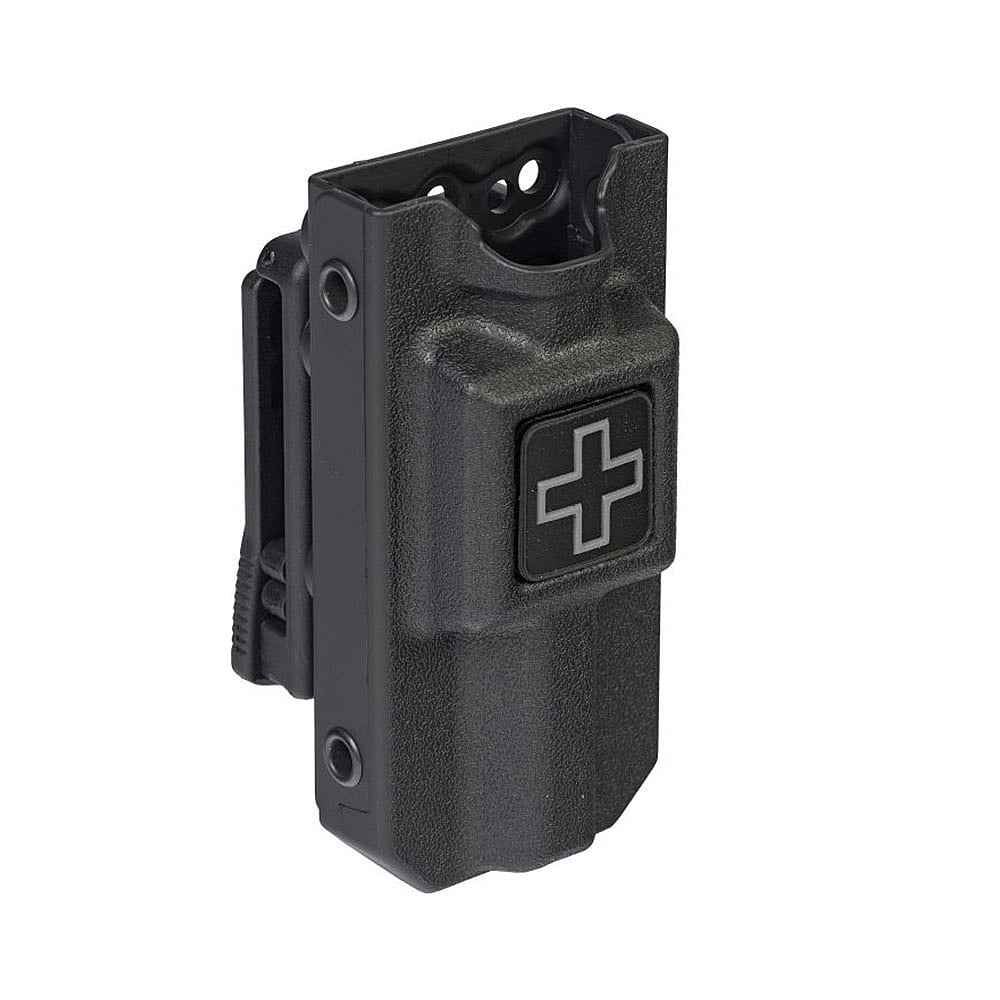
For users who want a tourniquet immediately accessible without opening a pouch, a dedicated belt-mounted or carrier-mounted tourniquet holder is the right call. Three options we stock:
- Laser TQ Pouch: our own laser-cut tourniquet pouch, built in Knoxville. The slim laser-cut construction sits flat against the carrier and integrates cleanly with laser-cut MOLLE platforms. The right choice for users running our laser-cut carriers and chest rigs who want a TQ holder that matches the rest of the kit.
- Elastic Tourniquet Holder: low-profile elastic retention that holds a CAT in a quiet, draw-fast configuration. Mounts on plate carriers, chest rigs, battle belts. The right choice when minimal bulk matters.
- RIGID Gen 7 CAT TQ Case: positive retention with a hard polymer case that protects the tourniquet from environmental damage. The right choice for users who carry a tourniquet exposed to weather, friction, or repeated movement.
Best practice is one tourniquet inside your IFAK and one tourniquet on a dedicated holder where you can reach it without opening anything. The holder is for the immediate self-application scenario; the IFAK tourniquet is your backup or for treating a teammate.
Mounting Position
Mount your dedicated tourniquet where you can reach it with either hand. Strong-side cummerbund, support-side wing of a plate carrier, or centerline of a battle belt are all common positions. Practice draws regularly. A tourniquet you cannot find in two seconds under stress might as well not be on you.
Basics of Tourniquet Application
This is not a complete training guide. Take a Stop the Bleed class for hands-on practice. The following is an overview of the standard CAT application sequence so you know what right looks like.
- Position the tourniquet 2-3 inches above the wound, between the wound and the heart. For high-thigh or high-arm wounds, go as high as possible. Do not place over a joint.
- Pull the strap tight through the buckle. Many failures are caused by an insufficiently tight initial strap before the windlass is engaged.
- Twist the windlass until arterial bleeding stops and the distal pulse is gone. This will hurt the casualty significantly if they are conscious. That is expected.
- Lock the windlass into the clip and secure with the time strap.
- Mark the time on the casualty’s forehead with a permanent marker (this is why your IFAK has a marker). Time of application is critical for the medical team that takes over.
- Do not loosen the tourniquet after application. Let medical professionals manage that decision.
If one tourniquet does not stop the bleeding, apply a second tourniquet immediately above the first. Do not waste time troubleshooting the first; double up and address the bleeding.
Common Tourniquet Mistakes
- Not tightening enough. Tourniquets need to be aggressively tight, much tighter than feels reasonable. If the bleeding has not stopped, the tourniquet is not tight enough.
- Placing over a joint. Place above or below the elbow or knee, never directly over.
- Loosening to “check” if it is still bleeding. Once applied, leave it. Loosening risks reactive bleeding and shock.
- Single-tourniquet mindset. Severe high-thigh wounds may require two tourniquets. Carry capacity for both.
- Not training regularly. Tourniquet application skill decays without practice. Train at least quarterly with a real tourniquet on a real limb (yours or a partner’s, simulated).
Bottom Line
For most buyers, the right starting tourniquet is a real CAT in your IFAK plus a second CAT in a dedicated holder like the Elastic Tourniquet Holder or RIGID Gen 7 CAT TQ Case. Add a SOF-T for redundancy if you operate in a high-threat environment. Skip knockoffs entirely.
For the complete IFAK and trauma kit context, see our complete IFAK guide. For the broader pouches discussion including how IFAKs and tourniquet holders fit on a carrier, see our complete pouches guide.
FAQ
CAT stands for Combat Application Tourniquet. It is a specific tourniquet design from North American Rescue, the standard-issue tourniquet for the US military and most TCCC-trained responders.
Modern combat trauma data shows tourniquets can stay on for many hours without permanent limb damage. The 2-hour myth is outdated. The right rule: leave the tourniquet in place until a medical professional removes it. Mark the application time on the casualty so the medical team has accurate data.
The widespread fear that tourniquets cause limb loss is a holdover from older battlefield medicine. Modern data from Iraq and Afghanistan shows tourniquets dramatically reduce mortality with very low rates of limb amputation attributable to the tourniquet itself. Bleeding out kills more people than tourniquet duration.
Yes, but high-thigh wounds may require two tourniquets stacked because the larger muscle mass and femoral artery require more circumferential pressure. Always carry enough capacity for two tourniquets if you anticipate working in a high-threat environment.
Yes, the CAT is specifically designed for one-handed self-application. You feed your wounded arm through the loop, pull the strap tight with your free hand, and twist the windlass until bleeding stops. Practice this with both hands so either side is automatic.
No. Improvised tourniquets (belts, shirts, ratchet straps) are vastly inferior to a real tourniquet and frequently fail to occlude arterial flow. The cost of a real CAT is low compared to the consequences of an improvised tourniquet that does not work. Always carry a real tourniquet.
The CAT manufacturer recommends replacement every 5 years from manufacture date. Replace sooner if exposed to UV (left in a vehicle dashboard), heat, moisture, or visible wear. Inspect annually. Tourniquets used in training should be retired and replaced; do not use a training tourniquet for live duty.
The CAT has been iterated several times since its introduction. Gen 7 is the current generation as of this writing, with refinements to the windlass clip, time strap, and Velcro. Older generations (Gen 6 and earlier) still work but lack some of the durability improvements. Buy current generation when possible.
Yes. Stop the Bleed is a free 90-minute course offered by hospitals, fire departments, and trained instructors across the country. Search for “Stop the Bleed” plus your city to find local sessions. Take it. Tourniquet skill decays fast without hands-on practice.
UV exposure is the biggest enemy of tourniquet shelf life. Any tourniquet stored in a clear or visible pouch on the outside of a vehicle, plate carrier exposed to sun, or window-facing storage location will degrade faster than one stored in a covered pouch. Keep tourniquets shaded.
Custom Soft Armor: How to Get Inserts That Actually Fit Your Carrier
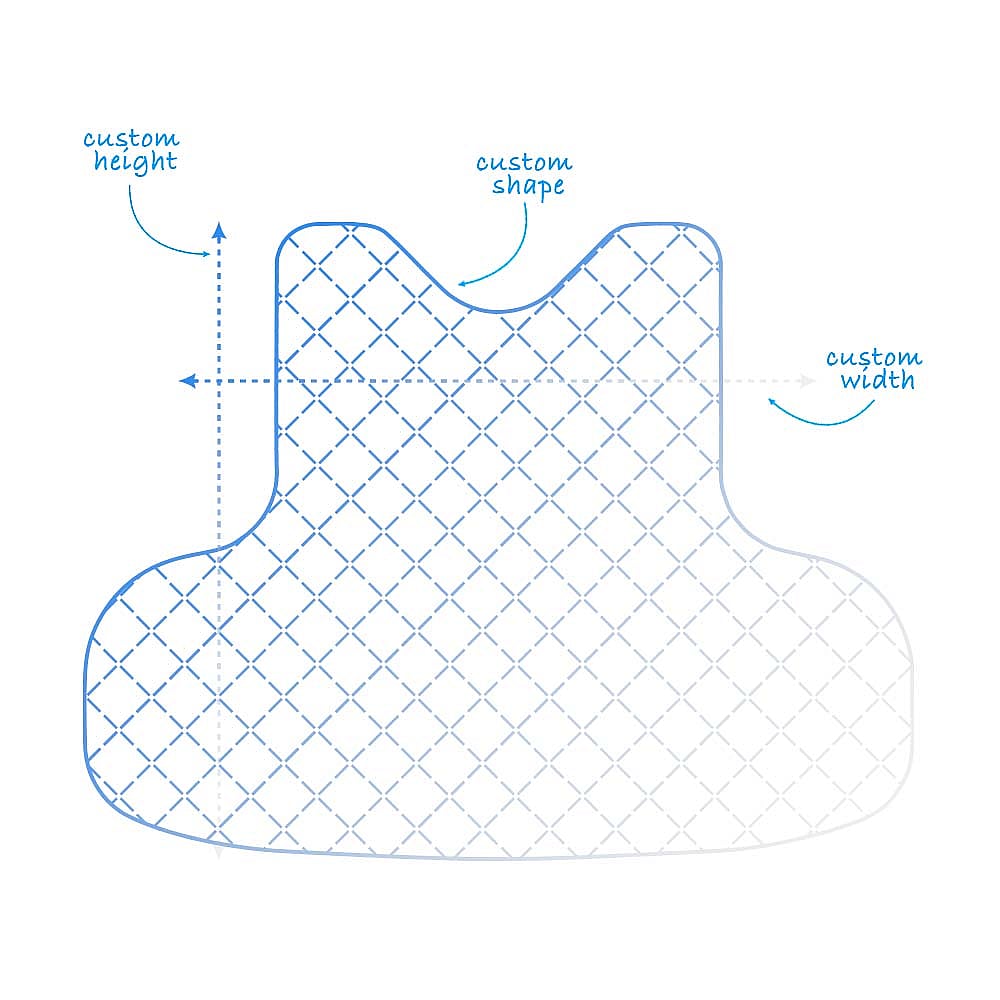
Most soft armor doesn't fit the carrier you actually own. Here's how our Custom Soft Armor program solves the fit problem and when to choose custom…
Layering a Chest Rig Over a Plate Carrier: When and How
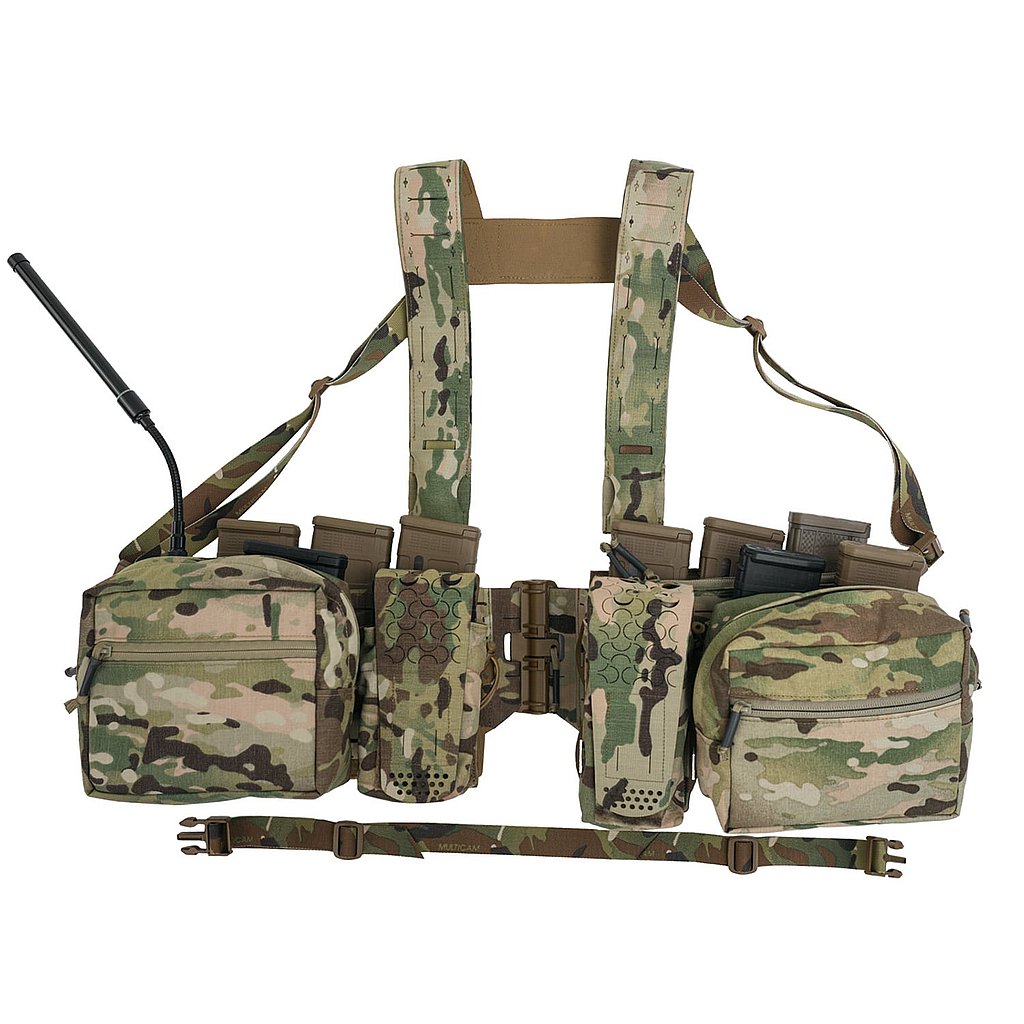
Layering a chest rig over a plate carrier gives you ballistic protection plus high-capacity gear carriage. The SRV Split Chest Rig is purpose-built for this layered…
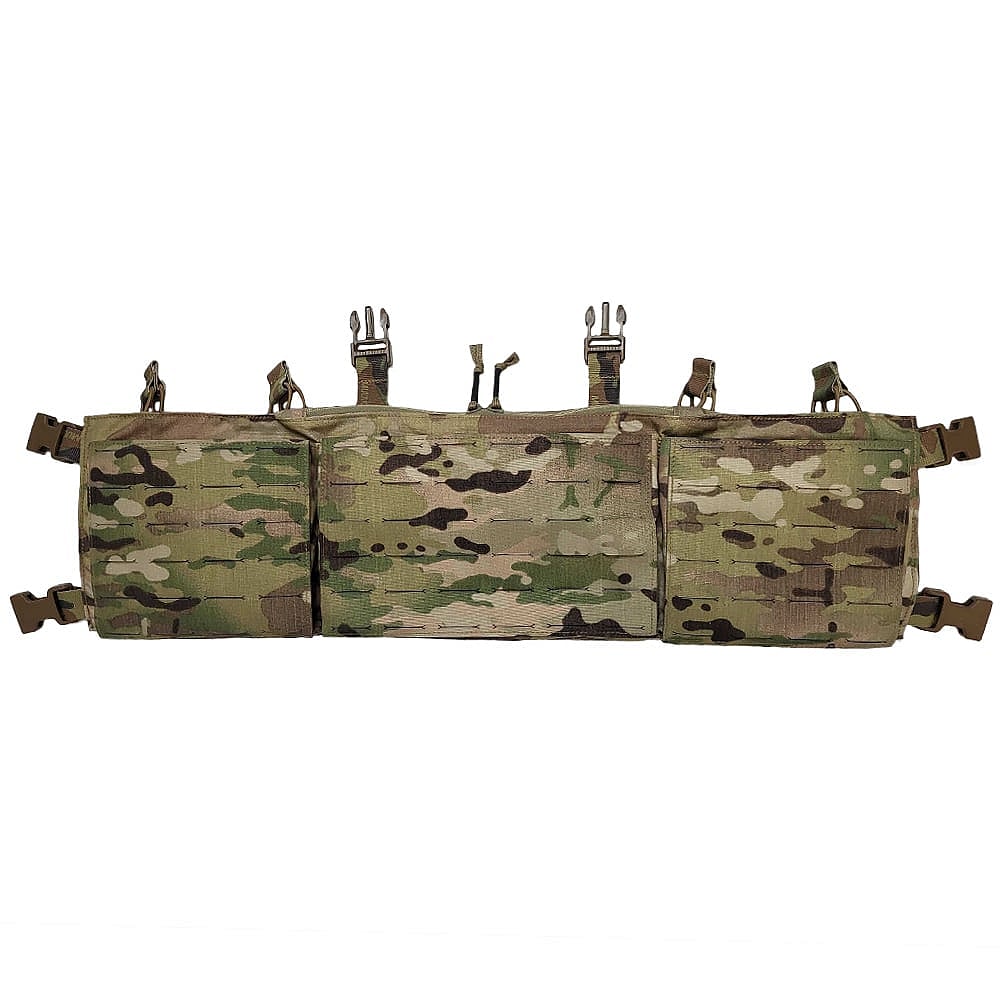
Best Chest Rig: How to Pick the Right Rig for Your Role
The best chest rig is the one that matches your role, mag count, and platform. Here is how to pick between continuous, modular, split, and minimalist…